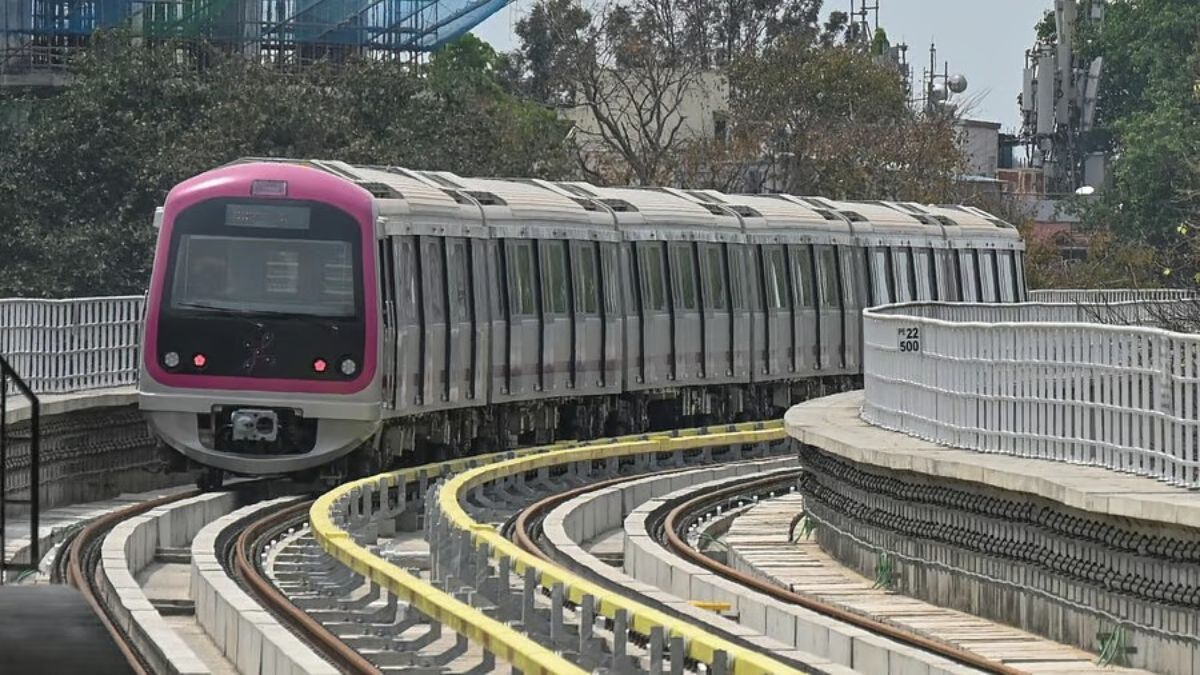
Bengaluru Metro Purple Line Faces Six Week Slowdown
Commuters using Bengaluru’s Purple Line are set to experience slower train movements for about six weeks as a temporary speed restriction remains in force on a section of the corridor. The measure is linked to track-related maintenance requirements and is intended to allow engineering work to proceed while services continue operating.
The restriction affects the section between Benniganahalli and Baiyappanahalli, where trains will operate at a reduced speed of 40 kmph. The restriction is expected to remain for around six weeks as maintenance and track-related works are completed. For passengers, the immediate effect is likely to be a modest increase in travel time through the affected stretch. While a speed restriction on a short section may appear limited, its impact can accumulate when trains operate at high frequency, particularly during peak hours.The Purple Line is a critical east-west component of Bengaluru’s metro network, carrying passengers between neighbourhoods, commercial districts and major interchange points. Reliable performance on the corridor is therefore important not only for individual commuters but also for the wider public transport system.The decision to reduce speed highlights the importance of preventive maintenance as Bengaluru’s metro network expands and older sections continue to handle substantial passenger volumes. Track systems experience continuous wear from repeated train movements, making inspections and timely interventions necessary to maintain safe operations. For a growing city, safety must take precedence over maintaining maximum speeds. A temporary reduction in operating speed can be preferable to allowing deteriorating infrastructure to create a larger disruption or safety concern. However, prolonged restrictions also underline the importance of efficient maintenance planning.
Engineering work on heavily used corridors needs to be scheduled and communicated carefully so that passengers have sufficient information to adjust their travel plans. Clear passenger communication will be particularly important during peak periods. Real-time service information, accurate estimates of additional travel time and advance notice of changes can reduce uncertainty for commuters connecting to buses, trains and other metro lines. The restriction also has implications for Bengaluru’s sustainability goals. The metro provides high-capacity transport that can reduce dependence on private vehicles, especially along congested corridors. Maintaining its reliability is therefore important to the city’s efforts to shift more daily journeys towards public transport.
The wider lesson extends beyond this particular stretch. Metro expansion brings visible new infrastructure, but maintaining existing assets is equally important as networks mature. Track renewal, signalling, station upkeep and structural inspections require predictable funding and long-term asset-management strategies. For commuters, the six-week period may mean allowing additional time for journeys through the affected section.
For the transport system, it provides an opportunity to complete necessary engineering work before normal speeds are restored. The priority now is to finish the maintenance within the planned period and return trains to normal operating speeds once the track is certified safe. For Bengaluru, ensuring that maintenance keeps pace with metro expansion will be essential if the network is to remain a dependable alternative to increasingly congested roads.