Mumbai Railway Food Safety Rules Tighten From September
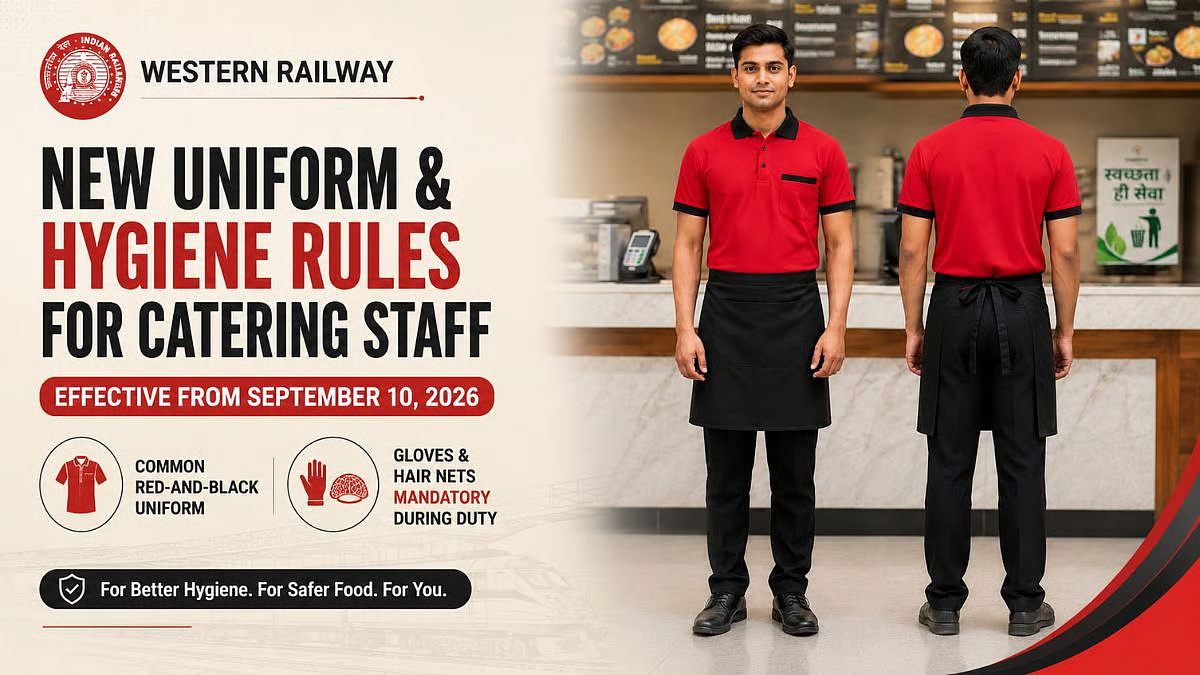
Western Railway is tightening food-handling requirements at licensed catering outlets across its Mumbai division, with new staff hygiene standards scheduled to take effect from September 10. Workers serving passengers will need prescribed uniforms, disposable gloves and hair nets while on duty. The move places greater responsibility on catering operators to maintain basic food-safety standards across one of the city’s busiest public transport environments. Under the revised Mumbai railway catering rules, workers at licensed food stalls and units will have to wear a specified uniform comprising a red polo shirt with black detailing, black trousers, a half-apron and black footwear. Clothing will also be expected to remain clean, properly maintained and presentable during working hours.
The requirements extend beyond appearance. Staff involved in handling or serving food will have to use disposable gloves and hair nets. Railway commercial personnel will monitor compliance through inspections, with reports to be submitted to the divisional administration. The tighter Mumbai railway catering rules follow increased scrutiny of food-handling practices at stations. A catering outlet at Boisar was recently found selling samosas wrapped in newspaper, prompting concerns over the possibility of contamination and inappropriate food-contact materials. The incident has added pressure on operators to demonstrate more consistent hygiene practices. For passengers, the significance goes beyond the appearance of catering workers. Railway stations function as high-footfall public spaces where food is prepared and served to large numbers of people within limited areas. Weak hygiene controls can therefore create risks that extend beyond an individual outlet.
The new framework also shifts part of the enforcement burden towards licence holders. Operators will be responsible for ensuring that their employees follow the prescribed standards, while station-level commercial officials will conduct checks. Non-compliance can result in action against both the catering licence holder and the personnel concerned. Urban food systems increasingly depend on simple but enforceable standards. Gloves and hair coverings can reduce some contamination risks, but they cannot substitute for proper handwashing, clean preparation surfaces, safe storage temperatures, pest control and regular cleaning. Industry experts say inspections need to assess these wider conditions rather than treating uniforms as the primary measure of food safety. There is also a practical operational challenge. Disposable gloves can create additional waste if changed unnecessarily, while poorly managed single-use materials can add to the environmental burden at already congested stations. Effective implementation will therefore require hygiene compliance alongside responsible waste handling.
With Mumbai’s suburban railway network carrying millions of passenger journeys, station catering is an important part of the everyday urban economy. The revised Mumbai railway catering rules provide a clearer baseline, but their value will ultimately depend on consistent inspections and whether food-safety practices improve beyond the visible requirements.