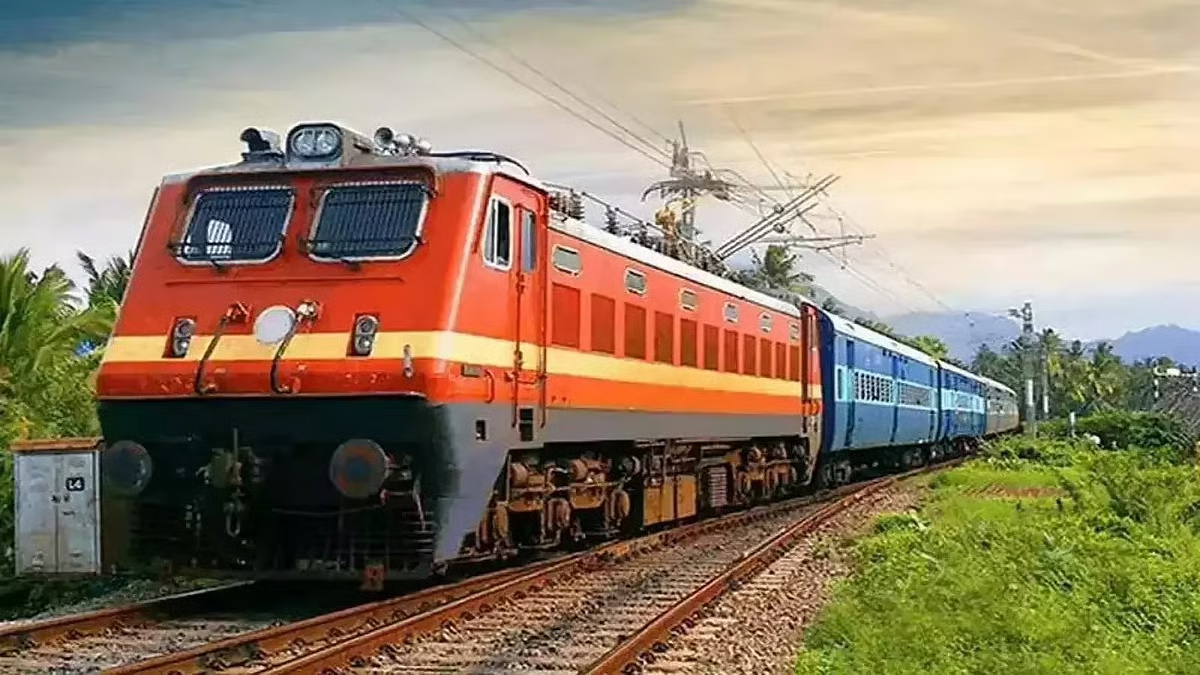
India Railways Maps Major Expansion Across Seven Corridors
Indian Railways is preparing a major capacity expansion across seven of the country’s busiest rail corridors, with plans to develop four-line networks over nearly 11,000 km. The routes currently carry about 41% of railway traffic despite representing only 16% of the network, highlighting a capacity imbalance that could increasingly constrain passenger mobility and freight movement as India’s economy expands. The corridors identified for the proposed expansion include Delhi–Howrah, Howrah–Chennai, Chennai–Mumbai, Mumbai–Delhi, Delhi–Chennai, Mumbai–Howrah and Delhi–Guwahati. Together, they connect major metropolitan centres, industrial regions, ports and commercial markets, giving the programme significance beyond railway capacity alone.
The immediate challenge is concentration. When a relatively small share of the network handles a disproportionately large volume of trains, delays, maintenance requirements and timetable conflicts can have consequences far beyond individual journeys. Additional tracks can provide greater flexibility for separating passenger and freight services and creating operating capacity during disruptions. The proposed four-line configuration could therefore become an important logistics intervention. Faster and more predictable freight movement would benefit manufacturers, agricultural producers and distribution networks that depend on rail to move large volumes over long distances. For passengers, additional capacity could support more services without relying entirely on higher train frequencies on already congested infrastructure. The Delhi–Guwahati corridor carries a different strategic dimension. Better rail capacity towards the Northeast could strengthen connections between the region and major markets in eastern and northern India. Improved reliability could also reduce the logistical disadvantages faced by businesses located far from the country’s largest consumption centres.
However, expanding rail infrastructure at this scale will require substantial land, engineering work and capital. Construction across established urban areas can involve complex land constraints, level crossings, bridges, signalling systems and station upgrades. The programme’s effectiveness will depend not only on laying additional tracks but also on modernising the supporting infrastructure around them. From an urban-development perspective, stronger rail capacity could help cities manage growth more efficiently. Rail remains significantly more space-efficient than road-based movement for large passenger and freight volumes. Increasing capacity on existing strategic corridors can also reduce pressure for parallel road expansion, provided freight and passenger services are planned as an integrated network. The sustainability gains, however, will depend on how much additional traffic shifts towards rail and how efficiently the expanded system operates. Capacity creation alone does not guarantee lower emissions or better mobility.
The next phase will require detailed planning, investment decisions and corridor-level execution. If delivered alongside signalling, stations, freight infrastructure and multimodal connections, the rail capacity expansion could reshape how people and goods move across India’s economic backbone.