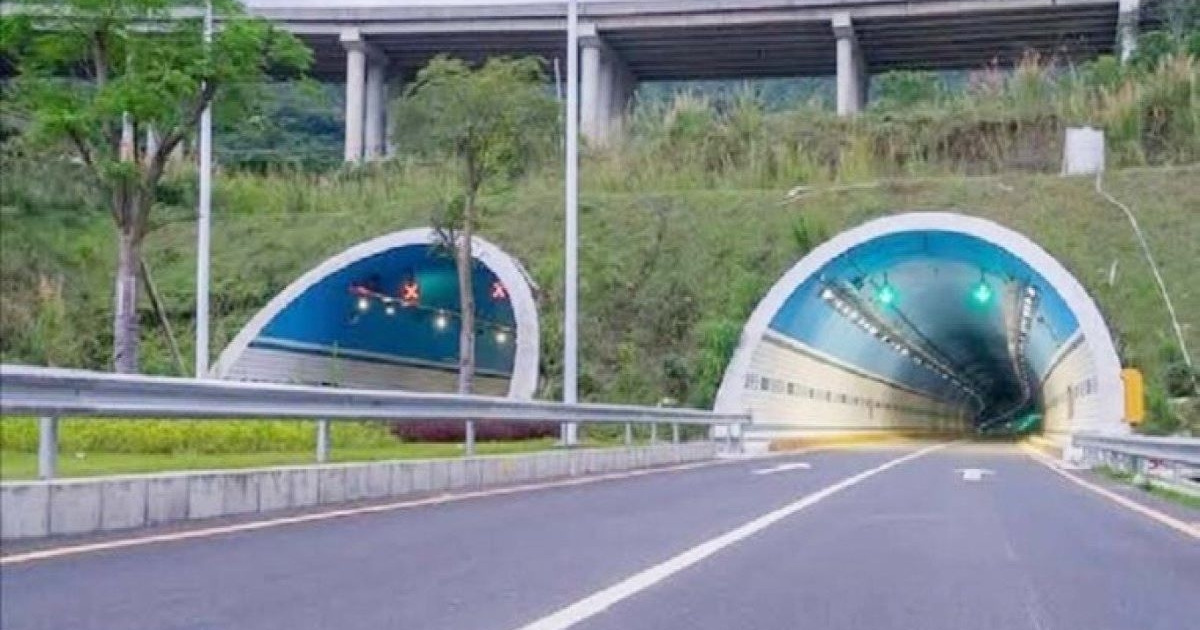
Mumbai’s ₹14,000-crore Goregaon-Mulund Link Road (GMLR) has entered its underground construction phase, with the first tunnel boring machine completing nine metres of excavation beneath the Sanjay Gandhi National Park. The early progress on the twin-tunnel section is significant for a project intended to provide a direct east-west road connection while avoiding extensive surface-level construction through a densely developed part of the city. The tunnelling forms part of Phase 3(B) of the GMLR, where two three-lane tunnels are planned between Dadasaheb Phalke Chitranagari in Goregaon East and Amar Nagar in Mulund West. Together, the underground section will extend for about 5.30 km.
The first machine, named Tulsi, began operations on August 17. Its initial excavation marks the transition from preparatory work to the more technically demanding stage of the project. Tunnel boring machines cut through the ground while supporting the excavation face and enabling the installation of tunnel structures as work progresses. A senior civic official recently inspected the site to review excavation methods, technical systems and worker-safety arrangements. The focus on safety is particularly important because underground construction beneath a protected green area involves complex geological and engineering conditions. The second tunnelling machine is also moving towards deployment. Around 70% of its components have reportedly been assembled, with the civic authority setting September 30 as the target for completing assembly. A Site Acceptance Test is scheduled from October 1 to assess whether the machine and its systems are ready for excavation.
The GMLR is planned as a 12.2-km east-west corridor connecting Goregaon with the Eastern Express Highway in Mulund. By creating a more direct connection between Mumbai’s western and eastern suburbs, the project is expected to alter travel patterns and reduce pressure on some existing road corridors. However, the project’s value will ultimately depend on more than construction speed. Urban transport planners note that new road capacity can shift congestion rather than eliminate it if demand continues to rise. Integration with public transport, pedestrian access and surrounding road networks will therefore influence how much benefit commuters actually receive. The underground alignment also carries an environmental dimension. Building beneath the national park limits direct surface disruption compared with a conventional road corridor, but tunnelling must still be closely monitored to protect the park’s ecological systems and surrounding communities.
For Mumbai, the next test is maintaining excavation progress without compromising safety or environmental safeguards. The second TBM’s testing and deployment will provide the next major indicator of whether the project’s underground works can maintain their planned trajectory.