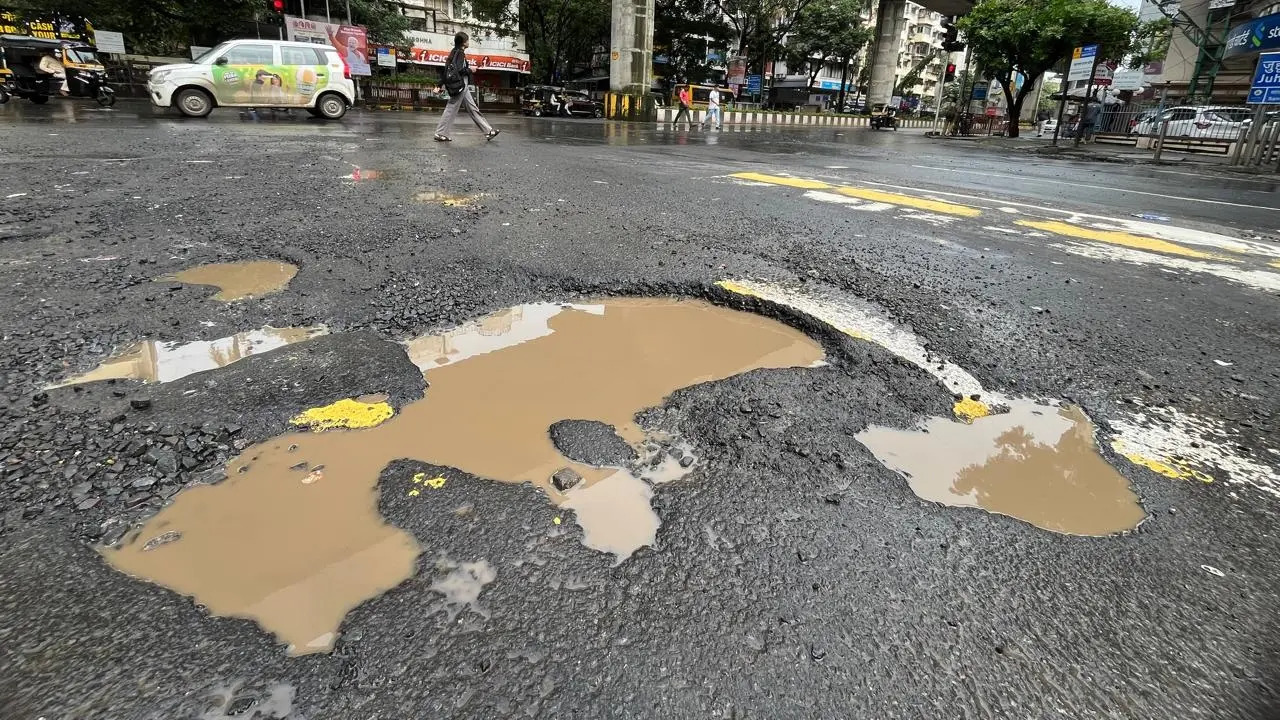
Kalyan Dombivli Roads Struggle Under Monsoon Damage
Kalyan-Dombivli’s deteriorating road network is coming under renewed scrutiny as potholes and damaged surfaces disrupt movement across key commuter routes during the monsoon. The condition of roads near the civic administration’s official residential area and along the Ramdaswadi-Kalyan railway station corridor has intensified concerns over road safety, maintenance standards and whether temporary repairs can withstand increasingly heavy rainfall. The damage is particularly significant for two-wheeler users, who face greater exposure to sudden changes in road levels, standing water and slippery surfaces. Deep potholes can also slow traffic, increase vehicle wear and create bottlenecks on roads that connect residential neighbourhoods with railway stations and commercial areas.
Residents have raised concerns about the pace and durability of repairs, while a former civic representative has questioned whether repeated complaints have translated into effective action. The criticism reflects a wider problem for growing urban regions: road maintenance is often treated as a short-term monsoon response rather than part of a planned asset-management system. The Kalyan Dombivli potholes issue is also linked to the quality of road construction and restoration. Frequent digging for utilities, inadequate drainage and repeated patching can weaken surfaces and create a cycle in which newly repaired sections deteriorate soon after rainfall. Urban infrastructure specialists say roads need coordinated drainage, utility and resurfacing plans rather than isolated pothole filling. KDMC has attributed much of the current deterioration to persistent rainfall. Its city engineering department has said scraping and rolling work is being carried out at affected locations to keep roads usable during the wet season. Comprehensive restoration using Mastic Asphalt and Modified Premix Macadam is planned after the monsoon, with the tender process already completed.
The distinction between temporary and permanent intervention matters for public spending. Repeated emergency repairs can increase maintenance costs while leaving commuters exposed to the same hazards. A more durable approach would combine road resurfacing with drainage inspections, quality checks and monitoring of previously repaired stretches. The Kalyan Dombivli potholes problem also has implications beyond traffic. Poor roads can raise fuel consumption through slower journeys, increase vehicle maintenance expenses and affect access to public transport. For workers travelling daily to railway stations and employment centres, unreliable road conditions translate into additional time and financial costs. The immediate challenge is managing safety through the remainder of the monsoon. Damaged stretches need clear identification, temporary hazard controls and prioritised repairs, particularly where potholes are deep or located near junctions and transport hubs.
The larger test will come after the rains, when KDMC begins permanent restoration. The quality of that work, alongside stronger drainage and preventive maintenance, will determine whether the city breaks the cycle of repeated monsoon road failures or simply prepares for another round next year.