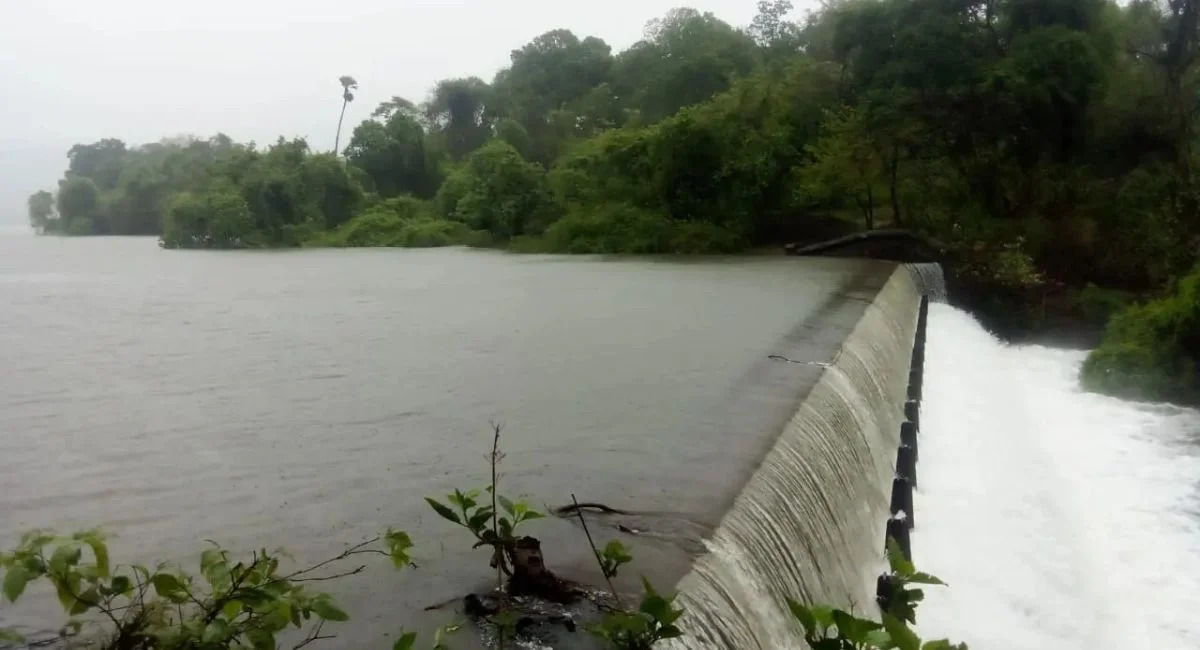
Mumbai’s water position has strengthened sharply as the seven reservoirs supplying the city climb to 95.53% of their combined capacity. Yet the civic administration has retained the existing 10% water cut, signalling that near-full lakes alone will not determine when restrictions are removed. The decision puts long-term supply security ahead of immediate easing, while keeping household consumption, rainfall patterns and reservoir management firmly in focus. The latest storage level represents a substantial improvement in Mumbai’s water position after a monsoon that has steadily replenished the city’s principal reservoirs. With the lakes now holding almost their full combined capacity, the immediate risk of a severe supply shortage has eased.
However, the Mumbai water cut remains in place as the Brihanmumbai Municipal Corporation continues to assess how much water can be safely allocated through the rest of the year. A senior civic official indicated that reservoir inflows, future rainfall and available stock would remain important factors before restrictions are reconsidered. For residents, the decision may appear difficult to reconcile with reservoirs being close to full. But water security is not determined only by the percentage visible in a reservoir. The civic system must account for evaporation, treatment capacity, distribution losses, seasonal rainfall variability and demand across households, commercial establishments and industries. The Mumbai water cut also highlights the limits of relying heavily on monsoon rainfall to secure an increasingly water-intensive metropolis. Mumbai’s population, commercial activity and expanding built environment continue to place pressure on a distribution network that must deliver water consistently across a dense and unequal urban landscape.
Urban planners and water-management specialists have increasingly emphasised demand management alongside expanding supply. Reducing avoidable leakage, improving monitoring of consumption and encouraging efficient water use in large residential and commercial developments can help reduce pressure on municipal resources. Rainwater harvesting and wastewater reuse can also provide supplementary sources for non-potable applications such as landscaping and flushing. The current reservoir position nevertheless provides the city with a stronger buffer than earlier in the monsoon. Maintaining restrictions despite that improvement gives the administration additional room to respond if rainfall weakens or inflows decline unexpectedly. For households and businesses, the immediate message is therefore one of continued conservation rather than a return to unrestricted consumption. The next decision will depend not simply on reaching a full-reservoir benchmark, but on whether Mumbai can maintain adequate reserves while managing demand through the drier months.
The episode underscores a broader urban lesson: reliable water supply requires both sufficient storage and disciplined management. As climate variability makes rainfall less predictable, Mumbai’s long-term resilience will increasingly depend on how efficiently it uses every unit of water available.