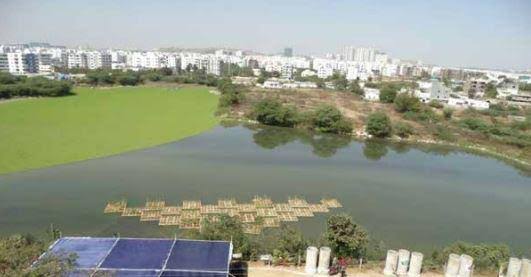
HYDERABAD: Hyderabad is preparing a temporary water-management system at selected lakes ahead of Ganesh Utsav, with authorities planning smaller immersion ponds to reduce pressure on the city’s main water bodies. The move comes as lake restoration gains importance across the city, where pollution, sewage inflows and encroachments continue to threaten urban water systems.
The Hyderabad Disaster Response and Assets Protection Agency (HYDRAA) plans to create “baby ponds” at lakes to provide designated spaces for idol immersion. The objective is to prevent immersion-related material from directly entering larger water bodies and to make post-festival cleaning and management more manageable. The intervention also brings attention to the material used to make idols. HYDRAA has encouraged organisers of large celebrations to consider clay idols instead of plaster of Paris (PoP). While clay idols are already used by many households, producing larger clay idols for major community celebrations remains a practical challenge. Technology and improved manufacturing methods could help address that gap. Developing stronger techniques for producing large clay idols could allow community celebrations to retain their scale while reducing the environmental burden associated with immersion.
The issue is significant because Hyderabad’s lakes serve functions beyond recreation. They form part of the city’s natural drainage network and can temporarily hold stormwater during heavy rainfall. Their degradation can therefore affect both water quality and flood resilience. HYDRAA is simultaneously pursuing wider lake restoration measures, including removing encroachments and clearing accumulated silt. The agency has also outlined plans to prevent sewage from reaching water bodies through sewage treatment facilities near lakes. For urban planners, the festival presents a test of whether environmental management can work alongside Hyderabad’s cultural calendar. Temporary infrastructure can reduce immediate pressure, but long-term lake protection requires better sewage management, catchment protection and control of activities around lake boundaries.
Environmental groups have also urged residents and festival organisers to choose more sustainable immersion practices. Several voluntary organisations have offered clay idols and discussed ways to increase their use during the festival. The broader challenge is to ensure that festival-related measures complement, rather than undermine, ongoing lake restoration. If temporary immersion ponds are properly managed and supported by responsible waste collection, they could provide a practical model for handling large public celebrations around sensitive water bodies. For Hyderabad, protecting lakes will ultimately require year-round action. Ganesh immersion management can reduce seasonal pollution, but restoring the city’s water network will depend on sustained efforts to control sewage, protect catchments and keep development away from vulnerable lake systems.