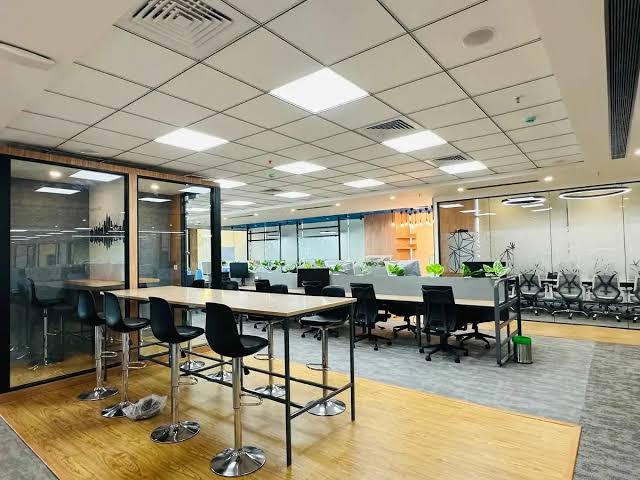
HYDERABAD: Hyderabad’s global capability centre market is entering a more mature phase as international businesses expand specialised operations in the city. The latest addition is a 120,000 sq ft facility in the Financial District, highlighting continued demand for large, technology-enabled workplaces while also increasing the need for efficient transport, inclusive offices and resilient urban infrastructure.
The new centre, operated by JLL Business Services, occupies two floors at Prestige Sky Tech and is expected to scale to about 1,600 employees over the next two years. It is the organisation’s second Indian hub after Gurugram and will support functions ranging from finance and human resources to analytics, project management, lease administration and technology-enabled services. The development is part of a wider shift in Hyderabad’s commercial property market. The city accounted for 16% of India’s GCC leasing activity between 2024 and mid-2026, while GCCs represented 42% of Hyderabad’s overall office leasing during the period, according to figures published with the project announcement. The composition of this demand is also changing. Financial services and insurance accounted for 34.5% of Hyderabad’s GCC activity, followed by technology at 23.2%, healthcare and biotechnology at 17% and engineering research and development at 12.1%. The mix points to a broader knowledge economy rather than an office market dependent solely on traditional IT services.
For commercial real estate, this trend can support sustained demand for modern office buildings and related services. But the economic value of GCC growth increasingly depends on the quality of the urban environment around these workplaces. A growing concentration of high-value employment in the Financial District can intensify peak-hour travel, housing demand and pressure on public infrastructure. Employees commuting from distant parts of the metropolitan region can also increase road congestion and transport-related emissions if public transport and last-mile connectivity do not keep pace. Workplace design is becoming another part of the equation. The new facility is LEED-certified and includes accessibility features, wellness spaces, natural lighting and flexible work areas. Such elements reflect a wider expectation that commercial buildings should support employee wellbeing while using resources more efficiently.
The expansion also has implications for Hyderabad’s employment base. The facility has already onboarded more than 150 employees and is recruiting across multiple functions, with the workforce expected to grow substantially. As more GCCs choose Hyderabad, the city’s challenge will be to convert office-led investment into broader urban value. Coordinated transport planning, housing options closer to employment centres, energy-efficient buildings and accessible public spaces will be important if the next wave of knowledge-sector growth is to remain economically productive and environmentally sustainable.