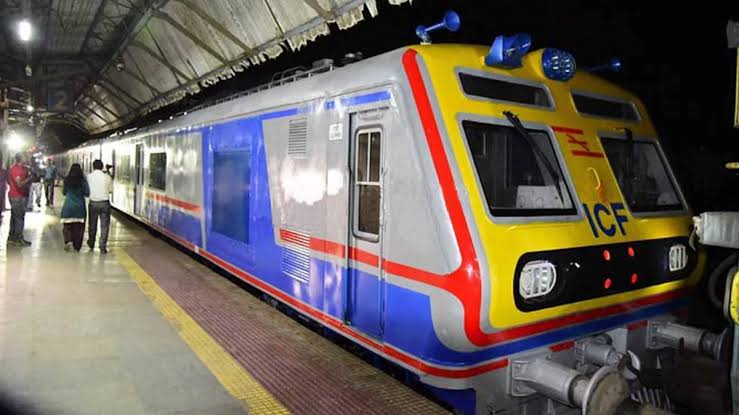
Mumbai Local Train Routes Shift During Maintenance
Mumbai’s suburban rail network will undergo a major maintenance window on Sunday, August 16, affecting services across the Central and Harbour corridors. Fast trains between Thane and Kalyan will be diverted, while Harbour services between Vashi and Panvel will see cancellations. The disruption highlights the operational trade-off facing one of the country’s busiest urban rail systems: infrastructure must be maintained even as millions depend on frequent services for affordable daily mobility. The Mumbai local train network will see its most significant changes on the Central Line between Thane and Kalyan. Both fast tracks will be unavailable from 10:40 am until 3:10 pm. Fast and semi-fast services will instead use the slow tracks, adding stops at stations including Kalva, Mumbra, Diva, Kopar, Dombivli and Thakurli.
For passengers, the operational effect is expected to be modest on individual services but potentially significant across the network. Diverted trains are expected to run about 10 minutes behind schedule. Additional stops will also change journey patterns for commuters travelling through the densely populated central and eastern suburbs. The Harbour Line will face a longer service restriction. The Vashi–Panvel section will remain blocked between 11:05 am and 4:05 pm, resulting in cancellations for several services connecting Panvel and Belapur with Chhatrapati Shivaji Maharaj Terminus. Special services between CSMT and Vashi are planned to provide an alternative during the disruption. Trans-Harbour passengers will also have fewer options during the same period. Services will operate only between Thane and Vashi, leaving passengers travelling towards Panvel without the usual direct train connection. This makes interchange planning particularly important for journeys involving Navi Mumbai.
The Mumbai local train system routinely requires such maintenance windows because tracks, signalling, overhead equipment and other railway assets operate under exceptionally high utilisation. Carrying out engineering work during lower-demand periods can reduce the operational risk associated with ageing or heavily used infrastructure. There is also a wider sustainability dimension. Rail remains one of Mumbai’s most important mass-transit systems, carrying large volumes of passengers without the road-space and fuel requirements associated with equivalent private-vehicle journeys. Maintaining reliability is therefore central to keeping people on public transport, particularly as the metropolitan region continues to expand. The disruption also demonstrates why predictable passenger information matters as much as physical infrastructure. Clear advance communication, well-managed interchange points and adequate alternatives can reduce the economic cost of maintenance for workers, students and businesses.
There is no scheduled mega block on the Western Railway suburban network on Sunday, while the information provided for the day indicates no comparable disruption on the Uran corridor. For commuters, the practical priority is to allow additional time and check the latest railway updates before travelling. For Mumbai’s transport planners, the longer-term challenge is ensuring that essential maintenance can continue without undermining the reliability that makes suburban rail indispensable to the city.