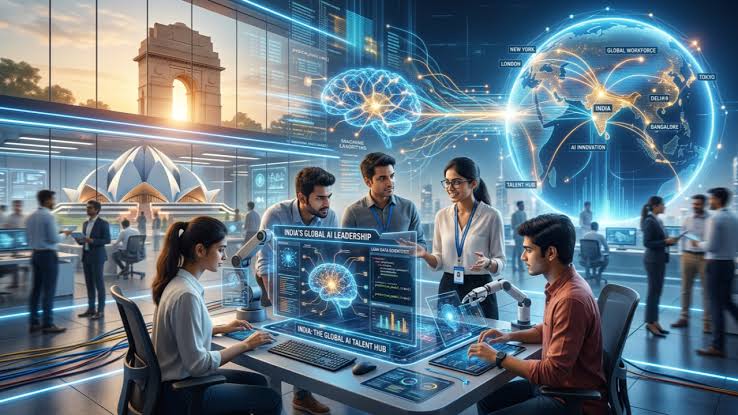
Bengaluru is strengthening its position as a technology and skills hub with the launch of a new artificial intelligence laboratory at MIT Bengaluru. The facility is designed to expand access to emerging technology skills and support practical learning, reflecting a broader shift in India’s technology sector towards building a workforce capable of working with rapidly evolving AI systems.
The laboratory is being established through a collaboration between MIT Bengaluru and IBM, with the initiative focused on making AI-related learning more accessible to students and professionals. Its stated areas of work include training, applied research and exposure to technologies that are increasingly influencing business and public services. The development comes as demand for AI skills expands across sectors. Companies are adopting automation and generative AI for software development, customer services, analytics and business operations, while government agencies are also exploring applications in areas such as urban management and public infrastructure. For Bengaluru, the significance goes beyond the technology industry. The city has one of India’s largest concentrations of technology workers, but access to high-value digital skills remains uneven. Students from smaller institutions and people seeking to transition into technology-intensive occupations can face barriers involving training costs, equipment and exposure to industry-standard tools. The new lab’s emphasis on wider access could therefore be important if it reaches learners beyond established technology networks. Affordable training, practical projects and partnerships with educational institutions can help reduce the gap between formal qualifications and the skills employers increasingly seek.
The initiative also highlights a growing relationship between universities and industry. Traditional classroom-based programmes can struggle to keep pace with rapidly changing technologies, while companies need workers who understand both technical systems and their practical applications. Shared laboratories can provide a bridge between academic learning, experimentation and workplace requirements. For Bengaluru’s wider economy, developing those capabilities could support entrepreneurship and employment in areas extending beyond software services. AI-enabled systems are increasingly relevant to manufacturing, healthcare, finance, logistics, energy management and urban infrastructure, creating potential opportunities for workers with interdisciplinary skills. There is also a sustainability dimension. AI can support better forecasting, energy management and resource allocation, but its growing use brings additional computing and electricity requirements. Responsible technology development will therefore require attention not only to skills and innovation but also to efficient infrastructure and environmental costs. The impact of the new facility will ultimately depend on who can use it and what opportunities follow training.
If access extends to a diverse pool of learners and connects skills development with real employment and research pathways, Bengaluru could strengthen its technology workforce without deepening existing inequalities in access to opportunity. As AI becomes embedded across the economy, the city’s competitiveness will increasingly depend not simply on attracting technology companies, but on building a broad and adaptable talent base capable of using these systems responsibly.