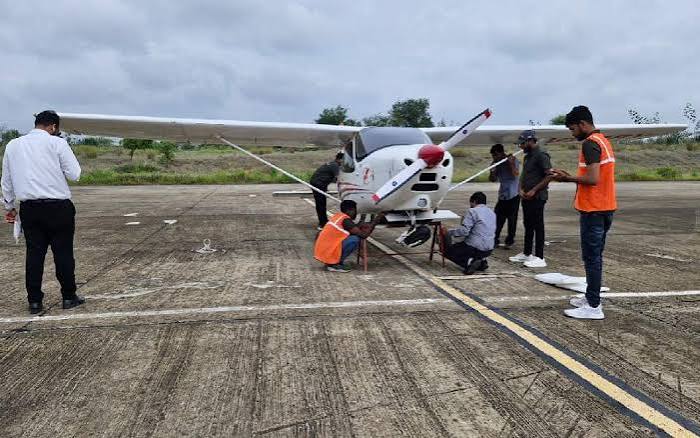
Pune Baramati Trainer Aircraft Landing Raises Safety Review
A trainee aircraft made a forced landing near Gojubavi village in Pune district’s Baramati area after developing a technical issue during a solo training flight, prompting aviation authorities to begin an assessment of the incident. The student pilot escaped without injuries, but the event has renewed attention on safety standards at flight training centres operating in rapidly developing aviation zones.
The aircraft, operated by a flight training academy based near the Baramati airstrip, encountered difficulties during a routine training exercise on Wednesday morning. According to officials, the trainee pilot managed to bring the aircraft down in an open area, though the aircraft sustained damage during the landing. The Directorate General of Civil Aviation (DGCA), the country’s aviation safety regulator, has initiated a technical investigation to determine the cause of the malfunction and examine whether operational procedures were followed. Investigators are expected to review aircraft maintenance records, flight data and other operational details as part of the assessment. The incident has brought renewed focus on Pune aviation safety as Baramati continues to emerge as an important aviation training location. Flight training organisations depend on consistent infrastructure, reliable aircraft maintenance systems and effective emergency response mechanisms to ensure safe learning environments for student pilots.
Aviation experts said training aircraft operate frequently through repeated take-offs and landings, placing additional importance on preventive maintenance and strict monitoring protocols. Unlike commercial aviation, where aircraft undergo scheduled operations with larger support systems, training environments require close coordination between instructors, maintenance teams and regulators. The Baramati region has previously witnessed incidents involving training aircraft, making safety oversight a key consideration as aviation activity expands beyond major metropolitan airports. Industry observers said that growth in pilot training capacity must be matched with investments in safety infrastructure, airfield management and regulatory compliance. The Pune aviation safety framework is also connected to broader regional development trends. As smaller cities and peripheral urban areas attract aviation-related activities, authorities must balance economic opportunities with responsible infrastructure planning. This includes ensuring that flight operations consider surrounding communities, land use patterns and emergency preparedness.
Officials involved in the latest incident said the aircraft had damage to components following the landing, while the student pilot remained safe. Further findings will depend on the outcome of the regulatory investigation. The event highlights the importance of strengthening safety systems across India’s expanding aviation training network. With demand for trained pilots increasing, maintaining public confidence will depend not only on growing capacity.