


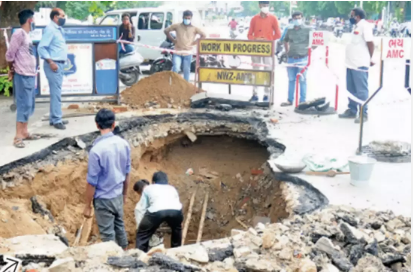
Ahmedabad, known for its sinkhole woes during monsoon seasons despite substantial infrastructural investments, faces renewed challenges as 27 sinkholes have emerged with the onset of this year’s rains. The Ahmedabad Municipal Corporation (AMC), having allocated over Rs 250 crore towards upgrading the city’s aging drainage network under a 20-year guarantee, continues to grapple with recurring sinkhole incidents, causing severe disruptions in traffic flow.
Historical data from civic authorities reveals a persistent issue: from 2013 to 2020, 460 potholes were reported, with a noticeable spike during the monsoon of 2021 and now in 2022. Last year alone, over 100 sinkholes were reported, highlighting the urgency of infrastructure upgrades. The AMC attributes these incidents to the deteriorating condition of drainage lines that have served the city for over four decades. In response, a specialized plan was devised under the AMRUT scheme to rehabilitate these aging networks, promising a long-term solution to prevent sinkholes during rainy seasons. Despite ongoing efforts over the past year, significant work remains as certain areas continue to face substantial sinkhole risks.
Western Ahmedabad is particularly affected this monsoon, with major sinkholes reported near vital locations such as the Vadaj metro station and Club O7 Road in Shela, prompting closures and diversions. Key areas like Vasna APMC and Chandrika Dairy on CG Road have also reported sinkhole formations, exacerbating local commuting challenges. The stormwater pipeline network, critical for drainage across the city, remains a focal point of concern. Aging pipelines, including those along 132ft Ring Road and from Juna Vadaj Circle to Ashram Road, are identified as hotspots for sinkhole occurrences. Of the 27 reported incidents this season, efforts have successfully repaired 18, though challenges persist in securing vulnerable areas.
As Ahmedabad navigates these infrastructure challenges, stakeholders emphasize the importance of continued investment in sustainable urban development and proactive maintenance strategies. The ongoing rehabilitation efforts under the AMC’s initiative are seen as critical steps towards ensuring safer, more resilient city infrastructure in the face of monsoon vulnerabilities.

