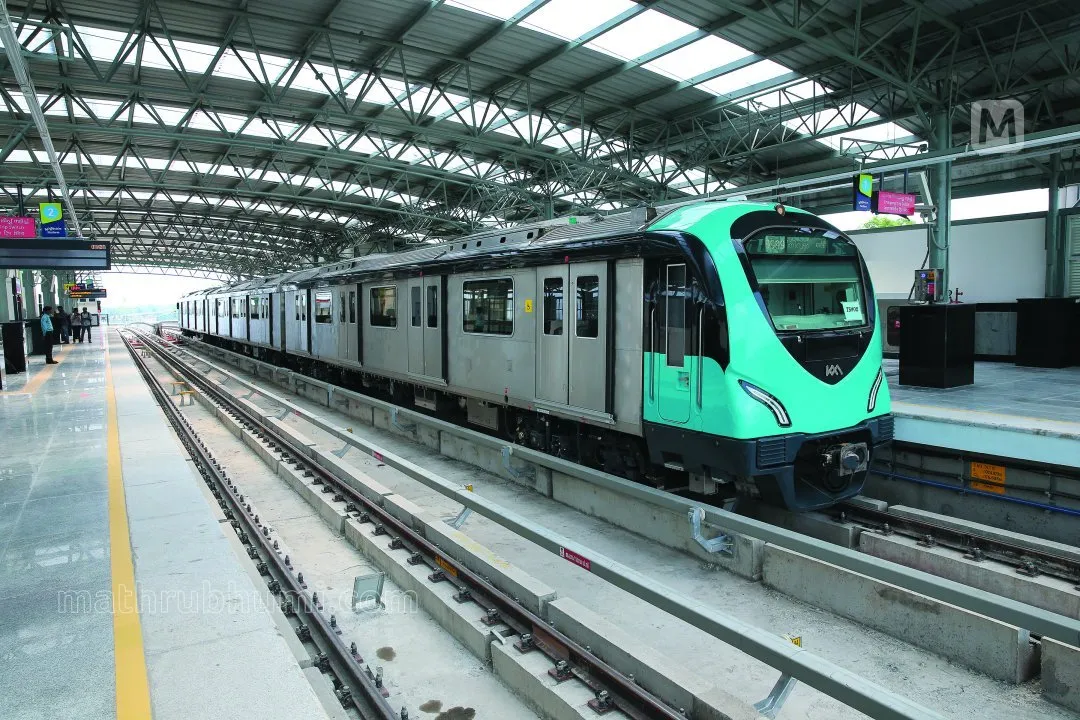
Kochi’s ambitious metro expansion towards Kakkanad is facing a fresh timeline setback, raising concerns over infrastructure financing, urban mobility planning and prolonged traffic disruption across some of the city’s busiest corridors. The proposed 11.2-km metro extension, positioned as a critical transit link connecting residential and IT growth zones, is now unlikely to meet its earlier completion target due to delays in securing international project financing.
Officials associated with the project indicated that pending financial closure linked to a major multilateral loan component has slowed construction momentum on the corridor, internally referred to as the Pink Line. The extension project, estimated at nearly ₹2,000 crore, is expected to play a major role in reducing dependence on private vehicles along eastern Kochi’s rapidly urbanising belt. Metro authorities are now working with a revised construction schedule that pushes civil completion into 2027. Safety approvals, operational testing and commercial commissioning are expected to follow only after key viaducts, stations and systems infrastructure are fully completed.
The delay highlights the growing dependence of large-scale urban mobility projects on external financing mechanisms, particularly in second-tier Indian cities attempting to build low-carbon transport networks without placing excessive pressure on state budgets. Urban economists note that delays in funding disbursement often create cascading impacts on contractor payments, labour deployment and procurement cycles, particularly for infrastructure projects operating under fixed engineering timelines. A senior official familiar with the development said efforts are underway to secure the pending loan tranche required to accelerate pending civil and systems work. Contractors have reportedly been assured of payment continuity to prevent further slowdown before the onset of the southwest monsoon, a period that traditionally affects construction productivity in Kerala.
Beyond project execution concerns, the prolonged construction phase is increasingly affecting daily mobility within Kochi. Barricaded work zones across key arterial stretches including Kaloor, Palarivattom, Civil Line Road and Seaport-Airport Road have intensified congestion pressures, especially during peak commuting hours. Traffic management officials and urban planners warn that delayed reduction of construction footprints in dense urban corridors is affecting emergency access, public transport efficiency and fuel consumption. In several stretches, narrowed carriageways have become bottlenecks for buses, freight vehicles and ambulances, exposing the absence of integrated traffic mitigation planning during long-duration infrastructure works. The Kochi metro extension has been widely viewed as a strategic transport intervention for the city’s eastern growth corridor, particularly with Kakkanad emerging as a major employment and technology hub. Experts argue that improving mass transit connectivity remains essential for reducing transport emissions, limiting urban sprawl and supporting more sustainable real estate growth patterns. However, transport specialists caution that public confidence in mass mobility systems depends not only on eventual delivery but also on predictable execution timelines and minimised disruption during construction. With trial operations and safety clearances now expected only after major structural works conclude, the coming year will be crucial in determining whether Kochi can align its mobility ambitions with the realities of financing, construction management and citizen-centric urban planning.