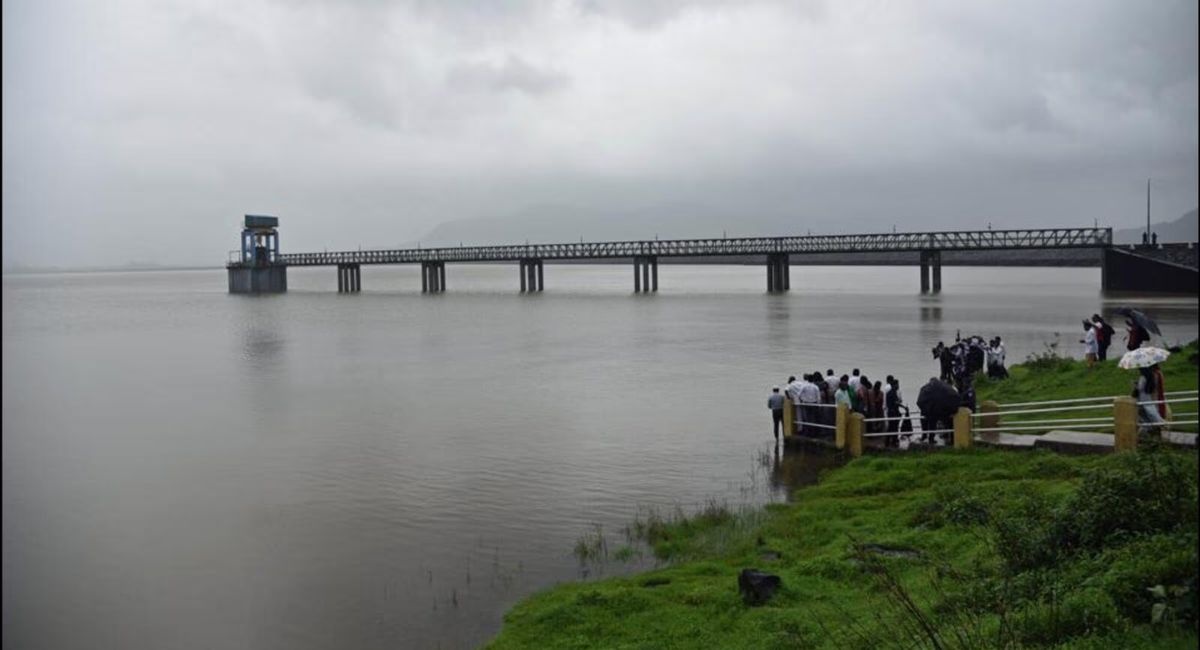
Navi Mumbai’s primary water source is under mounting pressure ahead of the monsoon season, with civic authorities warning that available reserves in the Morbe reservoir may sustain the city for less than three months if current consumption patterns continue. The alert has intensified concerns around urban water security across the Mumbai Metropolitan Region as forecasts point towards delayed rainfall and weaker monsoon activity linked to El Niño conditions. Officials from the Navi Mumbai Municipal Corporation have begun reviewing contingency measures after reservoir levels dropped sharply during the peak summer period. According to civic estimates, the usable stock in the Morbe dam has fallen to nearly one-fifth of its full storage capacity after accounting for mandatory emergency reserves.
The Morbe Dam Water Crisis has emerged at a sensitive moment for one of India’s fastest-growing urban corridors, where rising residential density, commercial expansion and infrastructure growth continue to increase demand for drinking water. Urban planners say the situation highlights the growing vulnerability of metropolitan regions that remain heavily dependent on seasonal rainfall and single-source reservoir systems. Municipal officials have indicated that future decisions on water distribution and conservation measures may become unavoidable if rainfall activity remains below expectations over the coming weeks. The India Meteorological Department has projected a delayed monsoon onset along with rainfall levels below the long-period average, raising fears of prolonged supply stress across the region. At present, Navi Mumbai draws nearly 477 million litres of raw water daily from the reservoir while treated water is distributed through more than 1.27 lakh consumer connections across residential, commercial and institutional zones. Several rapidly urbanising nodes, including Belapur, Vashi, Nerul, Ghansoli and Airoli, depend heavily on the Morbe system for daily supply. The Morbe Dam Water Crisis also underscores wider concerns around climate resilience and urban infrastructure preparedness in large Indian cities.
Water experts note that changing rainfall patterns, erratic monsoon cycles and rising heat stress are increasingly disrupting conventional reservoir management strategies. Cities dependent on monsoon-fed dams may face more frequent supply volatility unless investments in water recycling, leakage reduction and decentralised storage systems accelerate. Adding to the challenge, the civic body is simultaneously undertaking maintenance work on key water infrastructure before the monsoon season. A scheduled shutdown of supply systems for repairs and pipeline upgrades is expected to affect multiple parts of Navi Mumbai in the coming days. Officials monitoring reservoir conditions say replenishment remains uncertain because catchment rainfall may not be sufficient to fully restore storage levels this year. Historical trends indicate the reservoir typically requires sustained rainfall across the monsoon months to recover completely, but weaker precipitation forecasts have complicated planning assumptions.
Urban policy analysts believe the situation could serve as an early warning for metropolitan authorities across India. As cities expand rapidly into climate-sensitive regions, future infrastructure planning may need to prioritise long-term water resilience alongside transport and real estate growth. For Navi Mumbai, the coming monsoon will now play a decisive role not only in restoring reservoir levels but also in shaping how aggressively the city must manage water demand over the next year.