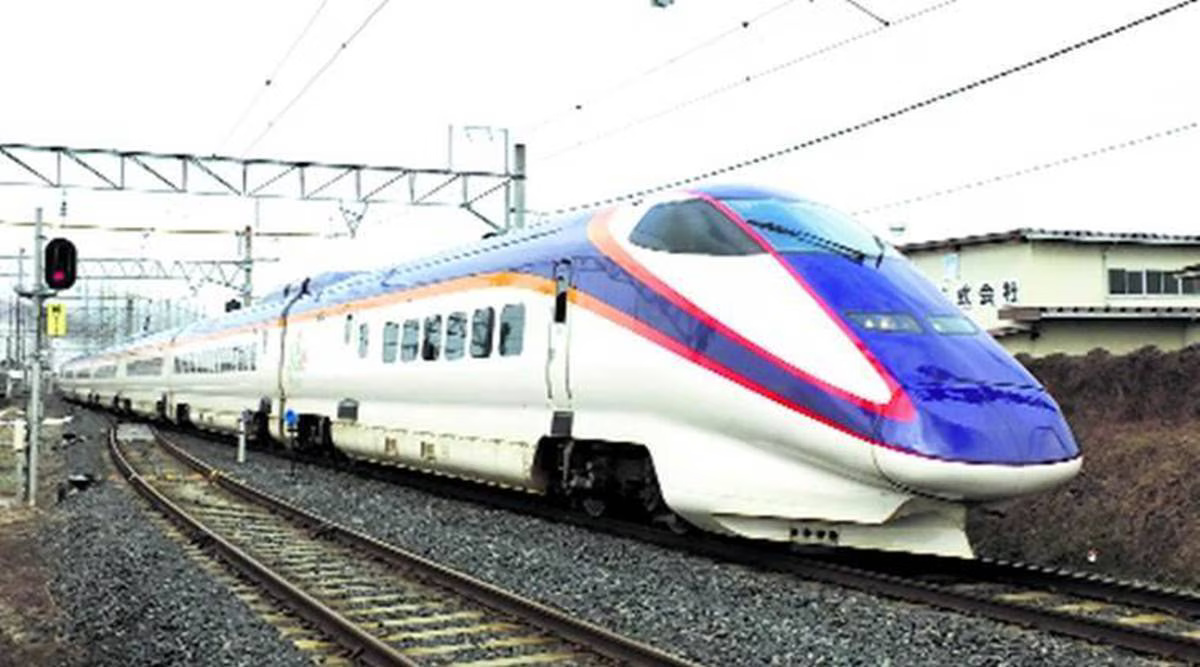
India’s expanding push towards faster intercity rail mobility is set to reshape travel between Bengaluru and Mumbai, with a new superfast rail service expected to significantly reduce journey times along one of the country’s most economically important corridors. Railway officials indicate that the route could eventually transition into a Vande Bharat Sleeper operation, reflecting broader efforts to modernise long-distance rail infrastructure and reduce dependence on short-haul aviation. The proposed Bengaluru Mumbai Sleeper Train is expected to reduce travel duration between the two metropolitan centres from the current 20 to 24 hours to nearly 14 to 16 hours. The route spans more than 1,100 kilometres and connects major industrial, technology and logistics clusters across Karnataka and Maharashtra.
Transport planners say improved rail connectivity between the two cities could reshape business travel patterns, especially for professionals working in the information technology, finance, manufacturing and startup sectors. Faster overnight rail systems are increasingly being viewed as a lower-emission alternative to domestic aviation on heavily travelled economic routes. The planned service is expected to pass through several urban and semi-urban centres including Tumakuru, Davanagere, Hubballi-Dharwad, Haveri and Belagavi, strengthening mobility across emerging regional growth corridors. Urban economists note that improved rail infrastructure often creates secondary economic benefits by enhancing labour mobility, tourism activity and regional trade integration. The Bengaluru Mumbai Sleeper Train also aligns with Indian Railways’ larger transition towards next-generation passenger systems equipped with higher safety and operational standards. Railway officials have indicated that the corridor may later adopt Vande Bharat Sleeper technology designed specifically for long-distance overnight journeys exceeding 1,000 kilometres. Unlike existing semi-high-speed chair car services, sleeper-based systems are being positioned as a hybrid model that combines airline-style amenities with the affordability and accessibility of rail transport. Proposed onboard features include multiple air-conditioned travel classes, digital passenger information systems, automated doors, advanced surveillance networks and indigenous safety technologies.
Railway infrastructure experts say the development reflects a larger shift in India’s transportation strategy, where high-capacity rail corridors are increasingly seen as critical to sustainable urban growth. With aviation traffic rising sharply between Bengaluru and Mumbai, a faster overnight rail option could help reduce pressure on airports while offering a more energy-efficient transport alternative. The corridor’s economic significance extends beyond passenger travel. Mumbai and Bengaluru together anchor major segments of India’s financial services, technology exports, research industries and startup ecosystem. Improved rail efficiency between the two cities could support greater regional integration while also strengthening connectivity for Tier-2 cities located along the route. Urban mobility analysts caution, however, that long-term success will depend on maintaining punctuality, operational reliability and seamless multimodal integration at both terminal cities.
Investments in station redevelopment, last-mile connectivity and transit-oriented planning are likely to play an equally important role in shaping commuter adoption. As India accelerates investments in high-speed and semi-high-speed rail infrastructure, the Bengaluru-Mumbai corridor is emerging as a test case for how sustainable long-distance mobility could evolve across the country’s rapidly urbanising economic regions.