


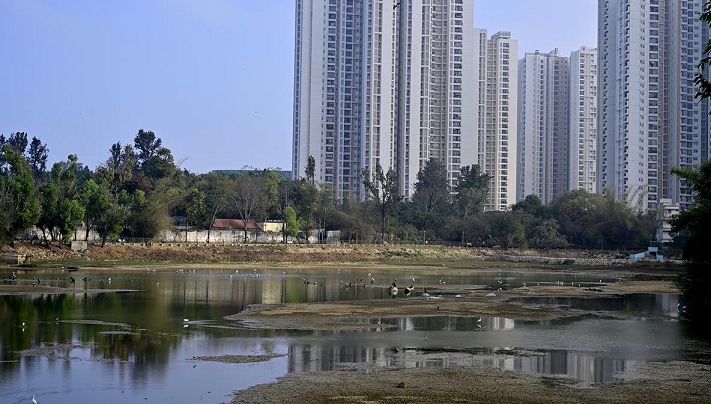
Desilting activity planned at Ulsoor Lake in Bengaluru has been temporarily halted following growing ecological concerns, highlighting the increasingly complex balance between urban restoration projects and environmental protection in rapidly expanding cities. The pause comes amid scrutiny over the potential impact of large-scale lake intervention on aquatic biodiversity, water quality, and existing wetland ecosystems.
The development has renewed debate around how Indian cities manage ageing urban water bodies that simultaneously function as drainage systems, ecological assets, public spaces, and climate buffers. Bengaluru’s lakes, once interconnected through traditional water networks, have undergone decades of degradation due to encroachment, sewage inflow, construction activity, and changing land-use patterns linked to urban development expansion.Officials associated with the project indicated that environmental considerations and technical assessments are being reviewed before further restoration activity proceeds.Urban ecologists argue that while desilting can improve water storage capacity and reduce sediment accumulation, poorly planned interventions may disturb aquatic habitats, alter ecological balance, and weaken natural regeneration systems.Ulsoor Lake remains one of Bengaluru’s most visible urban water bodies and plays an important role in local microclimate regulation, rainwater retention, and recreational activity.Environmental planners say such lakes have become increasingly valuable as the city experiences rising temperatures, surface flooding risks, and shrinking open spaces due to continued urban densification.The Bengaluru lake restoration debate also reflects broader national challenges surrounding urban ecological governance.
Across Indian cities, civic authorities are under pressure to rejuvenate lakes and wetlands to address flooding, groundwater depletion, and climate resilience goals. However, experts caution that restoration efforts often prioritise beautification and engineering works over ecological sustainability.Hydrologists emphasise that lake ecosystems are highly sensitive and require scientific planning that considers biodiversity conservation, hydrological flow patterns, native vegetation, and long-term maintenance strategies. In several cities, aggressive desilting and concrete-based redevelopment projects have faced criticism for disrupting natural wetland functions rather than restoring them.Urban policy analysts note that Bengaluru’s environmental future is closely linked to how effectively it protects and manages its remaining blue-green infrastructure. Lakes and wetlands are increasingly viewed not merely as aesthetic assets but as critical urban systems capable of reducing heat stress, supporting groundwater recharge, and improving resilience against extreme rainfall events.Citizen groups and environmental researchers have also become more active in monitoring restoration projects, reflecting growing public awareness around ecological governance and sustainable urban planning. Experts believe such participation can improve transparency and encourage more science-based decision-making in civic infrastructure projects.The temporary suspension of work may therefore signal a broader shift towards more cautious environmental oversight in urban redevelopment initiatives.
While restoration remains essential for Bengaluru’s stressed water ecosystems, specialists argue that future interventions must balance engineering efficiency with ecological sensitivity.As climate pressures intensify and urban land becomes increasingly contested, the management of lakes such as Ulsoor is likely to become central to conversations around sustainable city planning, environmental resilience, and the long-term liveability of India’s metropolitan regions.
Also Read:Bengaluru Rail Expansion Delay Impacts Urban Mobility Plans
