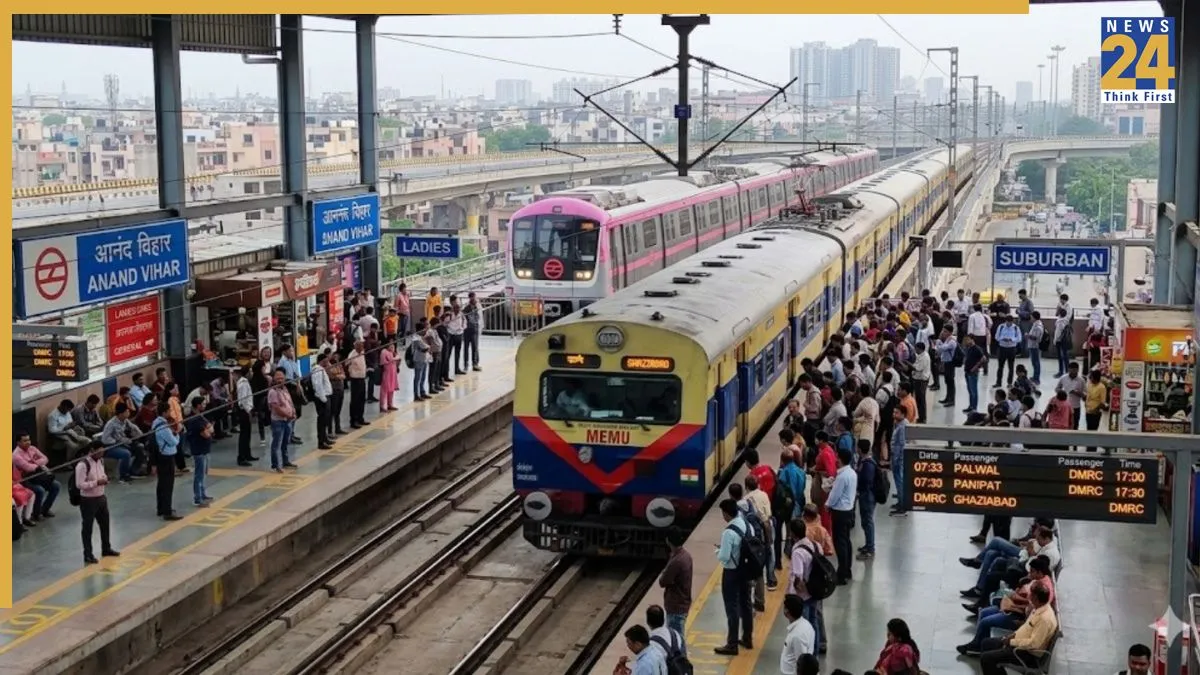
Faridabad Rail Delays Disrupt Daily Passenger Movement
Faridabad: Persistent train delays across key rail corridors passing through Faridabad are disrupting daily mobility for thousands of passengers, exposing long-standing gaps in regional transport reliability within the National Capital Region. The recurring disruptions have affected office commuters, students, and intercity travellers, while also raising concerns around the resilience and efficiency of public transport systems in rapidly urbanising cities.
Passengers at major railway stations in Faridabad reported extended waiting periods and uncertainty over revised schedules as multiple trains operated behind time over recent days. Crowded platforms, delayed announcements, and inadequate passenger information added to commuter stress, particularly during peak travel hours. Railway officials indicated that operational congestion on heavily used routes, combined with network pressure and maintenance-related constraints, contributed to the delays. Transport experts note that Faridabad’s growing dependence on rail connectivity reflects wider challenges facing NCR cities where population growth has outpaced mobility infrastructure upgrades. The train delays come at a time when regional authorities are attempting to encourage greater use of public transport to reduce vehicular congestion and urban emissions. However, irregular railway operations risk weakening public confidence in sustainable transit systems, especially for residents who rely on rail services for affordable daily travel between Faridabad, Delhi, and neighbouring industrial hubs.
Urban mobility analysts argue that unreliable train operations carry broader economic consequences beyond commuter inconvenience. Delayed arrivals can affect workforce productivity, increase informal transport costs, and place additional pressure on already congested road networks as passengers shift towards private vehicles or app-based mobility services. In industrial regions such as Faridabad, where manufacturing and service-sector workers depend heavily on predictable transit schedules, recurring disruptions can impact business efficiency and labour movement. Commuters also highlighted concerns regarding passenger amenities during long waiting periods. Limited seating capacity, overcrowded waiting areas, and insufficient real-time communication were among the key issues observed at stations. Several travellers said delays became particularly difficult for elderly passengers, women travelling alone, and families with children.
Infrastructure planners believe the situation underlines the urgent need for integrated regional mobility planning across NCR cities. Investments in signalling modernisation, dedicated rail corridors, improved station management systems, and multimodal connectivity are increasingly seen as essential for ensuring reliable urban transport in high-density growth zones. The issue also reflects the broader challenge of building climate-resilient and people-centric transport infrastructure in expanding metropolitan regions. Efficient railway systems remain central to reducing carbon-intensive road traffic and supporting equitable access to jobs and services. Railway authorities are expected to continue operational reviews and scheduling adjustments in the coming weeks. For daily passengers in Faridabad, however, the immediate expectation remains simple predictable travel, transparent communication, and a public transport system capable of matching the pace of urban growth.