


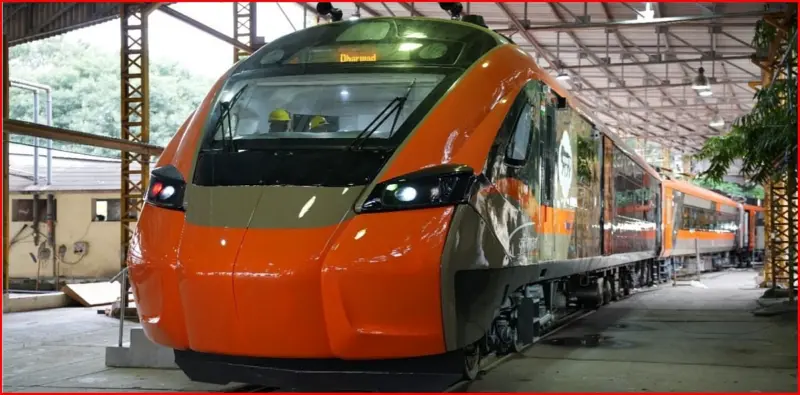
A new long-distance sleeper rail connection between Guwahati and Kolkata is expected to strengthen mobility across eastern and northeastern India, offering faster overnight travel while improving economic and social connectivity between two major regional centres. Railway officials are preparing to introduce a Vande Bharat sleeper service on the corridor, a move seen as part of a wider strategy to modernise intercity rail infrastructure and reduce dependence on short-haul air and road travel.
The proposed Vande Bharat sleeper service is likely to serve thousands of passengers travelling regularly for education, healthcare, employment and trade. The Guwahati–Kolkata corridor remains one of the busiest passenger routes in eastern India, yet existing services often face overcrowding and long travel durations. Transport analysts say the addition of a modern overnight train could improve travel reliability while easing pressure on conventional rail services.Urban planners believe the new Vande Bharat sleeper route may also influence regional economic integration. Kolkata functions as a major logistics, financial and institutional hub for much of the Northeast, while Guwahati continues to emerge as a gateway city for trade, tourism and services. Improved rail mobility between the two cities could support business movement, tourism flows and labour mobility across multiple states.The introduction of the Vande Bharat sleeper service reflects a broader shift in India’s rail strategy towards higher-speed, energy-efficient intercity travel. Compared with air travel and long-distance private vehicle use, rail systems generally produce lower per-passenger emissions, particularly on heavily travelled corridors. Mobility experts note that expanding comfortable overnight rail options can contribute to climate-conscious transport planning if integrated effectively with local transit systems.
However, infrastructure specialists caution that premium rail modernisation must also remain accessible to middle-income and lower-income travellers. Affordable fares, multimodal connectivity and station accessibility will play a critical role in determining whether the service delivers broader public value beyond speed and convenience. Connectivity to local bus systems, metro networks and non-motorised transport routes will be essential for seamless urban movement at both ends of the corridor.The proposed service also arrives at a time when cities across eastern India are facing growing mobility pressures linked to rapid urbanisation. Congested highways, rising fuel consumption and increasing aviation demand have pushed policymakers to revisit rail-led regional transport models. Experts argue that strengthening overnight rail networks can improve transport resilience while supporting more balanced urban growth.Railway infrastructure upgrades linked to the Vande Bharat sleeper corridor are expected to improve operational efficiency and passenger amenities over time. Yet implementation timelines, scheduling coordination and maintenance capacity will remain important factors in ensuring long-term reliability.
For passengers, the upcoming Vande Bharat sleeper connection could reduce travel fatigue and improve overnight mobility between two economically significant regions. For policymakers, it represents another test of whether modern rail investments can simultaneously deliver speed, sustainability and equitable regional access in India’s expanding urban landscape.
Read More : West Bengal Infrastructure Debate Shapes Kolkata Growth
