


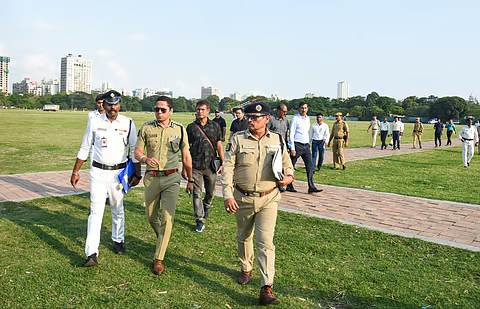
Kolkata is undergoing one of its largest coordinated civic and security deployments in recent years as authorities prepare for a high-profile government swearing-in ceremony expected to draw political leaders, administrators and large public gatherings across the city. The extensive arrangements highlight how major political events increasingly shape urban mobility, emergency management and civic infrastructure planning in densely populated metropolitan centres.
Officials have intensified surveillance, traffic control measures and crowd-management operations across central Kolkata and adjoining administrative zones ahead of the event. Transport diversions, temporary parking restrictions and enhanced public monitoring systems are being introduced to prevent disruptions in one of India’s most congested urban regions.The scale of the preparation reflects the logistical challenges cities face when political transitions intersect with daily commuter movement. Urban mobility experts note that Kolkata’s ageing road network, combined with high pedestrian density and mixed traffic patterns, leaves limited flexibility during large-scale gatherings. In such situations, even temporary route closures can significantly affect emergency services, public transport reliability and informal economic activity.Authorities are understood to be coordinating with multiple agencies, including transport departments, municipal teams and law enforcement units, to maintain operational continuity. Officials involved in the planning process indicated that the objective is to minimise disruption while ensuring public safety around key ceremonial locations and transit corridors.
The Kolkata security deployment also underscores a broader trend in Indian cities where civic infrastructure is increasingly required to support not only population growth but also high-frequency public events and political mobilisations. Analysts say cities with stronger integrated command systems, adaptive traffic signalling and multimodal transport networks are generally better equipped to manage such pressure without paralysing everyday movement.From an urban governance perspective, the event places attention on the need for resilient public infrastructure capable of handling surges in footfall and vehicle demand. Experts argue that investments in intelligent traffic systems, pedestrian-first planning and emergency response coordination are becoming as critical as road expansion projects in metropolitan regions.Environmental planners also caution that large-scale vehicular restrictions and rerouting can increase congestion in peripheral areas if not carefully managed. Extended vehicle idling and traffic spillovers often contribute to higher local emissions, particularly in densely built neighbourhoods already facing air quality concerns. Sustainable event management practices, including greater reliance on public transport and controlled entry zones, are increasingly being recommended for major civic gatherings.Businesses operating in central commercial districts are meanwhile preparing for fluctuations in customer access and delivery schedules during the ceremony period. Street vendors and small retailers, who depend heavily on uninterrupted pedestrian movement, may experience short-term economic disruption despite heightened city activity.
The coming days will test Kolkata’s administrative coordination capacity and its ability to balance political significance with urban functionality. While the swearing-in ceremony marks an important democratic transition, urban planners believe its longer-term lesson lies in how effectively Indian cities can manage large public events without compromising mobility, safety and citizen convenience.
Read More : Kolkata Economic Reset Shapes Urban Growth Debate
