


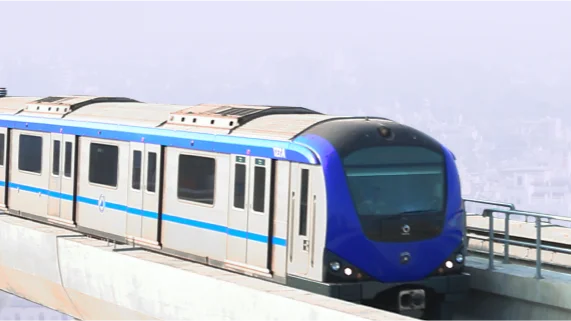
Construction activity on a critical stretch of Kolkata’s East-West transit network is set to resume this month, reviving long-delayed work on the Orange Line corridor near Chingrighata. The restart is expected to improve regional connectivity across the eastern fringes of the city while reinforcing Kolkata’s wider transition towards mass public transport-led urban growth.
The stalled section forms part of the larger Kolkata Metro Orange Line project linking New Garia with the airport corridor. Officials involved in the process indicated that work along the Chingrighata alignment is scheduled to recommence after administrative and engineering hurdles slowed progress for several months. The development carries significance for thousands of commuters travelling daily between residential neighbourhoods, commercial districts and emerging IT clusters in eastern Kolkata.Urban planners view the Kolkata Metro Orange Line as more than a transport upgrade. The corridor is increasingly seen as a strategic intervention in a city facing rising road congestion, fragmented mobility systems and uneven urban expansion. Eastern Kolkata, particularly around the EM Bypass and Salt Lake connector zones, has experienced rapid real estate and commercial growth over the past decade, often outpacing supporting infrastructure.The revival of construction activity is also expected to ease uncertainty surrounding businesses and housing projects located along the route. Delays in metro infrastructure frequently affect investment decisions, traffic circulation and land-use planning. Industry observers note that predictable execution timelines are critical in cities where transit infrastructure strongly influences property markets and economic activity.
Transport experts argue that completing the Kolkata Metro Orange Line could help reduce dependence on private vehicles across some of the city’s busiest corridors. Improved metro connectivity has the potential to lower travel times, reduce fuel consumption and modestly curb transport-related emissions. However, specialists caution that metro expansion alone cannot resolve broader mobility challenges without stronger integration with buses, pedestrian pathways and last-mile services.The Chingrighata stretch is particularly sensitive because of its location near major traffic intersections and water bodies. Infrastructure work in such dense urban environments often requires balancing engineering needs with ecological and civic considerations. Experts in sustainable planning say future transit projects in Kolkata must prioritise flood resilience, drainage protection and accessible station design as climate risks intensify across low-lying urban regions.Officials overseeing the project are also expected to manage traffic diversions and construction impacts carefully to minimise disruption for residents and businesses. Previous delays linked to utility relocation, permissions and alignment concerns highlighted the complexity of building transport infrastructure in already congested urban zones.
For daily commuters, the restart signals progress on a corridor long viewed as essential for improving east-west connectivity in Kolkata. Yet the broader success of the Kolkata Metro Orange Line will ultimately depend on how effectively it integrates with the city’s evolving mobility network and whether it can support more inclusive, low-carbon urban development in the years ahead.
Read More : Hyderabad Metro Adds 56 Trains Amid Bus Strike Chaos
