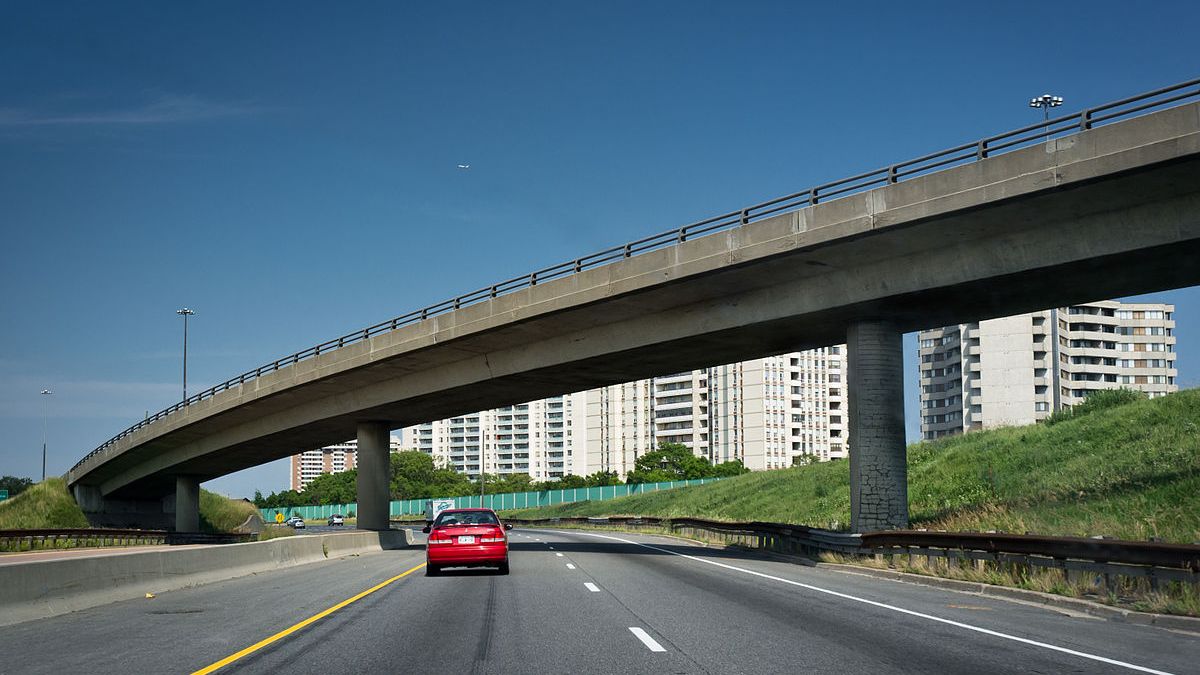
Gurugram is preparing a major road infrastructure upgrade at one of its busiest intersections, with civic authorities moving ahead on a new flyover project at Ambedkar Chowk aimed at easing chronic congestion across multiple residential sectors. The proposed corridor is expected to improve travel efficiency for thousands of daily commuters navigating the city’s expanding southern urban belt.
The Gurugram Metropolitan Development Authority has floated tenders for the construction of a four-lane flyover connecting the RD City stretch with Sohna Road through Ambedkar Chowk, a junction that links Sectors 45, 46, 51 and 52. The project, estimated to cost around ₹32 crore, is planned as part of the city’s broader mobility improvement strategy amid rapidly rising traffic volumes and intensified real estate growth in surrounding neighbourhoods. According to officials familiar with the proposal, the flyover will extend nearly 900 metres and is expected to reduce waiting times at one of Gurugram’s most overloaded traffic intersections. The junction has increasingly emerged as a pressure point due to dense residential expansion, office traffic and mixed-use development along the Sohna Road corridor.
Urban planners say the Ambedkar Chowk flyover reflects a wider shift in NCR cities where transport infrastructure is struggling to keep pace with population growth and vehicle dependency. While elevated corridors can offer immediate congestion relief, experts note that long-term mobility gains will depend on integrating road upgrades with public transport, pedestrian access and last-mile connectivity. The project also includes service lanes, pedestrian pathways, drainage systems and road safety interventions such as crash barriers and improved signage. Civic infrastructure specialists argue that these supporting elements are critical in ensuring that mobility projects are not designed solely around vehicle movement but also around safer and more inclusive urban access. Residents living in nearby sectors have frequently reported long traffic queues during peak office hours, particularly around school zones and market clusters feeding into Sohna Road. The planned flyover is expected to streamline traffic dispersal and reduce bottlenecks that currently spill into adjoining residential roads.
Officials indicated that the construction timeline has been set at two years from the start of execution. The authority is simultaneously pursuing additional traffic decongestion projects across Gurugram, including new flyover proposals and underpass infrastructure at other high-density junctions. The Ambedkar Chowk flyover comes at a time when Gurugram is witnessing accelerated urbanisation alongside mounting concerns over commute stress, fuel consumption and air pollution linked to traffic congestion. Infrastructure analysts say projects of this nature will increasingly be judged not only by their engineering scale but also by how effectively they improve urban liveability and reduce transport inefficiencies in fast-growing city regions. As construction planning advances, attention is likely to remain on execution timelines, traffic management during works and whether the project can deliver durable mobility benefits for residents navigating one of NCR’s busiest urban corridors.