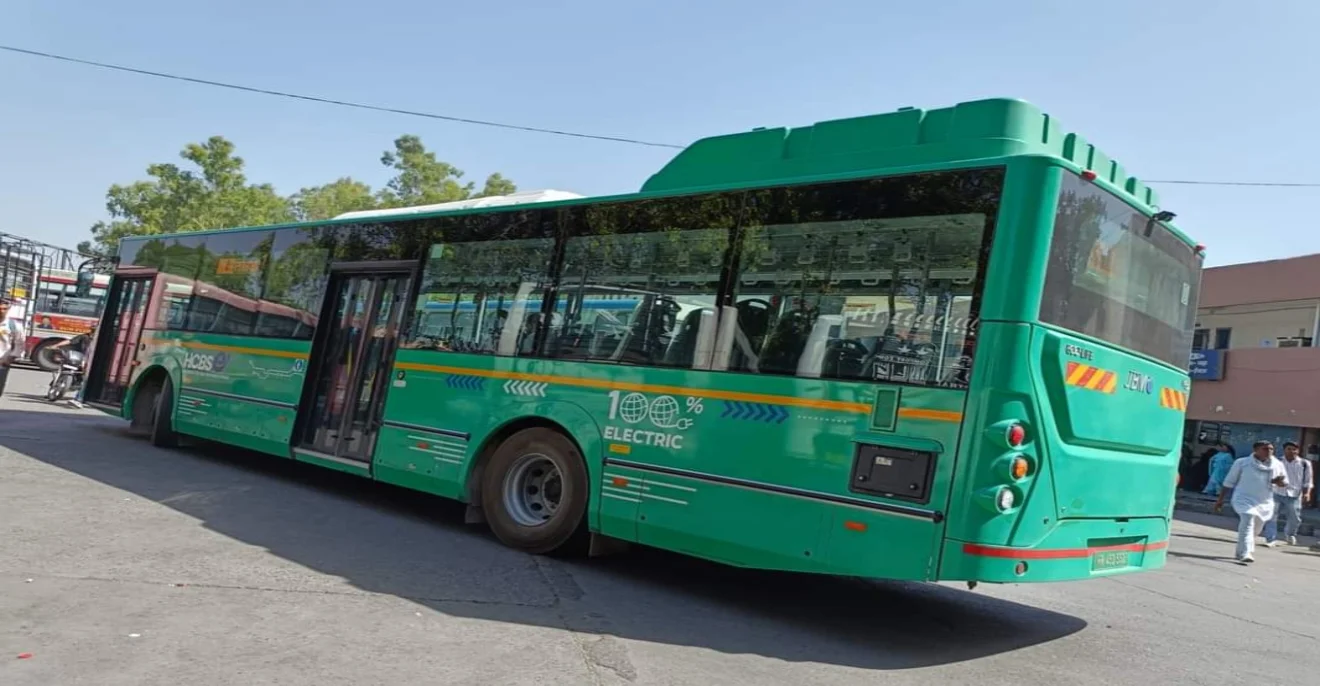
Gurugram Electric Bus Rollout Targets Cleaner Mobility
Gurugram is preparing to introduce a new fleet of air-conditioned electric buses in June, marking a significant shift in the city’s public transport strategy as authorities attempt to reduce congestion, improve commuter comfort, and lower transport-linked emissions in one of NCR’s fastest-growing urban centres.
The upcoming deployment comes at a time when Gurugram continues to struggle with rising private vehicle dependence, fragmented last-mile connectivity, and worsening summer pollution levels. Urban mobility experts say the arrival of AC electric buses could improve public transport adoption, especially among office commuters and daily travellers moving between residential sectors and commercial districts. Officials associated with the transport rollout indicated that the initial phase will prioritise high-density corridors connecting corporate hubs, residential clusters, metro stations, and institutional zones. The city’s expanding workforce and rapid real estate growth have significantly increased daily travel demand over the past decade, placing pressure on road infrastructure that was largely designed around private mobility. The electric bus programme is also expected to support Haryana’s broader clean mobility goals. Transport sector emissions remain one of the largest contributors to deteriorating urban air quality across the National Capital Region.
Policy analysts note that replacing diesel-based public fleets with electric alternatives can substantially reduce particulate pollution and operational noise in densely populated areas. For commuters, the introduction of AC electric buses may represent more than just a technology upgrade. Public transport usage in Gurugram has remained uneven due to concerns around reliability, comfort, and route integration. Climate-controlled buses with digital tracking and structured routes could encourage a behavioural shift away from private cars and app-based taxis, particularly during peak summer months when temperatures frequently exceed 40 degrees Celsius. Urban planners argue that the long-term success of the initiative will depend on infrastructure readiness rather than fleet numbers alone. Charging stations, depot capacity, dedicated maintenance systems, and integration with metro and feeder services will be critical to sustaining efficient operations. Without coordinated planning, experts caution that electric fleets risk facing the same delays and inefficiencies that affect conventional bus systems.
The AC electric buses are also expected to play an important role in improving accessibility for women, elderly passengers, and low-income commuters who rely heavily on affordable transit options. Reliable public transport remains central to inclusive urban development, particularly in rapidly expanding satellite cities where employment zones are often located far from affordable housing clusters. Industry observers believe Gurugram’s transition towards electric mobility could influence similar transport reforms across NCR cities confronting rising fuel costs, worsening congestion, and climate-related urban stress. However, they emphasise that cleaner buses alone cannot solve mobility challenges unless accompanied by safer pedestrian infrastructure, better route planning, and stronger multimodal connectivity. As Gurugram prepares for the June rollout, the project will be closely watched as a test of whether fast-growing Indian cities can balance economic expansion with cleaner and more people-centric urban mobility systems.