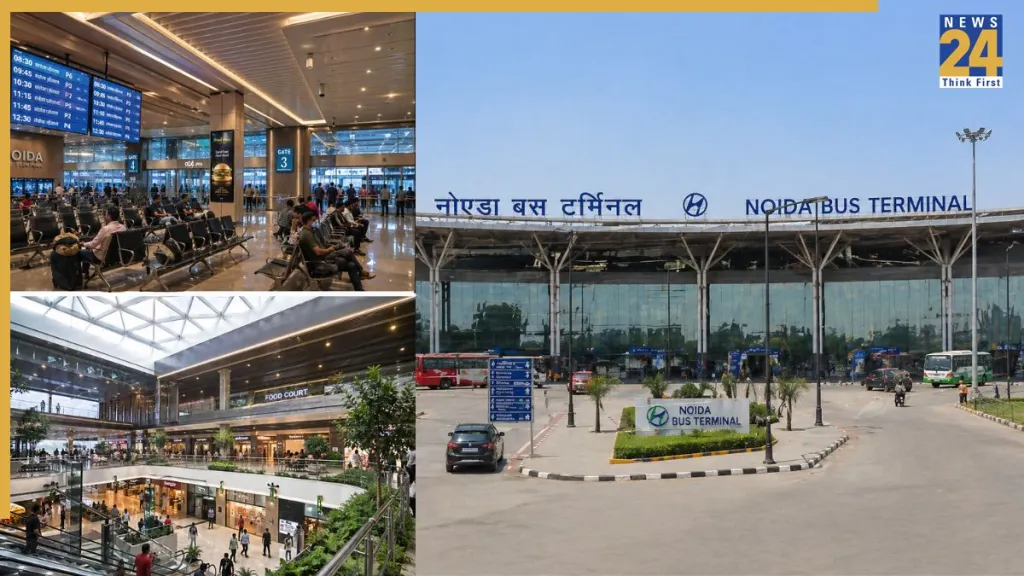
Noida Bus Terminal Adds Retail Entertainment Spaces
A major transport infrastructure overhaul is being planned in Noida, where authorities are preparing to redevelop an ageing bus depot in Sector 90 into an airport-style intercity transit hub designed around passenger services, commercial activity, and multi-modal mobility. The proposed project signals a broader shift in how rapidly urbanising regions across Delhi NCR are attempting to modernise public transport infrastructure while responding to growing commuter pressure.
Officials familiar with the project said the new Noida bus terminal is expected to include climate-controlled waiting zones, digital passenger systems, retail outlets, food courts, entertainment facilities, and dedicated lounges for long-distance travellers. Technical bids for the redevelopment are likely to be invited in the coming phase, with the facility projected to become operational within two years of construction commencement. The redevelopment comes at a time when commuter volumes across the National Capital Region continue to rise due to rapid residential expansion, workforce mobility, and increasing inter-city travel demand. Urban planners say traditional bus depots in many Indian cities no longer meet the expectations of modern commuters, particularly in dense metropolitan corridors where public transport nodes also function as economic and social spaces.
The proposed Noida bus terminal is expected to dedicate more than half of its built area to passenger movement and public amenities, while the remaining space may support commercial activities including retail and entertainment. Analysts believe this hybrid infrastructure model reflects a growing trend in urban India where transport projects are being designed to generate long-term operational revenue rather than relying solely on state funding. However, mobility experts caution that large-scale transit redevelopment must move beyond commercial aesthetics and prioritise accessibility, pedestrian movement, safety, and environmental resilience. With NCR cities already grappling with congestion, heat stress, and deteriorating air quality, future-facing transit centres will increasingly be judged by how effectively they integrate public transport with low-emission mobility systems.
The announcement also aligns with a wider infrastructure transition underway in Noida and neighbouring NCR districts, where new expressways, metro expansions, logistics parks, and aviation-linked developments are reshaping regional movement patterns. As urban density rises around emerging residential and industrial clusters, transport hubs are becoming critical civic assets rather than standalone travel facilities. Urban development observers note that projects like the Noida bus terminal could influence future transit-oriented growth across peripheral NCR sectors if supported by stronger last-mile connectivity and sustainable planning frameworks. Integrating bus infrastructure with electric mobility, walkable access, and mixed-use development could help reduce dependence on private vehicles while improving regional accessibility. For daily commuters, the transformation may ultimately represent more than an infrastructure upgrade. It reflects the growing expectation that public transport in Indian cities should be efficient, comfortable, inclusive, and capable of supporting the scale of urban growth now unfolding across the NCR.