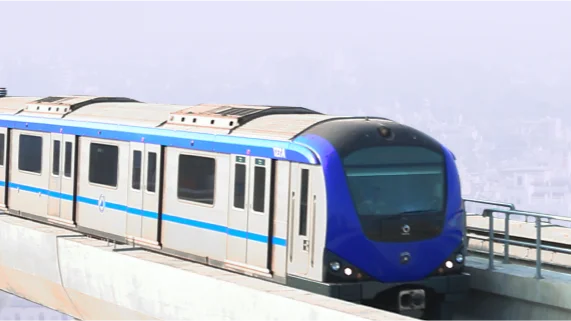
Chennai Metro Boosts Matchday Public Transport
Chennai Metro Rail’s decision to offer complimentary travel for cricket spectators attending the Indian Premier League fixture at Chepauk on Sunday signals a broader shift towards integrating mass transit with large-scale urban events. The initiative is expected to reduce pressure on central Chennai’s already strained road network while encouraging more residents to adopt public transport for high-footfall gatherings.
Under the temporary arrangement, spectators holding valid tickets for the Chennai franchise’s match against Lucknow will be able to access free return travel on the city’s Metro network. The travel benefit applies between operational Metro stations and the Government Estate station, located near the stadium precinct. Officials indicated that both physical and digital match tickets would function as access credentials through automated fare gates. The move comes as Chennai continues grappling with recurring traffic congestion during major sporting and entertainment events, especially around the historic Chepauk stadium corridor. Urban mobility experts note that event-linked transport planning is becoming increasingly critical for Indian metros where private vehicle dependence has intensified pressure on roads, fuel consumption, and urban emissions.
Transport planners say such measures can help reshape commuter behaviour if implemented consistently. Large public gatherings often generate concentrated traffic spikes that slow emergency services, increase air pollution, and create pedestrian safety concerns. By incentivising Metro use, authorities are attempting to shift a section of matchday commuters away from private cars and app-based taxis.The initiative also highlights the growing importance of multimodal transit planning in dense urban centres. Chennai’s Metro network has steadily expanded its role beyond daily commuting, positioning itself as a civic mobility backbone connecting offices, institutions, commercial hubs, and now leisure destinations. According to recent operational data, the system recorded over 90 lakh passenger journeys in April, reflecting rising dependence on rail-based transport across the city.
Urban economists observe that integrating sports infrastructure with public transport systems can generate wider economic gains. Reduced congestion lowers fuel wastage and improves travel reliability for workers and businesses operating in the city core. At the same time, smoother transit access encourages footfall at surrounding commercial establishments including eateries, retail outlets, and informal vendors.Environmental analysts further point out that event-based public transport incentives align with broader climate resilience goals being discussed across Indian cities. Transport remains a major contributor to urban carbon emissions, and temporary mobility interventions tied to cultural or sporting events can serve as pilot models for long-term behavioural shifts.
Officials stated that Metro services near the stadium would operate according to the regular Sunday schedule, with trains continuing from Government Estate station throughout the match period. Mobility experts, however, argue that future improvements should include integrated last-mile access, safer pedestrian movement around stadium zones, and coordinated traffic management between civic agencies.As Chennai expands both its sports economy and transit infrastructure, the effectiveness of such citizen-focused mobility measures may increasingly shape how the city balances growth, accessibility, and environmental sustainability.
Chennai Metro Boosts Matchday Public Transport