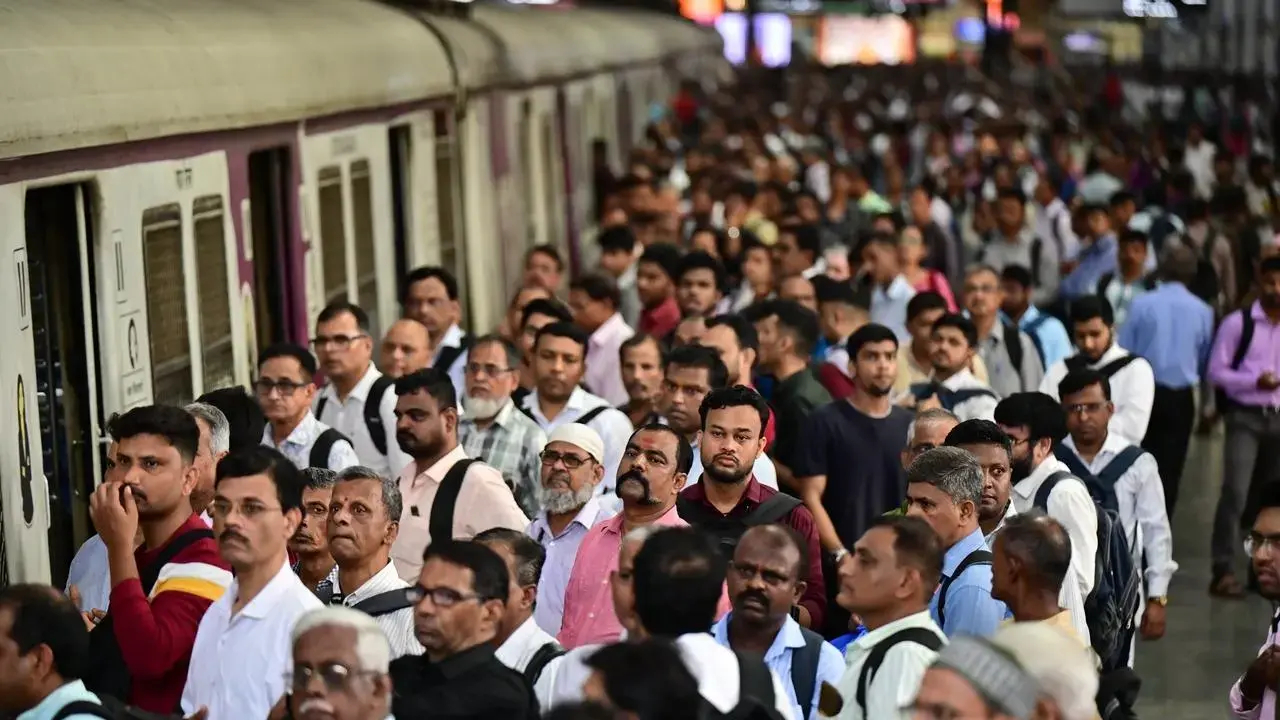
A significant capacity upgrade on Mumbai’s suburban railway network is set to begin this week, as Western Railway transitions several services to longer train formations in a bid to ease peak-hour congestion. The move targets some of the busiest commuter corridors in the Mumbai Metropolitan Region, where overcrowding remains a persistent challenge with economic and social implications. Under the latest operational shift, 17 existing suburban services will be converted from 12-coach to 15-coach configurations, increasing passenger capacity per trip by roughly a quarter. The intervention is expected to benefit commuters travelling along extended suburban stretches such as the Virar–Dahanu and Churchgate–Virar routes, both of which witness intense daily ridership due to growing residential expansion in peripheral zones.
Urban transport analysts view the Mumbai Local Trains Capacity Boost as a necessary, though incremental, response to structural demand pressures. The suburban railway system remains the backbone of Mumbai’s mobility ecosystem, carrying millions daily and enabling access to employment hubs across the city. However, rapid urbanisation, coupled with rising real estate development in outer suburbs, has outpaced infrastructure expansion in recent years. Officials indicate that eight upgraded services will operate on the northern Virar–Dahanu corridor, a stretch increasingly integrated into the metropolitan economy. The remaining nine services will run between Churchgate and Virar, one of the most heavily utilised urban transit corridors. By extending train length rather than increasing frequency, authorities aim to optimise existing track capacity without disrupting tightly scheduled operations.
In parallel, the introduction of additional air-conditioned services signals a gradual shift towards improving commuter comfort. While AC trains remain a smaller share of total services, their expansion reflects changing expectations among a workforce spending extended hours in transit. Transport planners note that such upgrades also align with broader climate resilience goals, as improved public transport can help reduce reliance on private vehicles and lower urban emissions over time. Despite these gains, experts caution that capacity enhancement alone may not fully address systemic overcrowding. Long-term solutions will require integrated planning across rail, metro, and bus networks, alongside transit-oriented development strategies that reduce travel distances. The Mumbai Local Trains Capacity Boost is therefore seen as part of a wider transition towards a more balanced and sustainable urban mobility framework.
For daily commuters, the immediate impact is likely to be modest but meaningful—slightly less crowded compartments and improved boarding conditions during peak hours. Over time, such incremental improvements can contribute to safer, more dignified travel experiences in one of the world’s most densely used suburban rail systems.