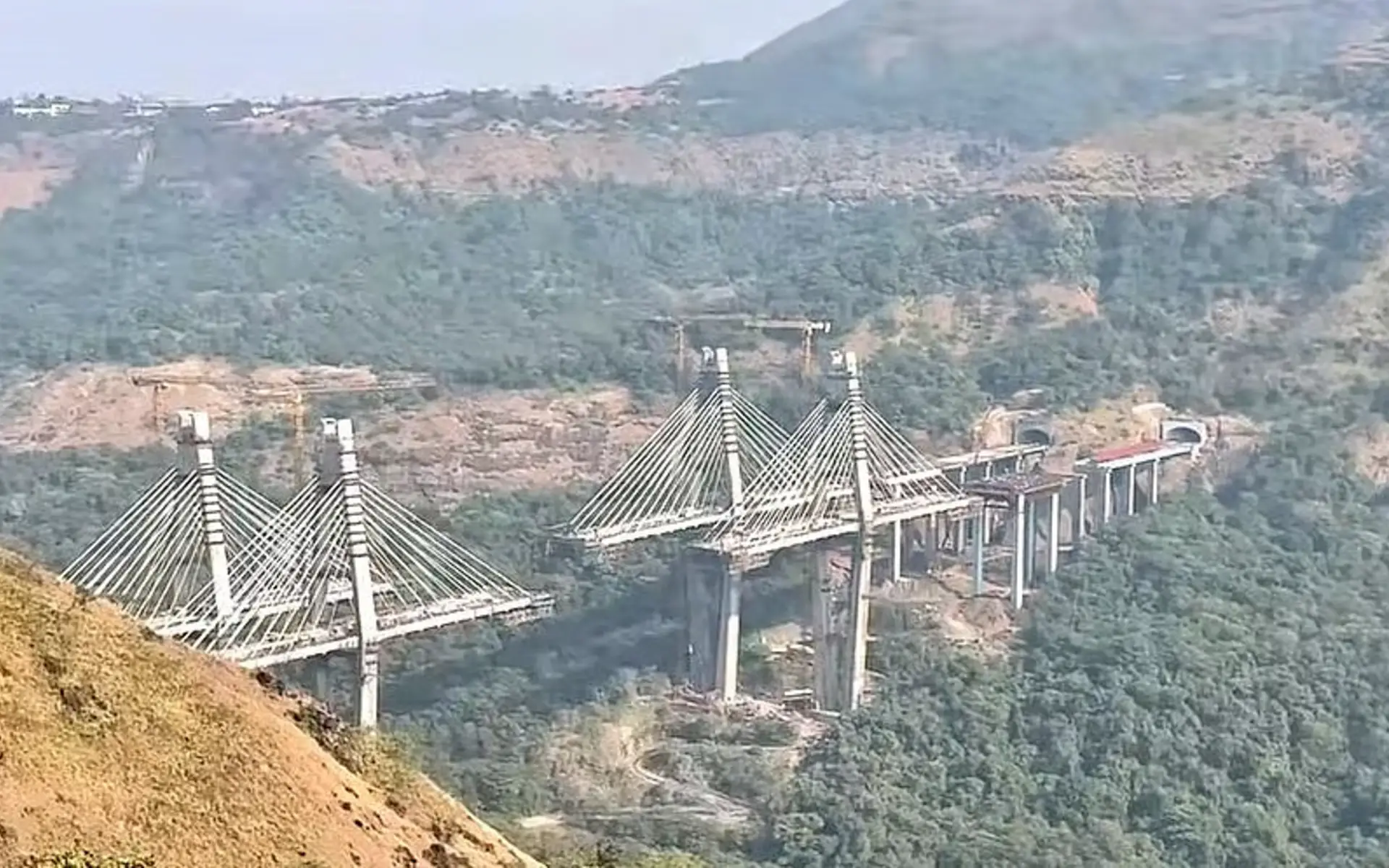
A long-awaited bypass on the Mumbai–Pune Expressway is set to become operational, offering a direct alternative to the congestion-prone ghat section and marking a major upgrade in intercity connectivity between two of Maharashtra’s key economic centres. The Mumbai Pune Missing Link project is expected to significantly reduce travel time while improving safety along one of India’s busiest highway corridors. The new alignment spans over 13 kilometres and connects the expressway near Khopoli to the Kusgaon area, effectively avoiding the steep and accident-prone mountain stretch. This section has historically been vulnerable to traffic disruptions, particularly during monsoons and peak travel periods, when even minor incidents can lead to prolonged gridlock.
At the heart of the Mumbai Pune Missing Link is a high-capacity tunnel system designed to streamline traffic movement through challenging terrain. The primary tunnel, extending close to nine kilometres, is among the widest road tunnels globally, built to accommodate multiple lanes of traffic. Supporting infrastructure includes advanced ventilation, fire safety systems, and emergency evacuation mechanisms, reflecting evolving standards in highway engineering. Complementing the tunnel network is a cable-supported bridge structure spanning a deep valley, constructed at a significant height to maintain a continuous gradient along the route. Infrastructure experts note that such engineering solutions are increasingly necessary in mountainous regions where traditional road expansion is both environmentally and logistically constrained. Authorities plan to initially allow only light vehicles, including cars and buses, on the Mumbai Pune Missing Link, with restrictions on heavy and hazardous vehicles until further assessments are completed. Given that a majority of traffic on the corridor comprises passenger vehicles, the phased opening is expected to deliver immediate congestion relief, particularly during weekends and holiday seasons when travel demand surges.
From an economic standpoint, improved travel efficiency between Mumbai and Pune could strengthen business linkages, logistics networks, and regional mobility. Reduced travel time not only enhances productivity but also supports the growth of satellite towns along the corridor, influencing real estate development and investment patterns. However, urban planners emphasise that while the Mumbai Pune Missing Link addresses a critical bottleneck, it also raises broader questions about sustainable mobility. Expanding road capacity can sometimes induce additional traffic demand, potentially offsetting long-term congestion benefits. Experts suggest that parallel investments in rail and public transport infrastructure remain essential to ensure balanced and low-carbon mobility. Environmental considerations also remain central, given the project’s location within ecologically sensitive hill ranges. While modern construction techniques aim to minimise disruption, continuous monitoring will be necessary to assess long-term impacts on local ecosystems and water systems.
As the corridor opens to traffic, it represents a milestone in India’s highway development journey, demonstrating the scale and complexity of infrastructure required to support growing urban regions. The effectiveness of the Mumbai Pune Missing Link will ultimately depend on how well it integrates with broader transport planning and sustainability goals in the years ahead.