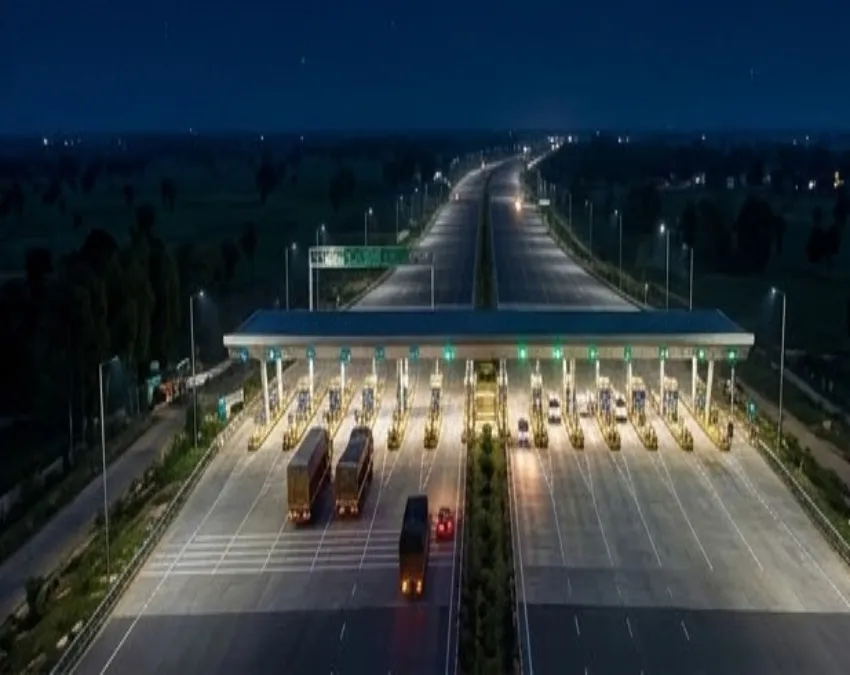
A major road infrastructure project in Noida is set to reshape connectivity across the National Capital Region, with plans for a 10-lane corridor linking Delhi to Greater Noida and the upcoming Jewar airport. The proposed stretch, expected to pass through Sector 94, aims to ease congestion and significantly reduce travel time along one of NCR’s fastest-growing mobility routes.
The new corridor is designed to handle high traffic volumes generated by residential expansion, commercial activity, and airport-bound travel. As the Noida International Airport in Jewar moves closer to operationalisation, connectivity projects such as this are becoming critical to supporting both passenger movement and logistics networks across the region. At the centre of this development is the growing importance of the Noida 10 lane road, which is expected to function as a high-capacity urban artery connecting multiple economic zones. By linking Delhi more efficiently with Greater Noida and the Yamuna Expressway belt, the project could ease pressure on existing routes that are already operating beyond capacity during peak hours. Urban planners see this as part of a broader shift towards corridor-based development in NCR. Large-scale road infrastructure is increasingly being used to unlock peripheral land, attract investment, and enable decentralised growth. In the case of Noida, the corridor is likely to accelerate real estate activity, particularly in sectors located along the route and near the airport influence zone.
However, the expansion of the Noida 10 lane road also raises questions around long-term sustainability. While wider roads can temporarily reduce congestion, they often induce additional traffic demand over time, potentially offsetting initial gains. Experts argue that road expansion must be complemented by robust public transport systems, including metro and bus networks, to create a balanced mobility ecosystem. Environmental considerations are also central to the discussion. Large road projects can increase vehicular emissions unless integrated with green infrastructure measures such as urban tree cover, noise barriers, and sustainable drainage systems. As NCR continues to grapple with air quality challenges, the design and execution of such corridors will play a critical role in shaping environmental outcomes. From a commuter perspective, the project promises improved travel efficiency, particularly for those commuting between Delhi, Noida, and Greater Noida. Reduced travel time to Jewar airport is expected to enhance accessibility and support regional economic growth, especially in sectors such as logistics, hospitality, and manufacturing.
The Noida 10 lane road also highlights the need for coordinated regional planning. With multiple agencies involved across Delhi and Uttar Pradesh, ensuring seamless execution and integration with existing infrastructure will be key to maximising the project’s impact. As NCR’s urban footprint expands, infrastructure investments of this scale are likely to define the region’s growth trajectory. The challenge will be to ensure that such projects not only improve connectivity but also contribute to more sustainable, efficient, and inclusive urban mobility systems.