


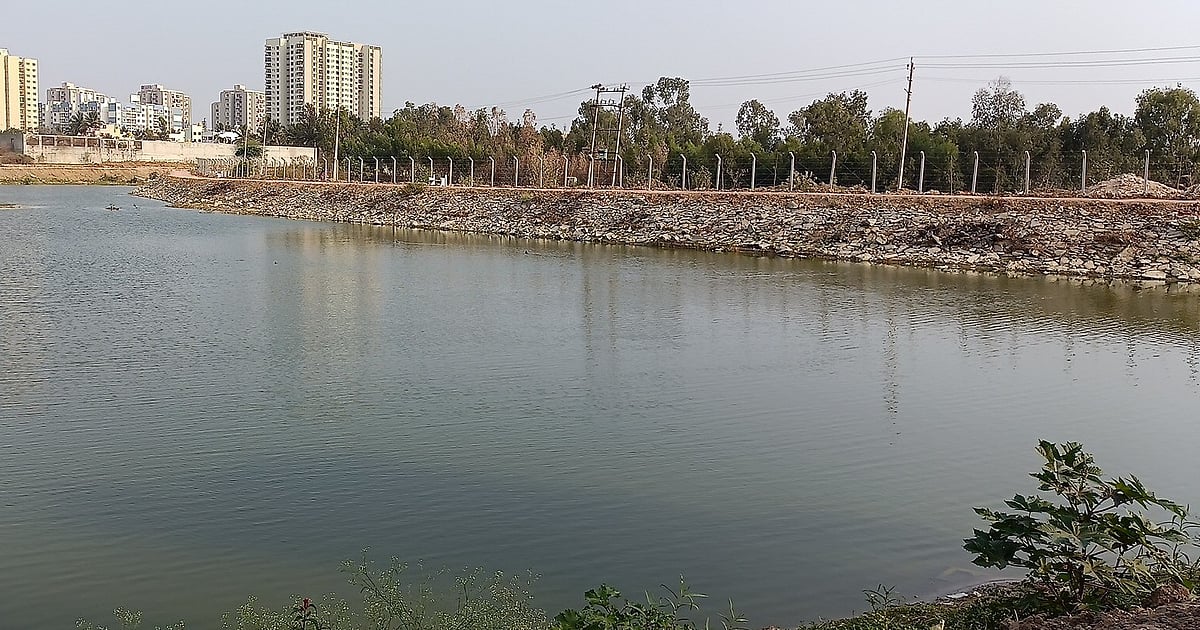
A recent survey of Sarakki Lake in Bengaluru has identified multiple encroachments within and around its buffer zone, intensifying concerns over the protection of urban water bodies and their role in climate resilience. The findings highlight the ongoing tension between real estate expansion and environmental safeguards in one of India’s fastest-growing cities.
Officials involved in the assessment flagged several structures that appear to violate prescribed norms governing lake boundaries and buffer areas. These zones are designed to act as protective barriers, preventing construction too close to water bodies and preserving their ecological function. However, sustained urban pressure has led to gradual encroachment, often weakening these safeguards.Urban planners warn that the Bengaluru lake encroachments issue has far-reaching implications. Lakes in the city are part of an interconnected hydrological system that historically managed rainwater flow and reduced flood risk. Disruptions to this network can lead to increased waterlogging, reduced groundwater recharge, and heightened vulnerability during extreme weather events.The Sarakki Lake case is indicative of a broader pattern across Bengaluru, where shrinking water bodies and compromised buffer zones have altered natural drainage systems. Experts note that such changes not only affect environmental health but also place additional stress on engineered infrastructure, such as stormwater drains.The Bengaluru lake encroachments challenge also raises governance concerns.
Enforcement of land-use regulations and protection norms has often been inconsistent, allowing violations to persist or expand over time.Strengthening monitoring mechanisms and ensuring accountability among stakeholders are seen as critical steps in addressing the issue.From an environmental perspective, preserving lake ecosystems is essential for maintaining biodiversity and improving urban microclimates. Water bodies help regulate temperature, support vegetation, and provide habitats for various species. Their degradation can therefore have cascading effects on urban sustainability.There are also economic and social dimensions to consider.Encroachments can lead to disputes, legal uncertainties, and potential demolition actions, affecting both residents and developers. At the same time, well-maintained lakes can enhance property values and improve quality of life, highlighting the importance of balanced development.Urban policy experts advocate for a combination of regulatory enforcement and community engagement. Involving local residents in lake conservation efforts has proven effective in several parts of the city, fostering a sense of ownership and improving long-term outcomes.The situation underscores the need for integrating ecological considerations into urban planning frameworks. Protecting buffer zones, restoring degraded water bodies, and aligning development with environmental limits are essential for building resilient cities.
As Bengaluru continues to expand, the findings at Sarakki Lake serve as a reminder that safeguarding natural assets is not optional but fundamental to sustainable urban growth. Ensuring compliance and restoring ecological balance will be key to mitigating future risks and preserving the city’s environmental foundations.
Also Read:Bengaluru Flood Resilience Projects Get New Deadlines

