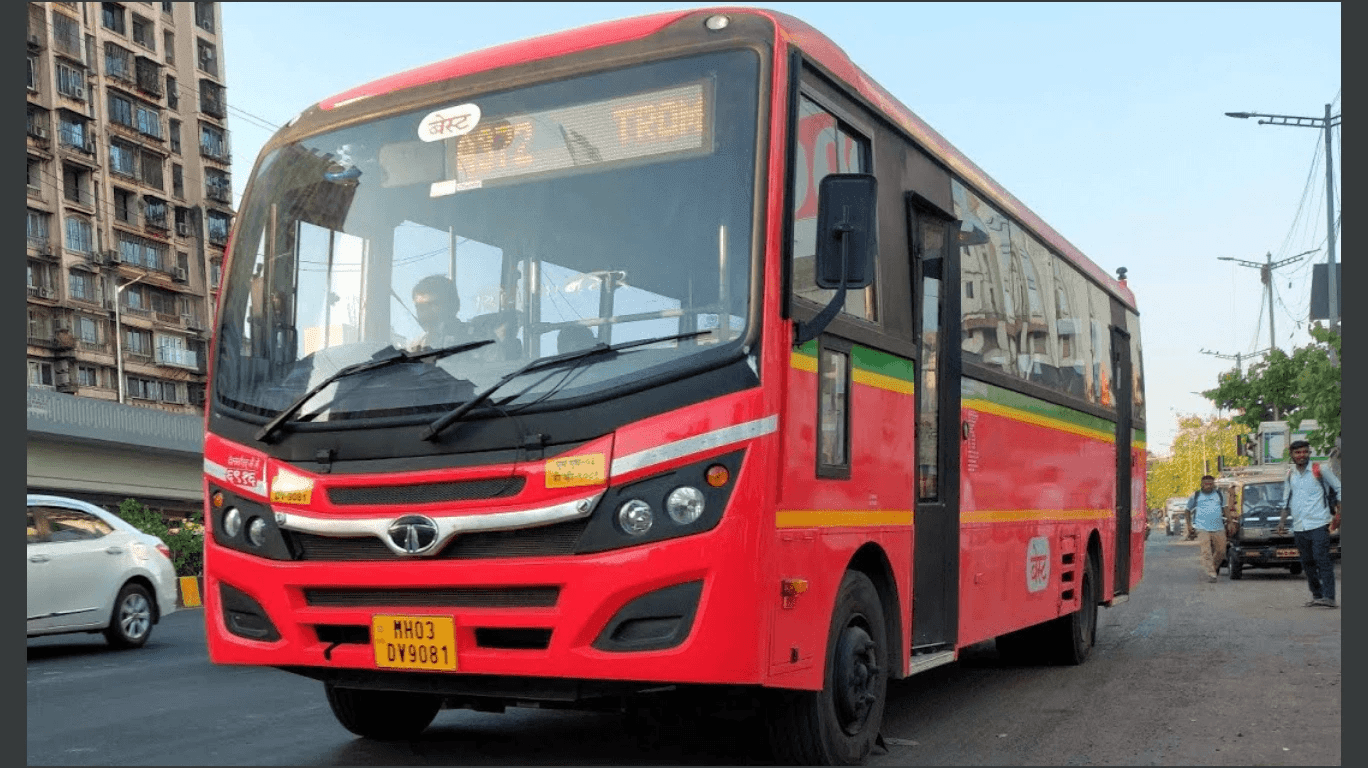
Mumbai’s public transport strategy is undergoing a recalibration as the city looks to balance safety, accessibility and fleet modernisation. The Brihanmumbai Electricity Supply and Transport undertaking is preparing to introduce 500 midi buses—shorter, nine-metre vehicles—following recent operational concerns linked to larger buses navigating dense and uneven urban roads. The decision comes after incidents involving long electric buses raised questions about their suitability on steep or narrow stretches, particularly in eastern suburbs such as Bhandup and Vikhroli. While preliminary findings pointed to human error in one case, officials say the episodes have triggered a broader reassessment of how vehicle design interacts with local road conditions.
The proposed midi bus fleet is expected to be deployed on routes where manoeuvrability is a persistent challenge. Compared to conventional 12-metre buses, these vehicles occupy less road space and are easier to handle in tight turns, congested lanes and hilly pockets. Urban mobility experts note that such right-sizing of fleets can improve both safety outcomes and service reliability, especially in older neighbourhoods not designed for large vehicles. Beyond safety, the shift reflects a deeper structural issue in Mumbai’s bus ecosystem: a mismatch between ambitious electrification targets and on-ground delivery timelines. The city’s transport undertaking has been working towards a predominantly electric fleet, yet supply constraints have slowed progress. Only a fraction of the planned electric buses have been inducted so far, leaving a gap between demand and availability. This gap has implications for equitable mobility. With an estimated requirement of around 10,000 buses to adequately serve the metropolitan population, delays risk overburdening existing services and pushing commuters towards less sustainable transport options. The midi bus fleet is being seen as a pragmatic interim solution that can maintain service coverage while larger procurement issues are resolved.
At the same time, contractual and regulatory complexities continue to shape the transition. Industry sources point to evolving safety norms—such as mandatory stability control systems—as a factor affecting manufacturing timelines and costs. Disagreements over compliance responsibilities and subsidy disbursements have further slowed deliveries from suppliers, highlighting the need for clearer policy alignment between public agencies and private operators. From a sustainability perspective, smaller buses operating on optimised routes could contribute to reduced congestion and improved energy efficiency, particularly when integrated into a wider electric mobility framework. However, planners caution that fleet diversification must be complemented by better route planning, driver training and infrastructure upgrades to fully realise these benefits. The move towards midi buses also underscores a broader shift in urban transport thinking—from maximising capacity per vehicle to improving system-wide efficiency and accessibility. In a city where road geometry varies dramatically across neighbourhoods, flexible fleet strategies may prove more resilient than one-size-fits-all solutions.
As the proposal moves towards approval, its success will depend on timely execution and coordination with long-term electrification goals. For Mumbai’s commuters, the immediate expectation is simple: safer journeys and more reliable connectivity across the city’s most challenging routes.