Hyderabad ultra luxury housing market leads south India
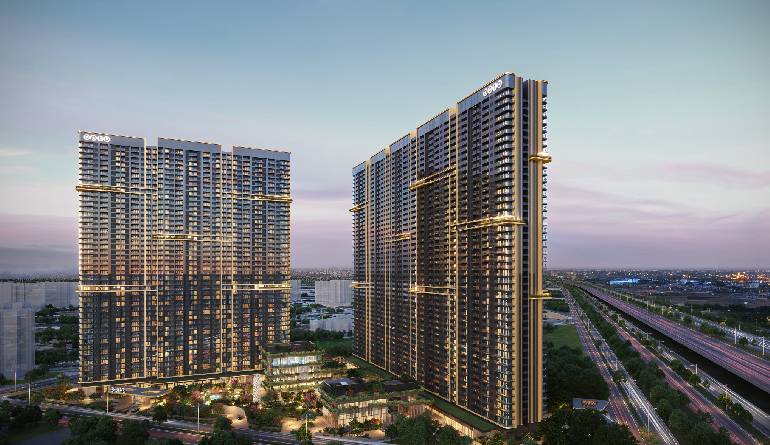
A new high-rise residential development in Greater Faridabad is signalling a continued shift in the National Capital Region’s housing market towards vertical, premium living, even as affordability and infrastructure equity remain pressing concerns. The project, located in Sector 80, introduces twin towers with a projected development value of nearly ₹1,800 crore, adding to the growing pipeline of upscale housing in emerging urban corridors.
The development is expected to bring over 300 large-format apartments to the market, primarily in three- and four-bedroom configurations. With unit sizes extending beyond 3,000 square feet, the project targets a segment of buyers seeking expansive homes outside Delhi’s saturated core, reflecting a broader demand trend for space, amenities, and controlled-density living environments. Greater Faridabad—often referred to as the Neharpar region—has increasingly emerged as a real estate hotspot due to its improving connectivity. Infrastructure links such as the Faridabad Bypass Road, which integrates with regional expressway networks, have strengthened access to Delhi and neighbouring economic hubs. Planned projects, including the Faridabad–Noida–Ghaziabad corridor and proximity to the upcoming Noida International Airport, are further reinforcing its strategic appeal. However, the rise of premium housing in peripheral zones also raises important questions about urban balance. While such developments optimise land use through vertical construction and introduce modern building systems, they often cater to a narrower income segment.
Urban planners caution that without parallel investments in affordable housing, public transport, and social infrastructure, these growth patterns risk deepening spatial inequality within expanding cities. From an environmental standpoint, high-rise developments present both opportunities and challenges. On one hand, vertical housing can reduce urban sprawl and preserve land if planned efficiently. On the other, the sustainability outcomes depend heavily on building design, energy systems, and water management practices. Developers are increasingly incorporating green building features, but experts emphasise the need for stricter compliance and lifecycle sustainability assessments rather than isolated design interventions. Economically, projects of this scale signal confidence in the NCR’s real estate resilience, particularly in the premium segment. Industry data suggests that while overall housing demand has shown signs of moderation, higher-value properties continue to attract interest, driven by end-users and investors seeking long-term assets.
Yet, the long gestation timelines typical of such developments—often stretching towards the end of the decade—highlight the importance of regulatory oversight and timely execution. Delays or mismatches between supply and infrastructure readiness can impact both buyer confidence and urban functionality. As Greater Faridabad continues to evolve, the focus will increasingly shift from isolated real estate projects to integrated urban ecosystems. The success of such developments will depend not only on design and pricing but on how well they align with broader goals of mobility, environmental sustainability, and inclusive growth in one of India’s fastest-expanding urban regions.