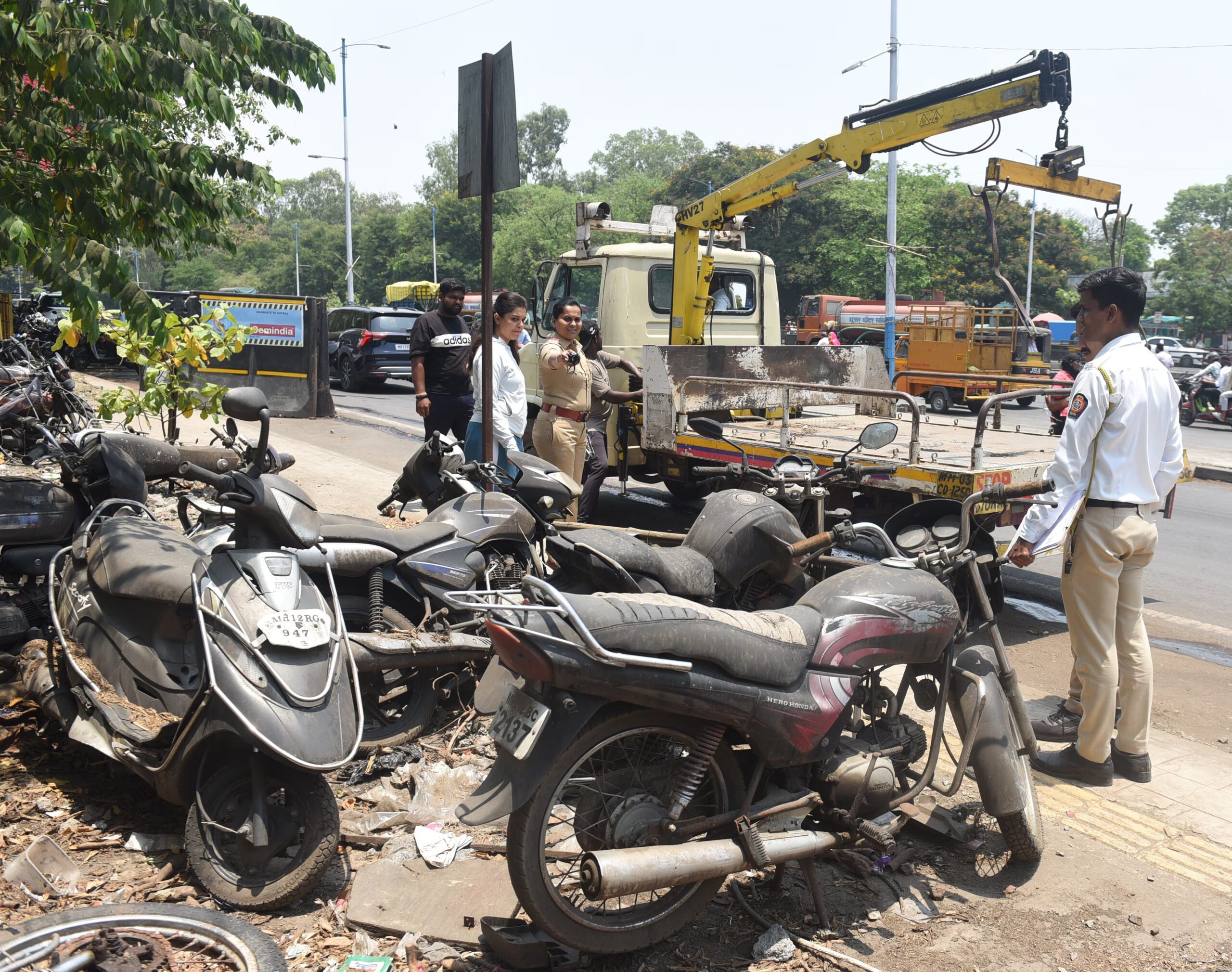
In ten days, traffic police have hauled away more than 6,000 vehicles — cars, motorcycles, and three-wheelers left to rust on public roads, narrow lanes, and commercial stretches. The special enforcement drive, triggered by rising citizen complaints, marks one of the most aggressive efforts in recent years to reclaim street space from abandoned private transport.
The mechanics are straightforward but stringent. A notice is affixed to any vehicle identified as abandoned or parked in violation of norms. Owners have 24 hours to remove it. If they fail, the vehicle is declared abandoned and seized. In certain cases, authorities may extend the deadline up to 48 hours or a maximum of seven days, but vehicles obstructing traffic flow or posing immediate risks are removed without delay. A senior traffic official confirmed that once seized, vehicles are taken to designated yards. Fines are imposed based on vehicle category and violation type. If owners do not claim the vehicle despite repeated notices, the disposal process begins through legal auction.
From an urban planning perspective, this drive addresses a silent crisis. Abandoned vehicles are not merely eyesores. They occupy valuable curb space in a city where parking is already scarce. They become dumping grounds for waste. They block emergency access routes — a fire truck delayed by 30 seconds can be a life-or-death difference. In residential areas, they frequently obstruct ambulance movement and garbage collection. The traffic department noted that a traffic police app proved crucial in tracing vehicle details and facilitating timely action. One division alone removed 30 two-wheelers and several four-wheelers from its jurisdiction, with officials emphasising that all due protocols were followed.
What makes this drive notable is its scale. Six thousand vehicles in ten days suggests that Pune’s public spaces have been functioning as informal long-term storage for private metal. The deputy commissioner of police for traffic framed it as a message: public roads cannot be used as permanent parking lots. But enforcement drives, however effective, are not a substitute for systemic solutions. Cities that successfully manage vehicle density do so through a combination of strict towing policies, congestion pricing, and most importantly, viable public transit alternatives that make car ownership optional. Pune’s Metro expansion and feeder bus network are steps in that direction. But as long as owning a vehicle remains easier than parking it responsibly, abandoned vehicles will keep appearing.
The traffic police have urged citizens to voluntarily remove unused vehicles and report abandoned ones. Periodic drives will continue. For now, 6,000 fewer metal carcasses are blocking Pune’s streets. The next step is keeping them clear.
Pune Seizes 6,000 Abandoned Vehicles In 10 Day Drive