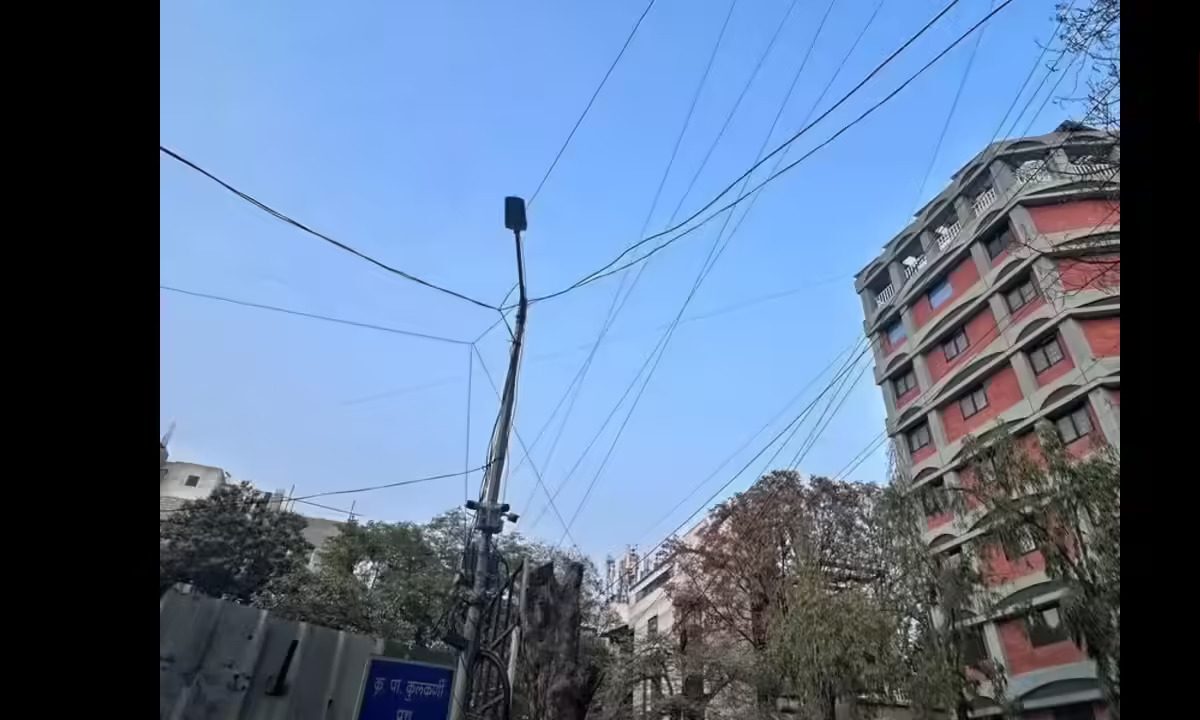
A city known for its ambitious urban transformation projects is now turning to Hyderabad for a more granular fix — how to regulate the tangled web of overhead cables that disfigure streetscapes and pose daily safety risks. The civic administration has begun drafting a standard operating procedure after suspending its cable removal drive last week, signalling a shift from enforcement to structured regulation.
The proposed policy borrows liberally from Hyderabad’s framework, which includes fixed height limits for overhead cables and a rental fee structure for operators installing independent poles. A senior official confirmed that directives from the central power and communications ministries issued in 2023-24 will serve as legal reference points. The standard operating procedure will also prioritise the conversion of overhead cables at major junctions into underground networks — a move that improves both aesthetics and storm resilience. From a citizen safety perspective, the stakes are not trivial. Unauthorised low-hanging or broken wires cause electrocution risks, particularly during monsoon when waterlogging is common. The Maharashtra Prevention of Defacement of Public Property Act, 1995, already allows punitive action against illegal cable installations, and operators can be prosecuted for criminal negligence in case of accidents. But legal provisions have historically meant little without enforcement mechanisms.
What makes this initiative different is the proposed administrative architecture. Nodal officers from the civic body, police, traffic police, the state electricity distribution company, and the natural gas utility will jointly oversee regulation and installation. An online portal is planned for service providers to apply for permissions; until then, a single-window system will process time-bound approvals. A fresh survey will be conducted in areas where overhead cables have not yet been mapped. Urban observers note that Pune’s cable clutter is not merely an aesthetic problem. It reflects a deeper governance failure — multiple agencies (internet providers, cable television operators, electricity utilities) installing infrastructure without coordination or accountability. The result is a public space that is functionally hazardous and visually chaotic. Hyderabad’s model succeeded not because of its technical specifications but because it assigned clear costs and consequences to operators.
The policy will also address Palkhi Road specifically, where cable removal has been a flashpoint. Feedback from local representatives and stakeholders will be incorporated. For Pune residents, the question is whether this standard operating procedure becomes another document on a shelf or a genuine tool for reclaiming public space. The draft is being prepared. The real work begins when enforcement starts.
PMC Drafts Policy For Rental Fees On Cable Poles