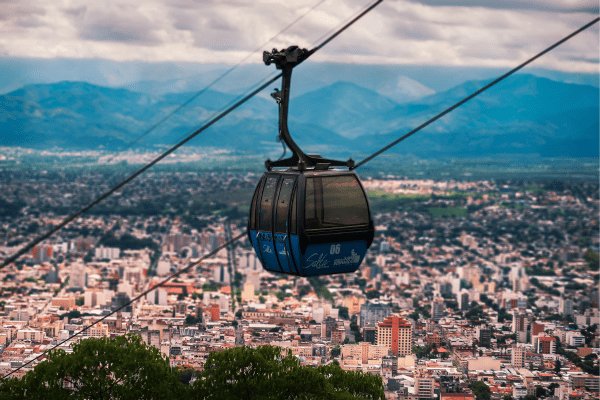
A 1.3-kilometre ropeway is being planned between Golconda Fort and the Qutb Shahi Tombs, offering visitors an aerial alternative to the congested road that currently separates two of the city’s most significant 16th-century landmarks. The proposal, now entering feasibility assessment, reflects a broader national push to deploy ropeways as both tourism infrastructure and urban mobility solutions. The two heritage sites lie geographically close but remain poorly connected. The existing road network faces severe congestion on weekends and during peak tourist seasons, forcing visitors into idling vehicles that burn fuel and generate emissions within a heritage zone. A ropeway would bypass surface traffic entirely, reducing travel time while offering an aerial view of the tomb-studded landscape.
A senior official confirmed that the project is being explored under a public-private partnership model. Preliminary work includes feasibility assessments, technical studies, and preparation of a detailed project report. Environmental and heritage conservation guidelines will also be examined — a critical consideration given the archaeological sensitivity of both locations. From an urban sustainability perspective, ropeways occupy an interesting middle ground. They are electrically powered, produce zero direct emissions, and require minimal ground-level construction compared to roads or bridges. They can also move large numbers of people without adding to surface congestion. Cities from Medellín to La Paz have successfully integrated cable cars into public transport networks, serving high-density, difficult-to-access terrain.
But heritage zones present unique challenges. The Qutb Shahi Tombs complex, dating to the 16th and 17th centuries, has distinct visual sightlines and archaeological layers. Any aerial structure must be assessed not just for technical feasibility but for visual intrusion. A ropeway that enhances access could also diminish the very experience visitors come for — the quiet, grounded contemplation of Deccan Sultanate architecture. The proposal builds on earlier discussions about alternative transport systems in Hyderabad’s high-footfall areas. What is different now is the national policy tailwind. The central government has been actively promoting ropeway projects across hill stations, pilgrimage sites, and congested urban corridors, with dedicated funding and streamlined approvals.
For Hyderabad, the ropeway could serve as a pilot for a larger network. If successful, similar links might connect other heritage clusters or provide last-mile connectivity to metro stations in hilly terrain. But first, the feasibility study must answer a deceptively simple question: Can a ropeway honour the past while serving the present? The detailed project report, once completed, will determine whether this aerial link remains a proposal or becomes a new way to see an old city.
1.3 Km Ropeway Planned For Hyderabad Heritage Circuit