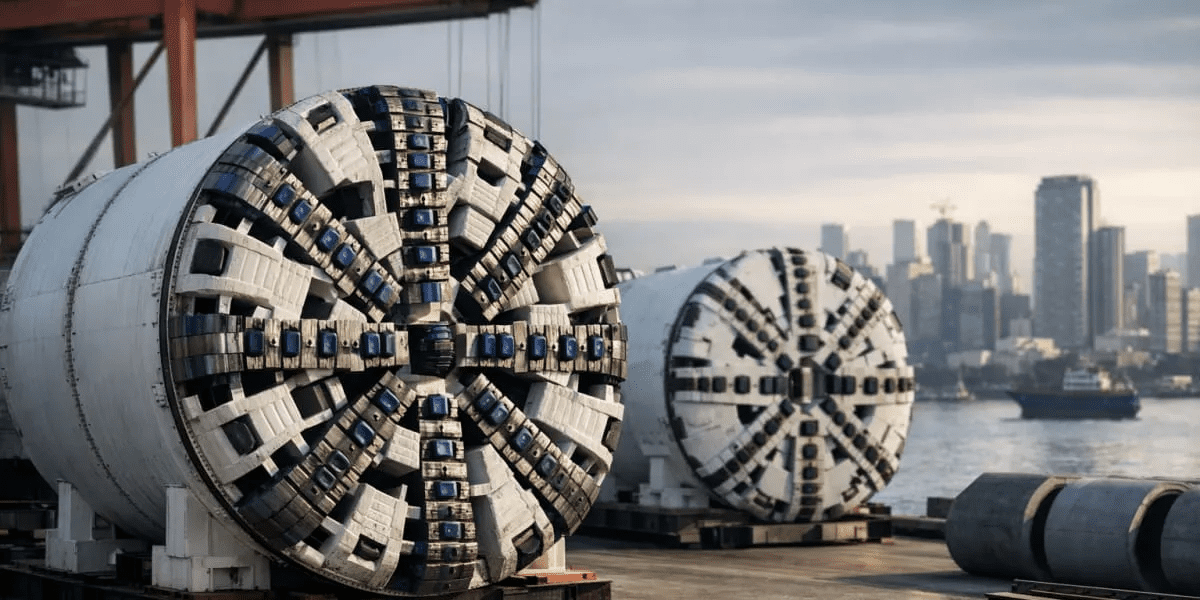
Mumbai’s long-delayed push to strengthen east–west connectivity has entered a decisive construction phase, with two high-capacity tunnel boring machines (TBMs) now being assembled to excavate a key underground corridor linking Goregaon and Mulund. The development marks a critical step in addressing chronic cross-city congestion while raising fresh questions about balancing infrastructure expansion with ecological sensitivity. The twin machines, among the largest deployed for road tunnelling in India, are set to carve out nearly 11 kilometres of underground passage as part of the Goregaon–Mulund Link Road. Each TBM will undertake a continuous drive of over five kilometres, creating a wide-diameter tunnel capable of supporting multi-lane vehicular traffic. Urban planners view the project as a strategic intervention to reduce travel time between the eastern and western suburbs, where surface routes remain heavily burdened.
Officials familiar with the project indicate that civil works have been tailored to navigate Mumbai’s complex geological profile, which includes dense basalt rock formations and variable groundwater conditions. The engineering design incorporates specialised systems to manage water ingress and maintain structural stability at significant depths. Such technological adaptation is increasingly becoming standard in large-scale urban tunnelling projects, particularly in coastal cities facing both geological and climate-related risks. The corridor is expected to integrate with existing arterial networks, offering an alternative to congested surface roads and potentially easing freight and commuter movement. Industry experts suggest that improved east–west mobility could unlock economic efficiencies by reducing logistics delays and enhancing access between residential and employment clusters. However, they caution that road-based solutions alone may not sustainably resolve urban congestion without parallel investments in public transport and demand management.
Environmental considerations remain central to the project’s long-term impact. Sections of the alignment pass through ecologically sensitive zones, including forested stretches that serve as vital urban green buffers. While tunnelling is often presented as a less disruptive alternative to surface construction, experts note that underground works can still influence groundwater systems, tree cover, and biodiversity if not carefully monitored. Calls for transparent environmental audits and continuous impact assessments have grown louder as construction activity intensifies. The use of conveyor-based systems to transport excavated material and reduce surface traffic reflects an attempt to minimise disruption during execution. Yet, urban researchers argue that the true sustainability of such projects will depend on post-construction outcomes—particularly whether they contribute to reduced emissions or simply induce additional vehicular demand.
As Mumbai continues to expand, the success of large infrastructure interventions like this will hinge not just on engineering milestones but on their alignment with broader climate resilience goals. The coming years will test whether such projects can deliver faster mobility without compromising the ecological systems that underpin the city’s long-term liveability.