


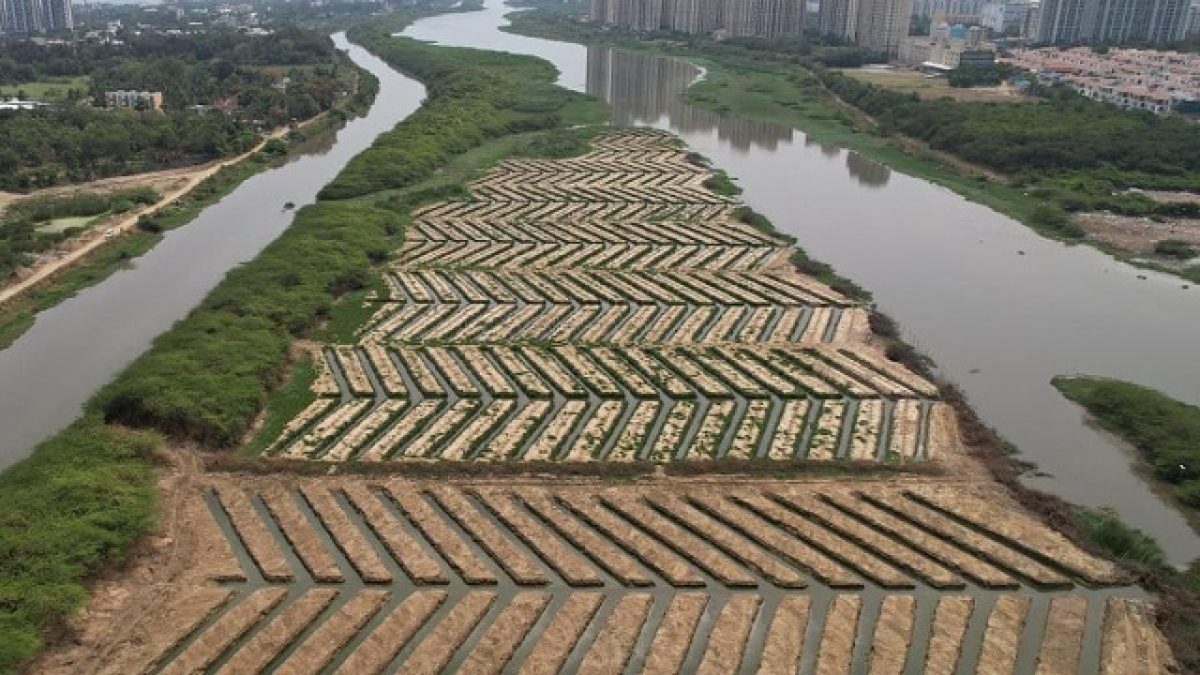
Chennai has initiated a large-scale mangrove plantation drive along the Buckingham Canal, with around 20,000 saplings being introduced to strengthen the city’s coastal resilience. The effort is part of a broader strategy to use nature-based solutions to address rising climate risks, including flooding, erosion, and extreme weather events.
The Buckingham Canal, a historic waterway running parallel to the coast, has long suffered from encroachment, pollution, and reduced ecological function. Restoring sections of the canal with mangrove cover is expected to improve its ability to act as a natural buffer, absorbing excess water during heavy rainfall and reducing the impact of storm surges.Environmental planners highlight that mangroves play a critical role in stabilising coastlines and enhancing biodiversity. Their dense root systems can trap sediments, improve water quality, and create habitats for aquatic species. In an urban context like Chennai, where built infrastructure often dominates flood management strategies, integrating such ecosystems offers a complementary and cost-effective approach.The initiative also aligns with the city’s growing focus on climate adaptation.Chennai has faced repeated flooding events and increasing variability in rainfall patterns, exposing gaps in conventional drainage and stormwater systems. By investing in ecological restoration, authorities aim to build layered resilience that combines engineered infrastructure with natural defences.
From an urban development perspective, the plantation drive could influence how waterfront areas are managed in the future. Reviving canal ecosystems may open up opportunities for creating green corridors, improving public spaces, and enhancing liveability in adjacent neighbourhoods.However, experts caution that sustained maintenance and protection from encroachment will be essential to ensure long-term success.There are also socio-economic dimensions to consider. Mangrove restoration projects can generate local employment in planting, maintenance, and monitoring activities. At the same time, ensuring community participation is key to preventing future degradation and fostering a sense of shared ownership over restored ecosystems.Challenges remain around water quality and waste management.Without addressing upstream pollution and sewage inflows, newly planted mangroves may struggle to survive.Urban ecologists emphasise that ecological restoration must be paired with stricter enforcement of environmental regulations and improvements in sanitation infrastructure.
As Chennai continues to confront the realities of climate change, the mangrove plantation along the Buckingham Canal reflects a shift towards more integrated and sustainable urban planning. The success of such initiatives will depend on long-term commitment, cross-agency coordination, and the ability to balance ecological restoration with the pressures of urban growth.
Also Read:Chennai Bengaluru Corridor Upgrade Improves Road Connectivity
