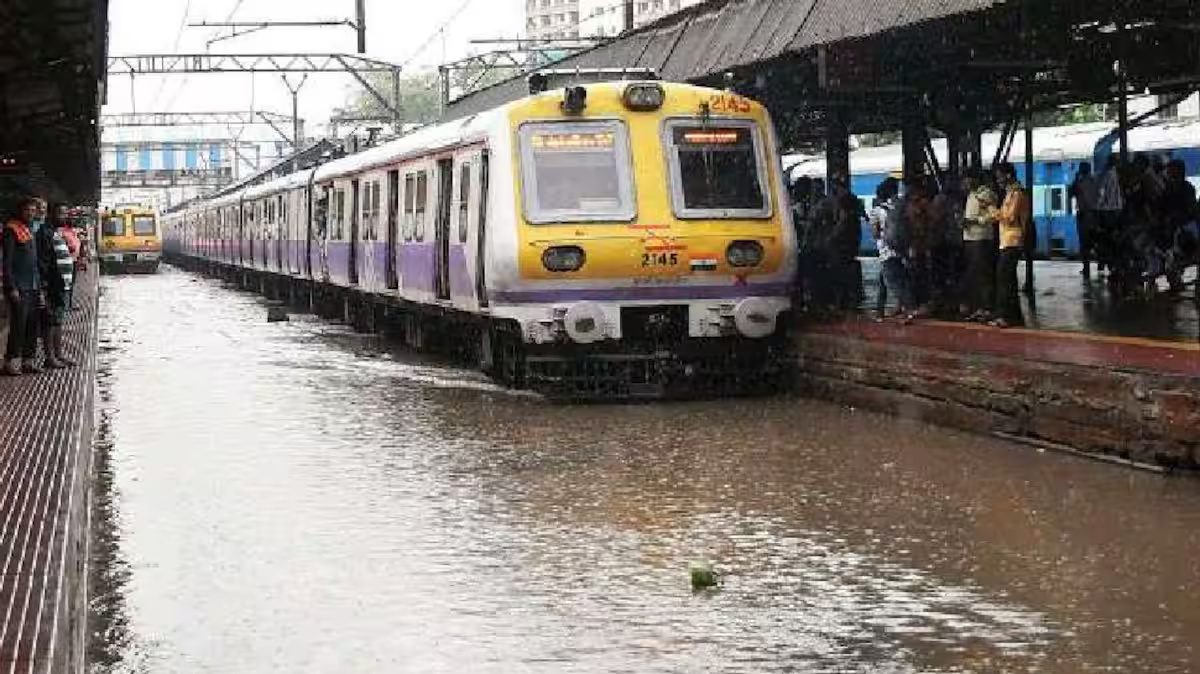
Sudden pre-monsoon showers across the Mumbai Metropolitan Region disrupted suburban rail services on Tuesday morning, triggering widespread delays during peak commuting hours and exposing vulnerabilities in the city’s overburdened transit network. Services on key Central Railway corridors were reported to be running behind schedule, with commuters facing extended travel times and overcrowded platforms. The disruption, caused by unseasonal rainfall accompanied by thunderstorms, led to delays ranging from 25 to 30 minutes on several routes connecting Kalyan, Thane and Chhatrapati Shivaji Maharaj Terminus. The Mumbai train delays were particularly pronounced on the down line, where a surge in passenger volume compounded operational challenges. Stations such as Diva witnessed heavy congestion, as commuters struggled to board already crowded trains.
Transport experts note that even short weather events can trigger cascading disruptions in Mumbai’s suburban rail system, which operates near capacity throughout the day. With minimal buffer in scheduling, any delay tends to ripple across the network, affecting thousands of passengers within minutes. The situation is further intensified during peak hours, when trains carry some of the highest passenger densities in the world. The timing of the disruption has raised additional concerns, coming shortly after a separate operational incident earlier in the week that had already strained services. While railway authorities routinely implement contingency measures during the monsoon, unseasonal weather events pose a different challenge, often catching systems off guard. For daily commuters, the Mumbai train delays translate into more than inconvenience. Extended travel times disrupt work schedules, increase stress levels, and in some cases lead to unsafe conditions as passengers crowd platforms and train compartments.
Urban planners highlight that such recurring disruptions underline the need for a more resilient and adaptive public transport system, particularly in cities prone to climate variability. From an infrastructure perspective, the incident reflects broader gaps in climate preparedness. As rainfall patterns become increasingly erratic, experts suggest that rail networks must invest in improved drainage systems, real-time monitoring, and predictive maintenance to minimise disruption. Upgrading signalling systems and enhancing operational flexibility could also help absorb shocks during sudden weather changes. The economic implications are equally significant. Mumbai’s suburban rail network is the backbone of the city’s workforce mobility, supporting millions of daily trips. Even short delays can lead to productivity losses across sectors, particularly in finance, services, and informal employment that depend on punctuality and reliable transit.
Looking ahead, the episode reinforces the urgency of diversifying urban mobility options. Expanding metro networks, improving bus connectivity, and promoting last-mile solutions could reduce overdependence on suburban rail, easing pressure during disruptions. As the city approaches the monsoon season, ensuring the resilience of critical transport infrastructure will be central to maintaining both economic momentum and commuter safety in one of the world’s most densely populated urban regions.