


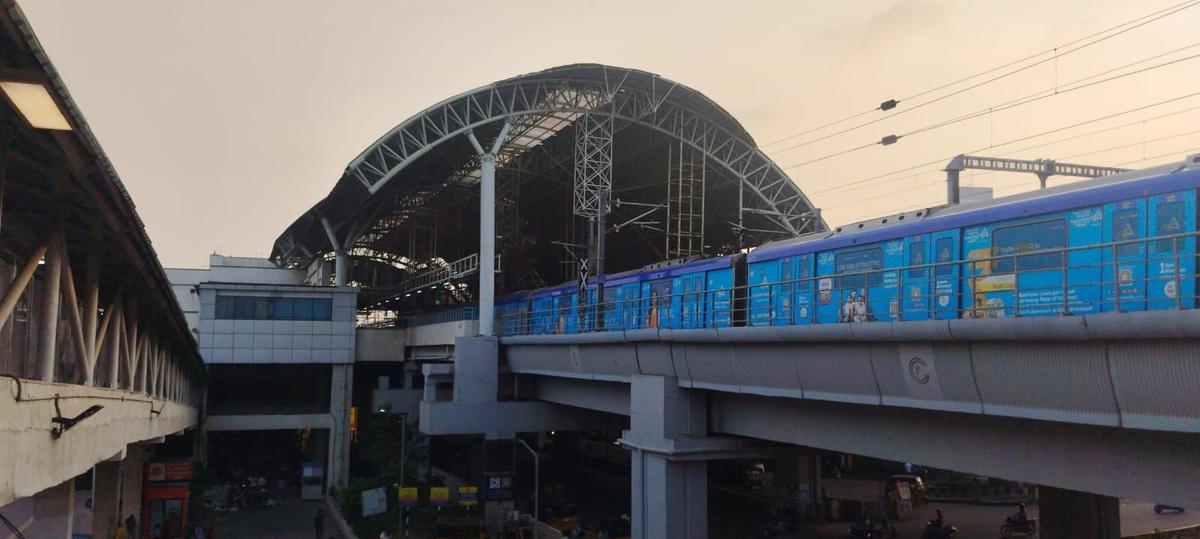
A technical disruption briefly affected metro rail operations in Chennai, interrupting services during a key travel window and impacting daily commuters across parts of the network. While services were restored after a short interval, the incident has renewed attention on system reliability in one of India’s fastest-expanding urban transit networks.
Passengers reported delays and longer waiting times as trains were temporarily halted due to the glitch. For a city increasingly reliant on metro connectivity to navigate congestion and reduce travel times, even short interruptions can ripple across work schedules and last-mile connections. Urban mobility experts note that reliability is as critical as capacity when it comes to sustaining public trust in mass transit systems.Chennai’s metro has become a central pillar of the city’s transport strategy, aimed at reducing dependence on private vehicles and improving air quality. However, incidents like this highlight the operational complexities of maintaining high-frequency services in a growing network. Technical systems, signalling infrastructure, and power supply all require continuous monitoring and rapid-response mechanisms to minimise downtime.From an economic standpoint, disruptions in public transport can have immediate productivity costs. Delays affect not only individual commuters but also businesses dependent on punctual workforce movement.
In dense urban environments, where commuting times are already stretched, reliability gaps can influence long-term travel behaviour, potentially pushing some users back towards private modes of transport.The incident also underscores the importance of resilient infrastructure planning. As cities invest heavily in metro systems to support sustainable mobility, ensuring redundancy and fail-safe mechanisms becomes essential.Experts suggest that real-time communication with passengers, predictive maintenance, and system upgrades are key to managing such risks effectively.There are broader sustainability implications as well. Public transport systems like metro rail are critical to reducing urban carbon emissions. However, their environmental benefits depend on consistent usage, which in turn relies on dependable service. Frequent or poorly managed disruptions can undermine efforts to shift commuters away from higher-emission transport options.
Authorities are expected to review the cause of the glitch and strengthen operational protocols to prevent recurrence. For Chennai, the episode serves as a reminder that infrastructure expansion must be matched with robust maintenance and service management frameworks.As the city continues to build out its metro network, maintaining reliability will be crucial to achieving long-term goals of efficient, inclusive, and low-carbon urban mobility.
Also Read:Chennai Renewable Investment Surge Drives Energy Transition
