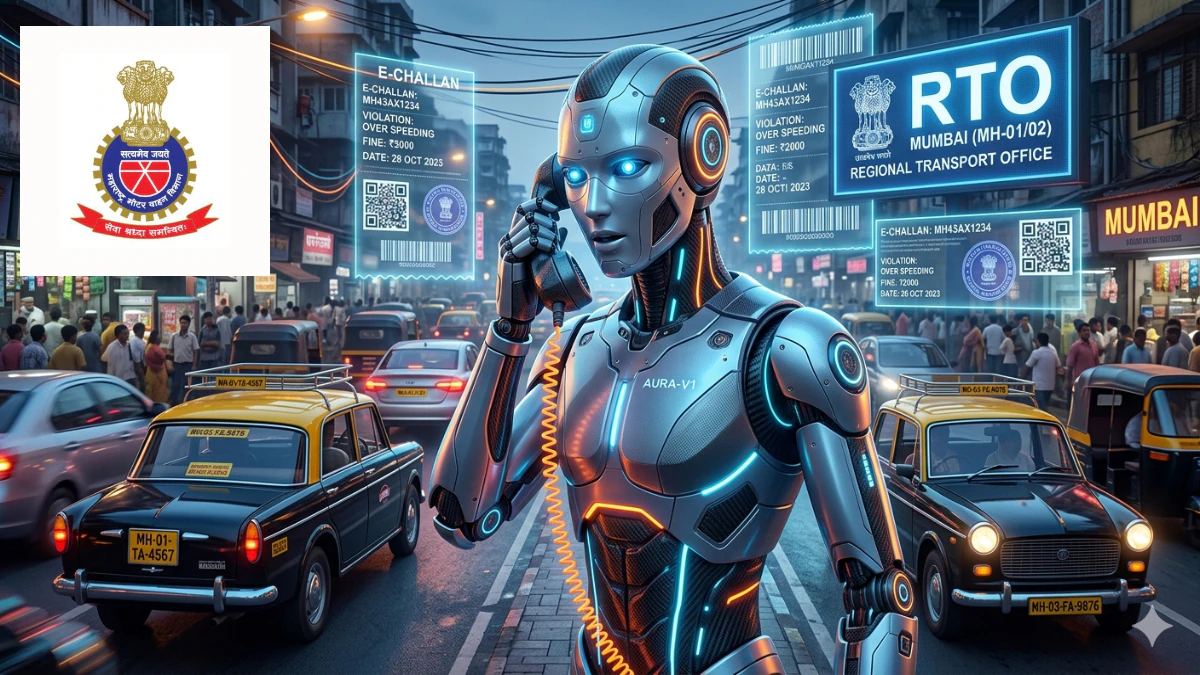
Maharashtra’s transport administration is preparing a technology-led overhaul of citizen services and enforcement systems, aiming to ease pressure on Regional Transport Offices while improving compliance with traffic rules. The twin strategy—anchored in a digital messaging interface and automated enforcement support—signals a broader shift towards data-driven governance in one of India’s busiest mobility networks. At the core of the plan is the rollout of a Maharashtra transport AI chatbot, designed to provide round-the-clock access to essential vehicle-related services. The system is expected to function through a widely used messaging platform, allowing users to check registration details, licence status, tax payments, and pending fines without visiting physical offices. Authorities believe this could significantly reduce daily congestion at transport offices, where routine queries often consume administrative capacity.
Across the state, transport offices continue to handle high footfall, reflecting gaps in digital accessibility and service integration. By shifting routine interactions online, the Maharashtra transport AI chatbot is expected to streamline workflows, lower transaction times, and improve transparency in service delivery. Urban governance experts note that such systems are increasingly vital as cities expand and mobility demands intensify. Beyond transactional services, the platform is also being positioned as a communication tool for public awareness. Regular updates on road safety practices, traffic advisories, and emergency alerts are expected to be integrated into the system. This dual role—service delivery and behavioural messaging—could support safer mobility patterns, particularly in urban areas where road accidents and congestion remain persistent challenges. Parallel to this initiative, authorities are exploring the expansion of an AI-enabled calling system aimed at improving recovery of unpaid traffic fines. Currently under limited deployment, the system uses automated calls to remind vehicle owners of pending violations.
Early indications suggest that such interventions may improve compliance rates, which have historically remained low despite widespread digitisation of challan issuance. From an economic standpoint, better recovery of fines could strengthen funding for road safety initiatives, while also reinforcing the credibility of enforcement mechanisms. However, experts caution that technology must be complemented by consistent legal follow-up and public trust to ensure long-term effectiveness. The move comes as cities across India grapple with the dual challenge of improving service accessibility and enforcing regulations in increasingly complex transport ecosystems. Digital tools like chatbots and AI-driven systems are seen as scalable solutions, particularly in regions with high smartphone penetration. Yet, concerns around data privacy, system reliability, and digital inclusion remain relevant. Ensuring that such platforms are accessible to diverse user groups—including those with limited digital literacy—will be critical to their success.
As Maharashtra advances this digital transition, the Maharashtra transport AI chatbot and related systems could redefine how citizens interact with transport authorities. The long-term impact will depend on how effectively these tools are integrated into broader urban mobility planning, balancing efficiency with inclusivity and accountability.