


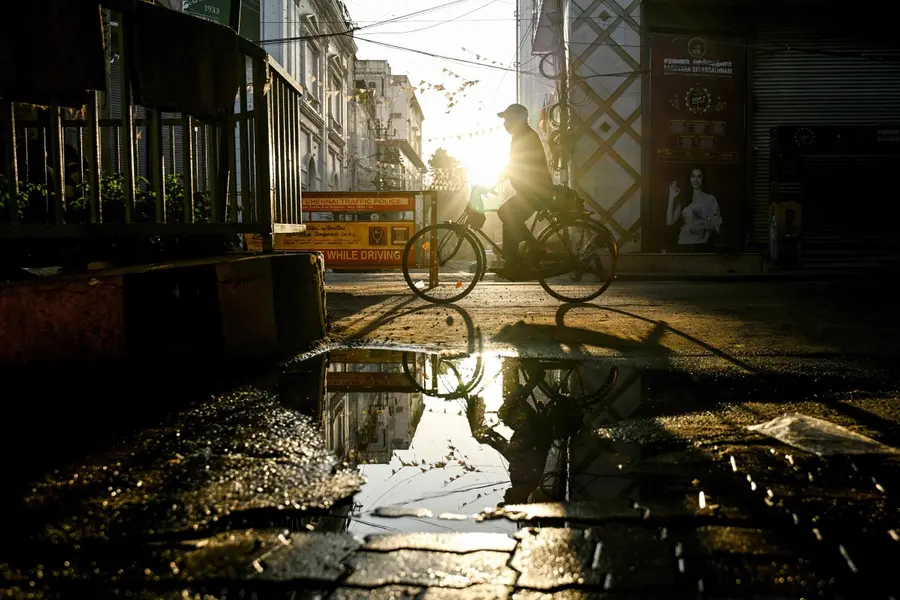
Chennai is facing intensifying heat conditions even as parts of Tamil Nadu receive rainfall alerts, underscoring a widening regional imbalance in weather patterns that is increasingly shaping urban planning and climate resilience strategies.
The divergence reflects a broader shift in seasonal behaviour, where localised extremes are replacing more predictable weather cycles.In Chennai, rising temperatures and prolonged dry spells are pushing heat stress levels higher, impacting daily life, public health, and infrastructure systems. Elevated temperatures are increasing electricity demand for cooling, straining power networks, and placing pressure on water resources in a city already vulnerable to periodic shortages.At the same time, rainfall warnings in other districts of Tamil Nadu highlight uneven precipitation distribution. Meteorological experts attribute this pattern to changing atmospheric dynamics, including variations in wind circulation and moisture movement.Such inconsistencies complicate forecasting and planning, making it harder for cities to prepare for both heatwaves and sudden rainfall events.For Chennai, these extremes present a dual challenge.Heatwaves demand immediate adaptation measures such as cooling infrastructure, shaded public areas, and improved building design.Meanwhile, the risk of sudden rainfall requires efficient drainage systems and flood management strategies.
Urban planners stress that cities must prepare for both scenarios simultaneously, rather than treating them as isolated events.The situation also exposes vulnerabilities in informal and high-density neighbourhoods, where access to cooling, water, and resilient infrastructure is limited.Experts note that climate variability disproportionately affects low-income populations, reinforcing the need for inclusive planning that prioritises equitable access to basic services.From an economic standpoint, weather volatility disrupts productivity across sectors, particularly construction, transport, and outdoor services. Businesses and city administrations are increasingly required to factor climate risks into operational and financial planning, highlighting the growing intersection between climate and urban economies.Environmental analysts point out that such patterns are consistent with broader climate change trends, where regional disparities in temperature and rainfall become more pronounced. This reinforces the need for long-term strategies focused on sustainability, including expanding green cover, promoting water conservation, and adopting energy-efficient systems.For Chennai, the current conditions serve as a reminder that climate resilience is no longer optional. Integrating adaptive infrastructure, improving early warning systems, and strengthening governance mechanisms will be critical to managing future risks.
As Tamil Nadu navigates this uneven weather pattern, the focus is likely to shift toward building flexible urban systems capable of responding to variability. For cities like Chennai, the challenge lies in ensuring that growth and development are aligned with the realities of a changing climate, while safeguarding the well-being of all residents.
Also Read:Chennai AI Healthcare Platform And Remote Monitoring Growth
