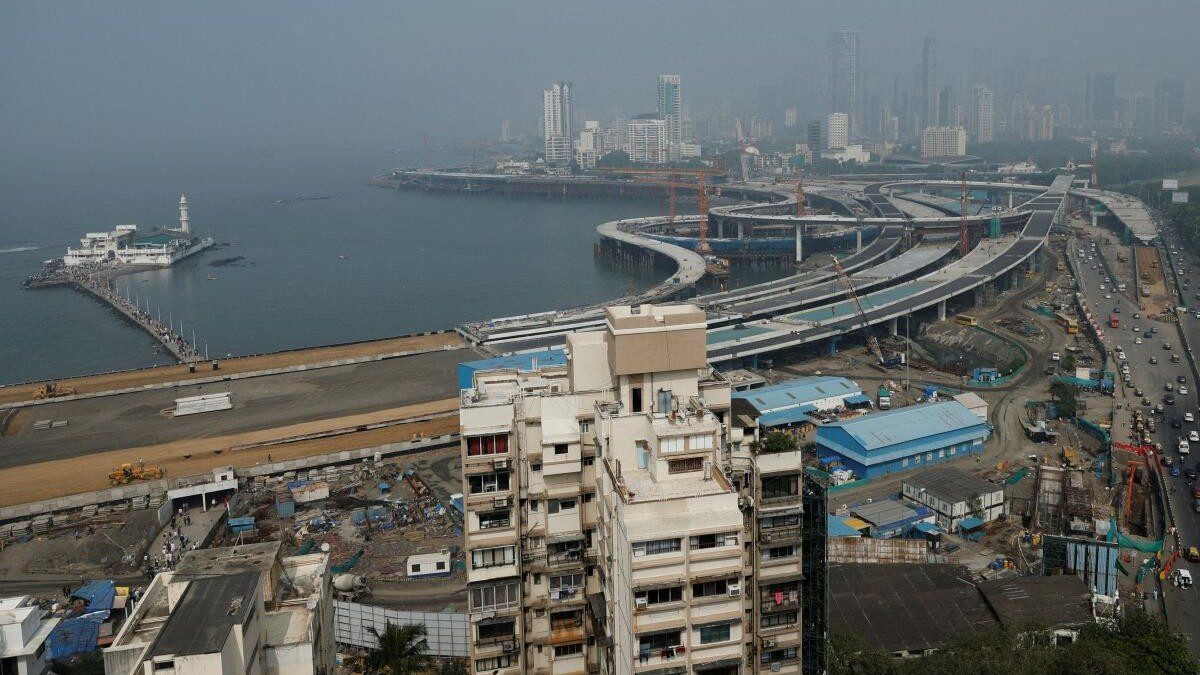
A new coastal road corridor in Navi Mumbai is being positioned as a critical link to the upcoming international airport, with planners aiming to significantly shorten travel time and reshape connectivity across the satellite city. The proposed route along Panvel Creek is expected to reduce airport access time to under 15 minutes, highlighting how transport infrastructure is being aligned with emerging urban growth zones. The nearly 10-kilometre Kharghar Coastal Road is being developed as a strategic connector between Kharghar, CBD Belapur and Nerul. Designed to run parallel to the creek, the project seeks to streamline movement within Navi Mumbai while strengthening access to the airport, which is anticipated to become a major economic driver in the region. Urban planners view this corridor as part of a broader shift towards decentralised growth, where suburban nodes are being reconfigured into independent economic centres.
Officials familiar with the project indicate that construction is being carried out in phases, allowing incremental connectivity gains even before full completion. The alignment integrates with existing arterial routes, including the Sion-Panvel corridor, which serves as a vital link between Mumbai and its extended metropolitan region. This layered approach reflects a growing emphasis on network-based planning rather than isolated infrastructure projects. However, the development also raises important environmental considerations. Sections of the road pass near ecologically sensitive mangrove zones and creek ecosystems. Adjustments to the alignment have reportedly been made to reduce direct impact, yet experts caution that long-term monitoring will be essential. Coastal and wetland systems play a crucial role in flood mitigation and climate resilience, particularly in low-lying urban regions like Navi Mumbai.
From an economic perspective, the road is expected to unlock land value along its corridor, encouraging both residential and commercial development. Areas such as Kharghar and Belapur, already witnessing steady real estate activity, could see accelerated growth due to improved accessibility. Industry observers note that infrastructure-led expansion often triggers a shift in land use patterns, which requires careful regulation to prevent speculative development and ensure equitable access to urban benefits. For daily commuters, the project promises reduced congestion and more predictable travel times, especially for those travelling between residential clusters and employment hubs. Yet, mobility experts emphasise that road-based solutions must be complemented by robust public transport systems to avoid long-term dependence on private vehicles.
As work progresses towards its targeted completion timeline, the coastal road is likely to become a defining feature of Navi Mumbai’s evolving urban landscape. Its success will depend not only on engineering execution but also on how effectively it balances connectivity gains with ecological preservation and inclusive growth.