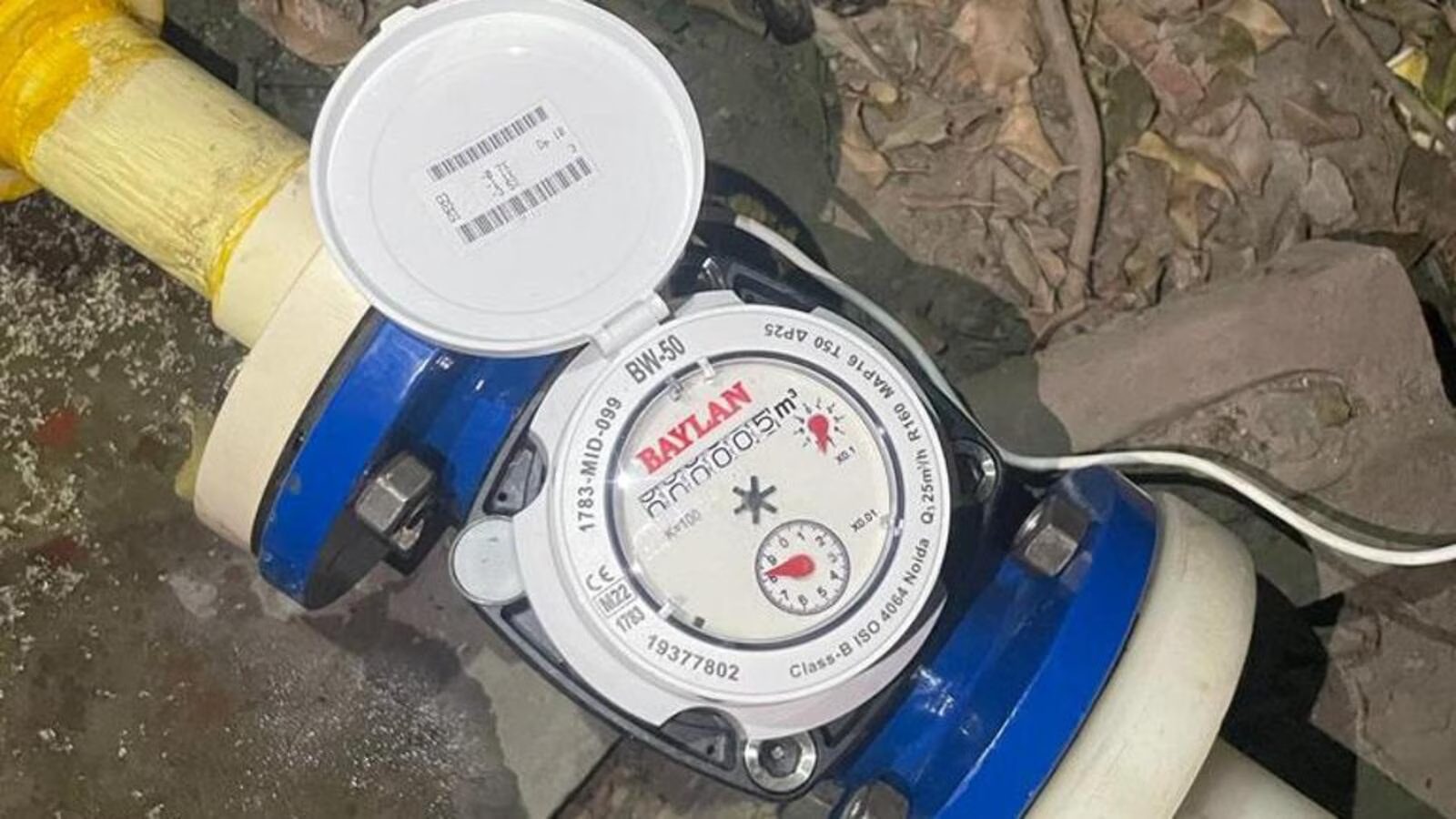
Delhi is advancing a long-pending overhaul of its water metering system, widening the pool of approved suppliers in an effort to improve billing accuracy and reduce distribution losses. The move signals a shift towards more accountable urban water management as the capital grapples with ageing infrastructure and rising demand pressures. The city’s water utility has initiated a fresh empanelment process for meter manufacturers, the first such exercise in several years. By expanding the list of authorised vendors, officials aim to accelerate the replacement of outdated and malfunctioning devices, which have been a persistent source of billing discrepancies and consumer grievances. The Delhi water meter upgrade is expected to make compliant devices more accessible across residential and commercial areas.
Despite millions of metered connections, coverage remains uneven when compared to the total number of households in the city. In many areas, faulty meters or the absence of functional devices have led to estimated billing rather than actual consumption-based charges. Urban infrastructure specialists point out that such gaps not only weaken revenue collection but also obscure real patterns of water use, making efficient planning more difficult. The revised framework introduces tighter technical benchmarks for new meters, including adherence to international accuracy standards and durability suited to local conditions. Independent testing and certification will be mandatory before devices are approved, alongside safeguards such as tamper-resistant mechanisms. These changes are intended to enhance reliability and restore confidence in the billing system, particularly among consumers who have faced inconsistencies. From a sustainability standpoint, the Delhi water meter upgrade plays a critical role in addressing non-revenue water—losses caused by leakages, theft, and unaccounted consumption. Estimates suggest that a significant portion of treated water currently fails to generate revenue, reflecting inefficiencies across both infrastructure and governance systems.
Improved metering can enable utilities to identify high-loss zones, track usage more accurately, and design targeted interventions to conserve resources. The initiative also intersects with broader efforts to formalise unauthorised connections. While policies have been introduced to regularise such connections, uptake has been limited, often due to cost concerns and procedural complexity. Experts suggest that combining simplified compliance processes with reliable metering could encourage greater participation and improve overall system transparency. For consumers, the option to procure approved meters directly may increase flexibility, but it also introduces a degree of responsibility. Households and businesses will need to ensure that installations meet prescribed standards, highlighting the need for clear guidelines and public awareness. Urban planners argue that accurate measurement is fundamental to equitable water distribution, particularly in dense cities facing climate variability and supply constraints. Without reliable data on consumption, efforts to manage demand or invest in infrastructure risk being misaligned.
As implementation progresses, the success of the Delhi water meter upgrade will depend on consistent enforcement, coordination between agencies, and sustained engagement with users. If executed effectively, the reform could strengthen financial sustainability while supporting more efficient and resilient urban water systems.