


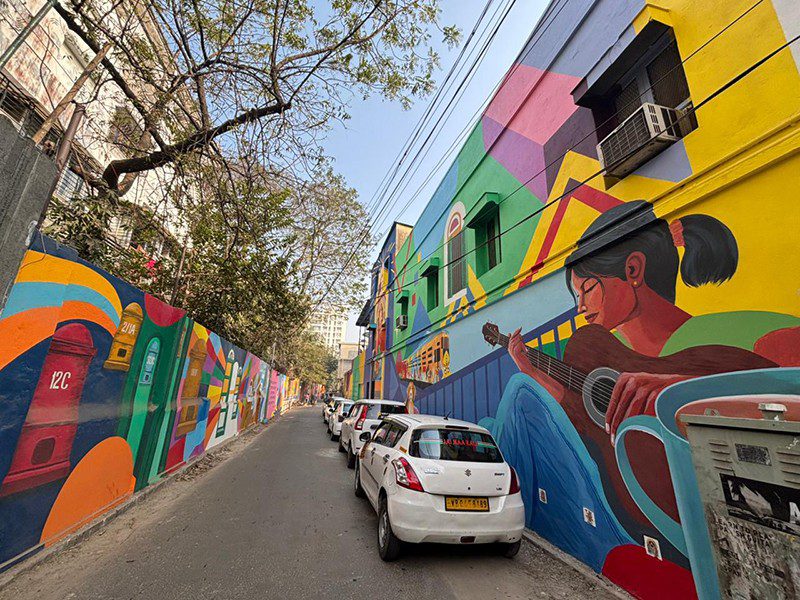
A new wave of street art in Kolkata is redefining how public spaces are experienced, with murals and creative installations on taxis and trams gaining widespread attention during the festive season.
The artist behind these widely shared works has brought renewed focus to the role of art in shaping urban identity, blending cultural storytelling with everyday mobility infrastructure.The installations, which appeared prominently during Durga Puja celebrations, transformed ordinary transit systems into moving canvases. By integrating traditional motifs with contemporary design, the artwork connected with both residents and visitors, turning functional urban elements into cultural expressions. This approach reflects a growing trend where cities are using art to activate public spaces and enhance community engagement.The rise of Kolkata street art movement signals a shift in how cultural economies operate within urban environments. Rather than being confined to galleries, art is increasingly entering public domains, making it more accessible and participatory. In Kolkata, a city with a rich artistic heritage, this transition reinforces its position as a cultural hub while also opening up new avenues for creative professionals.Urban planners highlight that such interventions can contribute to place-making—an approach that improves the quality and perception of public spaces.
Murals and mobile art installations not only add aesthetic value but can also foster a sense of ownership among residents. In high-density areas, where open spaces are limited, these creative expressions can play a role in enhancing mental well-being and social cohesion.The use of taxis and trams as artistic mediums is particularly significant.These modes of transport are deeply embedded in Kolkata’s urban fabric, and their transformation into art pieces bridges the gap between heritage and modernity. It also demonstrates how existing infrastructure can be repurposed to support cultural initiatives without requiring additional land or major investment.However, the expansion of the Kolkata street art movement also raises questions about sustainability and regulation.Ensuring that materials used are environmentally friendly and that installations do not interfere with transport operations will be essential as such initiatives scale up. Clear guidelines can help balance creativity with safety and maintenance requirements.Economically, the visibility of public art has the potential to boost tourism and local businesses, especially during major events like Durga Puja. At the same time, it creates opportunities for artists, designers, and fabricators, contributing to the broader creative economy.
As Kolkata continues to evolve, the integration of art into everyday urban life offers a pathway for more inclusive and vibrant cityscapes. The challenge ahead will be to sustain this momentum while aligning it with long-term urban planning goals, ensuring that creativity remains a central yet responsible component of the city’s development narrative.
Also Read:Kolkata Election Campaign Props Shape Voter Messaging
