Delhi Floating Solar Pilot Targets Clean Energy Growth
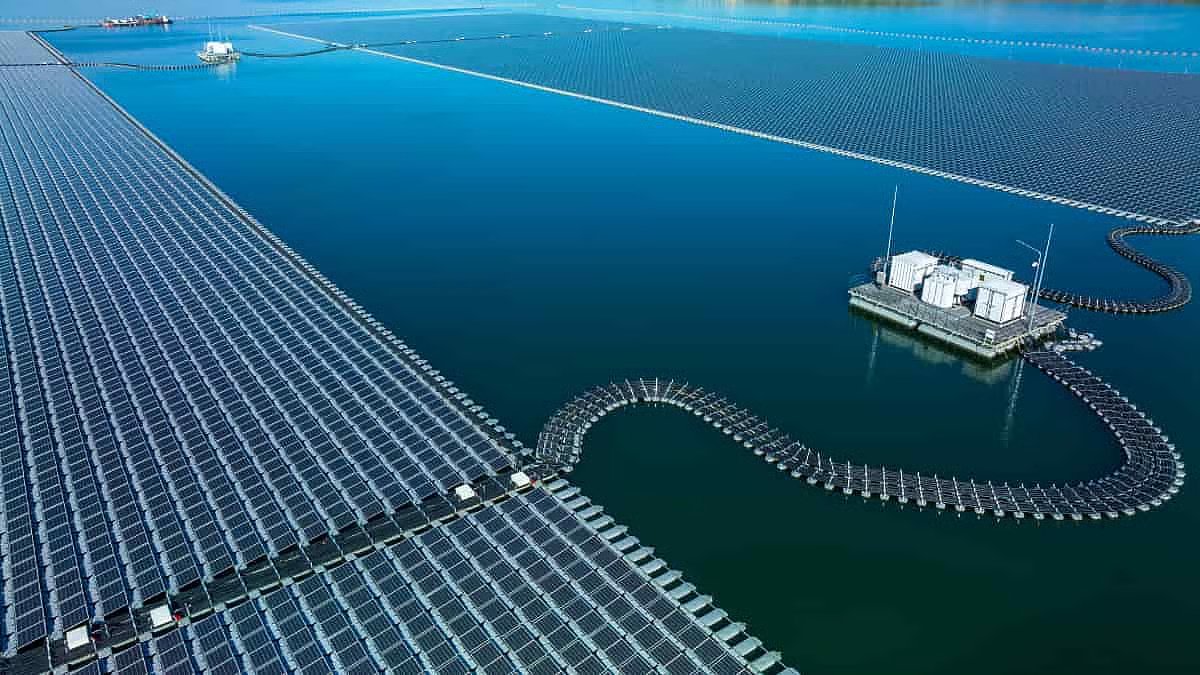
Delhi is preparing to test a new approach to renewable energy generation by installing floating solar panels on water bodies, with a pilot project planned at the Bawana power plant in the city’s north-west. The initiative marks an attempt to expand clean energy production in a densely built metropolis where land availability remains a major constraint. Officials involved in the planning say the proposed Delhi floating solar project will be installed on two artificial ponds within the Bawana power facility. The ponds, covering roughly four acres, are currently used for storing water required for cooling operations. By deploying solar photovoltaic panels on floating platforms across the water surface, the pilot facility is expected to generate about 2 megawatts of electricity.
Floating solar technology involves mounting solar modules on buoyant structures that remain anchored on water bodies. These systems capture sunlight similar to conventional ground-mounted solar installations but offer additional operational advantages, particularly in land-scarce urban environments. Energy planners believe the Delhi floating solar project could demonstrate how cities with limited open land can still scale renewable energy generation. If the pilot proves viable, authorities are examining the possibility of expanding the model to other sites including artificial ponds, sewage treatment plants and sections of large open drains across the capital. Urban sustainability experts say the concept fits within a broader push by cities worldwide to integrate renewable energy infrastructure into existing utility assets rather than acquiring new land. Water bodies used for municipal utilities, such as treatment plants or storage reservoirs, often offer underutilised surfaces that can support solar installations without altering surrounding land use.
Another advantage of floating solar systems is their potential to reduce water evaporation. By shading water surfaces, solar panels can help conserve stored water while simultaneously generating electricity. Engineers also note that cooler temperatures over water bodies can improve solar panel efficiency, enabling slightly higher power output compared to land-based installations. The initiative also aligns with Delhi’s wider renewable energy ambitions. The city government has set a target of generating around 4,500 megawatts of solar power by 2027 through a mix of rooftop installations, community solar systems and utility-scale projects. However, the rapid expansion of conventional solar infrastructure within the capital has been constrained by limited space in dense urban neighbourhoods. Floating solar technology could therefore offer an alternative pathway for cities seeking to expand clean power capacity without competing for land needed for housing, infrastructure or green spaces.
In parallel, authorities are also exploring other solar deployment models along water infrastructure corridors, including the possibility of installing panels along sections of the Munak canal that supplies raw water to the capital. If successfully implemented, the Bawana pilot could become a reference model for integrating renewable energy systems into urban utility networks, illustrating how cities can simultaneously address energy demand, climate resilience and infrastructure efficiency.