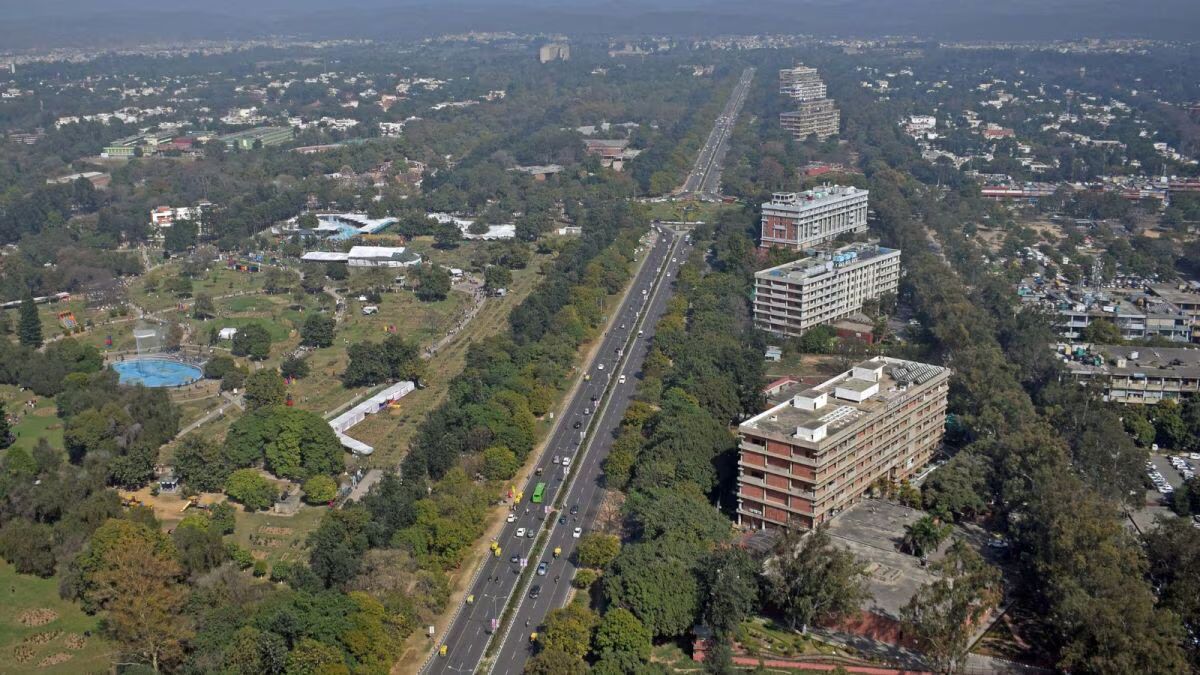
Chandigarh is likely to witness a spell of unstable weather conditions, with forecasts indicating thunderstorms, gusty winds and possible rainfall activity over the coming days. The alert, issued by the India Meteorological Department, points to short-term disruptions driven by western disturbances affecting northwest India, highlighting the growing variability in pre-summer weather patterns.
According to meteorological assessments, parts of Punjab, Haryana and Chandigarh may experience thunderstorms accompanied by wind speeds ranging between 30 and 40 kmph, with isolated instances of lightning and rainfall. Such conditions are typical of transitional weather phases but are becoming more frequent and unpredictable, particularly during April. The current advisory follows a series of recent weather fluctuations across the region. Earlier this month, Chandigarh experienced unseasonal rainfall and temperature drops, reflecting the influence of active western disturbances and shifting atmospheric systems. These variations underscore a broader trend of erratic weather, where sudden shifts between heat, rain and storms are increasingly common. From an urban systems perspective, such storm warnings carry implications beyond short-term inconvenience. Sudden weather events can disrupt transport networks, affect power supply and strain drainage systems—particularly in cities where infrastructure is not fully adapted to handle extreme or rapidly changing conditions. Experts note that even moderate storms can expose vulnerabilities in urban resilience, especially in densely built environments.
The Chandigarh weather alert also highlights risks for surrounding agricultural regions. Gusty winds and lightning during this period can impact standing crops and harvesting cycles, particularly in neighbouring districts where agricultural activity remains closely tied to seasonal stability. Strong winds, even at moderate speeds, can cause lodging of crops and damage to produce. Urban planners and climate specialists increasingly view such weather events as part of a broader climate pattern rather than isolated incidents. The frequency of western disturbances and associated storm activity in northwest India has shown variability in recent years, contributing to unpredictable rainfall distribution and temperature swings. Despite the immediate concerns, current forecasts suggest that the weather disturbance may be short-lived, with conditions expected to stabilise after the passing system. However, experts caution that intermittent episodes of similar weather may continue through the pre-monsoon period, requiring ongoing monitoring. The Chandigarh weather alert serves as a reminder of the need for adaptive urban planning. Investments in stormwater management, resilient power infrastructure and early warning systems are becoming increasingly critical as cities face more frequent weather variability.
For residents, the advisory translates into immediate precautions—monitoring weather updates, planning travel accordingly and ensuring safety during periods of high wind or lightning activity. As Chandigarh navigates this transitional weather phase, the broader challenge remains: building urban systems capable of responding to short-duration but high-impact weather events, while maintaining long-term climate resilience in an increasingly unpredictable environment.