


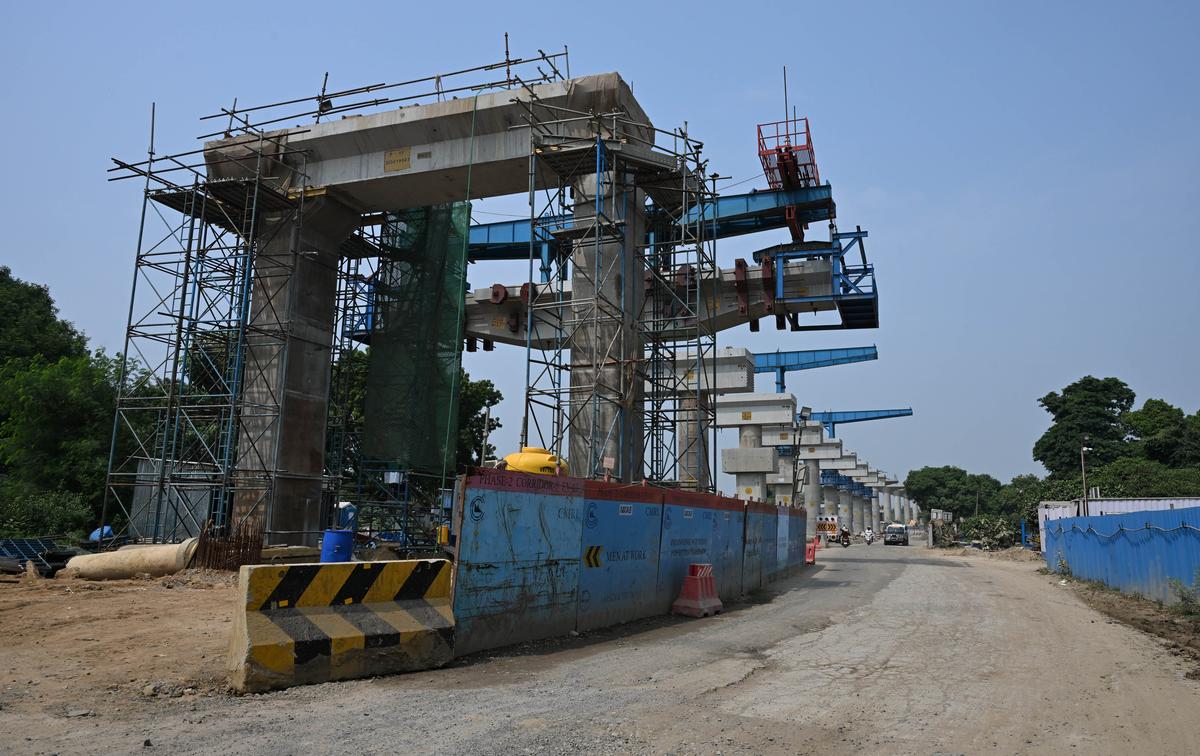
The next phase of Indore’s rapid transit expansion is set to begin as authorities prepare to launch tunnel boring work for the Indore Metro Yellow Line, a key corridor expected to strengthen connectivity across the city. Construction teams are scheduled to begin underground tunnelling in July 2026, with passenger operations targeted by the end of 2028. Transport planners say the upcoming tunnelling work represents a major milestone for the city’s metro programme. The Yellow Line will include underground sections designed to pass through dense urban areas where elevated rail infrastructure may not be feasible.
Metro engineers are expected to deploy specialised tunnel boring machines (TBMs) to excavate the underground passages required for the Indore Metro Yellow Line. These machines are capable of drilling through soil and rock while simultaneously installing concrete tunnel segments that support the structure. Urban mobility experts say underground metro corridors are often necessary in older city zones where surface land availability is limited. Subterranean rail lines allow cities to expand high-capacity transport networks without significantly disrupting existing road infrastructure. The Indore Metro Yellow Line is part of a broader effort to modernise public transportation in one of central India’s fastest-growing cities. Rapid population growth, increasing vehicle ownership and expanding residential neighbourhoods have placed pressure on the city’s road network, making mass transit systems increasingly important. Transport planners expect the new metro corridor to improve travel efficiency across several major residential and commercial areas. Once operational, the line will connect key city zones, reducing commute times and offering a reliable alternative to road-based transport. Urban economists note that metro rail infrastructure often reshapes development patterns around stations. Residential and commercial projects frequently emerge in areas with strong public transport connectivity, encouraging more compact and transit-oriented urban growth. Infrastructure specialists say the tunnelling phase of the Indore Metro Yellow Line will require careful planning and monitoring. Underground construction must account for soil conditions, groundwater levels and the presence of existing utilities such as pipelines and cables. Metro authorities have indicated that extensive geological surveys and preparatory work have already been conducted to ensure safe tunnelling operations. Continuous monitoring systems will track ground movement during excavation to protect nearby buildings and infrastructure. Environmental planners also highlight the sustainability benefits of metro rail systems. Electric rapid transit networks typically produce lower emissions per passenger compared with private vehicles, helping cities reduce traffic congestion and air pollution.
The expansion of the Indore Metro Yellow Line aligns with broader efforts to promote sustainable urban mobility across Indian cities. By providing reliable mass transit options, metro systems encourage commuters to shift away from private vehicles and reduce pressure on road networks. As tunnelling work begins later this year, the project will enter one of its most technically complex phases. If construction proceeds according to schedule, the Yellow Line could become operational by December 2028, marking another step in Indore’s transition toward a modern urban transport system.
ALSO READ – Surat Bullet Train Depot Plan Advances Project
Indore Metro Yellow Line Tunnel Work Begins July
