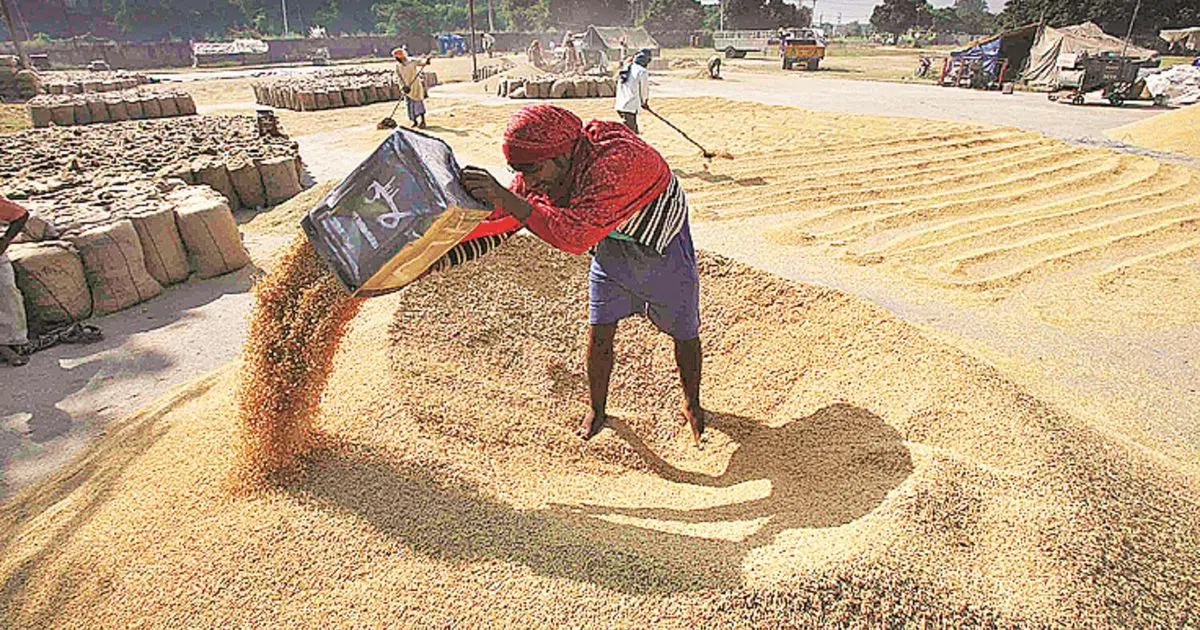
Delays in wheat procurement across parts of Punjab have triggered fresh concerns over farm logistics and rural market efficiency, as large quantities of harvested grain remain stranded in mandis during the peak procurement season. The issue, flagged by opposition leaders and farmer groups, highlights persistent gaps in execution during one of India’s most critical agricultural supply cycles.
The procurement season, which began earlier this month, has seen uneven progress across districts, with reports of farmers waiting for days to sell their produce. In several mandis, heaps of wheat have accumulated without timely lifting, pointing to bottlenecks in procurement operations and logistics coordination. A key concern emerging this season is the shortage of essential materials such as gunny bags, alongside constraints in labour availability and transport arrangements. These operational gaps have slowed the pace of procurement, even as arrivals increase with the ongoing harvest. Industry observers note that such inefficiencies not only delay payments to farmers but also risk crop spoilage, particularly under fluctuating weather conditions. Weather disruptions have further compounded the situation. Unseasonal rainfall and hailstorms in recent weeks have affected crop quality and delayed harvesting in several regions, resulting in higher moisture content in wheat. Procurement agencies, bound by quality norms, have slowed purchases or sought relaxations, contributing to a mismatch between supply and offtake.
The emerging Punjab wheat procurement delays also expose structural challenges in storage and supply chain management. Existing warehouse capacities are under pressure, with older grain stocks yet to be cleared at scale. This has limited the system’s ability to absorb fresh arrivals efficiently, forcing temporary pile-ups in open mandis. From an urban and regional economy perspective, procurement inefficiencies have wider implications. Mandis function as critical economic nodes linking rural production with national food distribution systems. Delays in procurement disrupt cash flows for farmers, impact transport networks and create ripple effects across agri-logistics and food supply chains. Urban planners and policy analysts suggest that improving procurement systems requires a combination of infrastructure upgrades and digital coordination. Investments in modern storage facilities, real-time tracking of arrivals and decentralised procurement centres could help reduce congestion during peak seasons. Additionally, better integration between state agencies and central procurement bodies is essential to ensure timely grain movement.
The recurring nature of such disruptions indicates the need for systemic reform rather than seasonal firefighting. As climate variability and production volumes increase, procurement systems must evolve to handle both scale and unpredictability. For now, the effectiveness of corrective measures—ranging from logistical adjustments to policy relaxations—will determine whether the current procurement cycle stabilises in time to prevent further distress. The coming weeks remain critical for restoring confidence among farmers and ensuring the smooth functioning of India’s food supply chain.