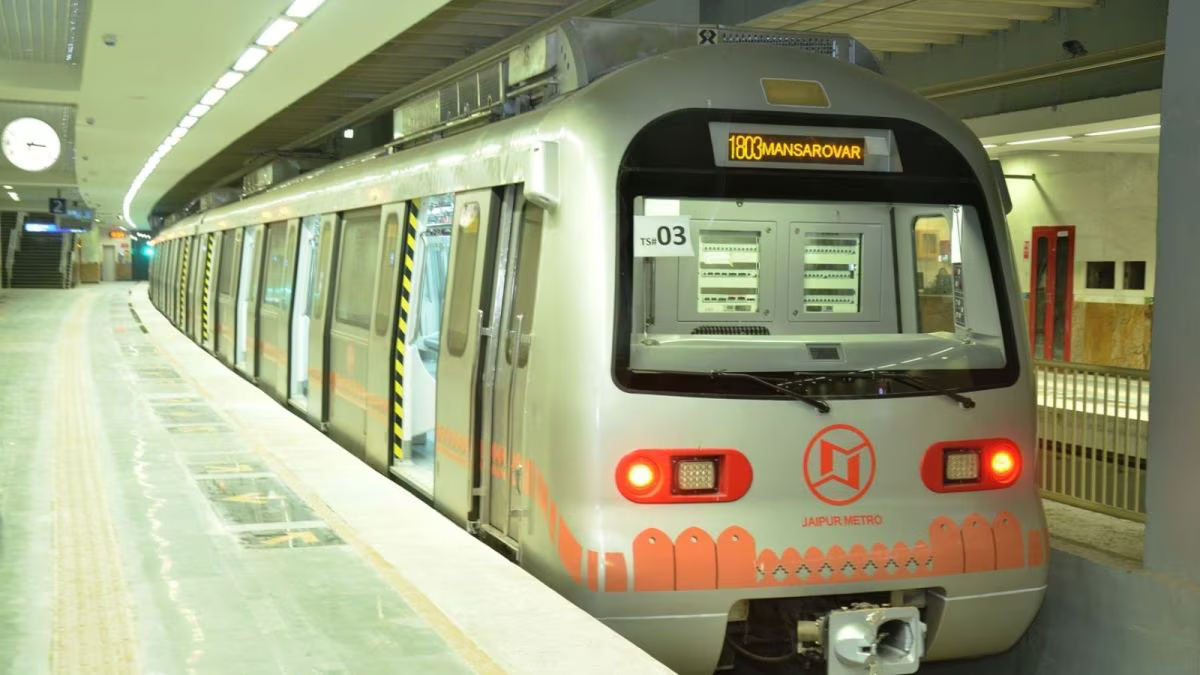
Jaipur Approves Metro Phase Two Expansion Corridor
India’s Union Cabinet has cleared a major expansion of urban rail infrastructure in Rajasthan, approving the Jaipur Metro Phase 2 project aimed at strengthening mass transit connectivity across the rapidly growing city. The project proposes a 41-kilometre north–south corridor with multiple stations linking key residential, commercial and industrial zones, marking a significant step in Jaipur’s long-term public transport strategy. The planned corridor will extend between Prahladpura and Todi Mod, creating a continuous transit spine that connects several high-activity districts, including industrial clusters, educational institutions, healthcare hubs and the city’s airport zone. Urban mobility experts say the corridor is expected to play a critical role in reducing travel time across the city while improving access to employment and economic centres.
The Jaipur Metro Phase 2 expansion will be implemented by the state metro rail corporation, a joint venture between the central and Rajasthan governments. The project carries an estimated investment exceeding ₹13,000 crore and will be developed through a mix of public funding, institutional support and multilateral financing sources. Transport planners highlight that the new corridor is designed to complement the operational east–west metro line that currently serves parts of Jaipur. The first phase of the network spans just over 11 kilometres and has established a foundation for rail-based mobility in the city, connecting residential neighbourhoods to the historic core and commercial districts. Officials say the upcoming phase is expected to dramatically increase passenger volumes by expanding coverage to new urban growth zones. Key stops along the Jaipur Metro Phase 2 route are planned near industrial estates, medical facilities, sports complexes and major road corridors, helping integrate public transport with the city’s economic and civic infrastructure. Certain sections of the corridor, particularly around the airport area, will include underground stations to accommodate existing urban development and maintain seamless connectivity.
Urban development specialists note that expanding metro networks in tier-two cities like Jaipur is increasingly viewed as essential for sustainable urban growth. As population levels and vehicle ownership rise, cities face mounting congestion, air pollution and pressure on road infrastructure. Rail-based public transport systems offer an alternative that can move large volumes of passengers efficiently while reducing carbon emissions from private vehicles. The project has also been assessed for its broader economic impact. Government assessments indicate that the corridor is expected to generate long-term socio-economic benefits by improving access to jobs, education and healthcare services across the metropolitan region. Enhanced transit connectivity may also influence land development patterns, encouraging more compact and transit-linked urban growth. Construction of the corridor is expected to progress over the coming years, with authorities targeting completion by the early next decade.
Once operational, the expanded network could reshape commuting patterns in Jaipur and support a larger shift toward public transport usage. For a city balancing heritage preservation with modern infrastructure needs, the Jaipur Metro Phase 2 corridor represents a critical investment in sustainable mobility and inclusive urban development.