Bihar Clears Bhagalpur Sultanganj Development Push
A new set of development approvals across Bhagalpur and Sultanganj is set to accelerate infrastructure upgrades in eastern Bihar, signalling a renewed push to strengthen smaller urban centres as economic growth nodes. The projects, spanning civic infrastructure, connectivity and public services, are expected to address long-standing gaps while positioning the region for future investment.
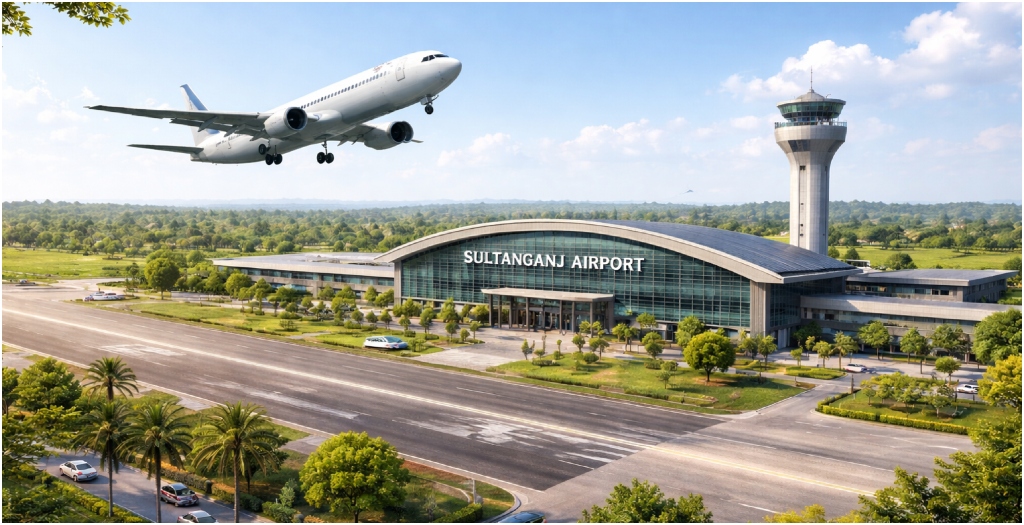
The approved initiatives form part of a broader state-led effort to expand urban infrastructure beyond major cities, with Bhagalpur emerging as a key regional hub. Recent administrative clearances include a mix of new construction and upgrades to existing facilities, aimed at improving service delivery and connectivity across the district. While individual project values vary, the cumulative investment reflects a growing focus on decentralised urban development. Sultanganj, in particular, is witnessing increased planning attention due to its strategic location and emerging connectivity potential. Proposals such as a greenfield airport in the area—backed by land identification and initial funding approvals—indicate a shift towards long-term infrastructure creation that could integrate the region into wider economic networks. Urban planners note that such investments are critical for balancing regional disparities. Historically, infrastructure development in Bihar has been concentrated in a few urban centres, leaving smaller towns with limited capacity to support economic activity. By strengthening towns like Bhagalpur and Sultanganj, authorities aim to create distributed growth corridors that reduce migration pressures while improving access to jobs and services.
The implications extend into real estate and local economies. Improved infrastructure—particularly roads, civic amenities and transport connectivity—tends to stimulate land value appreciation and attract private investment. In Bhagalpur, where residential and mixed-use developments are already gaining traction, new public projects could further catalyse demand for housing and commercial spaces. However, the region’s development trajectory has also been shaped by delays in project execution. Several earlier initiatives, including water supply systems, urban renewal works and smart city components, have faced implementation challenges due to land constraints, funding bottlenecks and administrative transitions. The latest approvals, therefore, are being viewed as an opportunity to reset timelines and prioritise completion. Experts emphasise that the success of these projects will depend on coordinated execution across departments. Integrating infrastructure planning with environmental safeguards—particularly in river-adjacent zones like Sultanganj—will be crucial for ensuring climate resilience. Flood management, sustainable water use, and energy-efficient public systems are increasingly becoming essential components of urban infrastructure design in eastern India.
There is also a governance dimension. Strengthening local institutions and ensuring transparency in project delivery can improve outcomes and build public trust, particularly in regions where infrastructure deficits directly affect quality of life. As Bihar continues to scale up its urban investment pipeline, the Bhagalpur–Sultanganj cluster represents a test case for inclusive, region-led development. If implementation keeps pace with approvals, the projects could transform the area into a more connected, economically active, and resilient urban ecosystem—setting a template for similar towns across the state.