


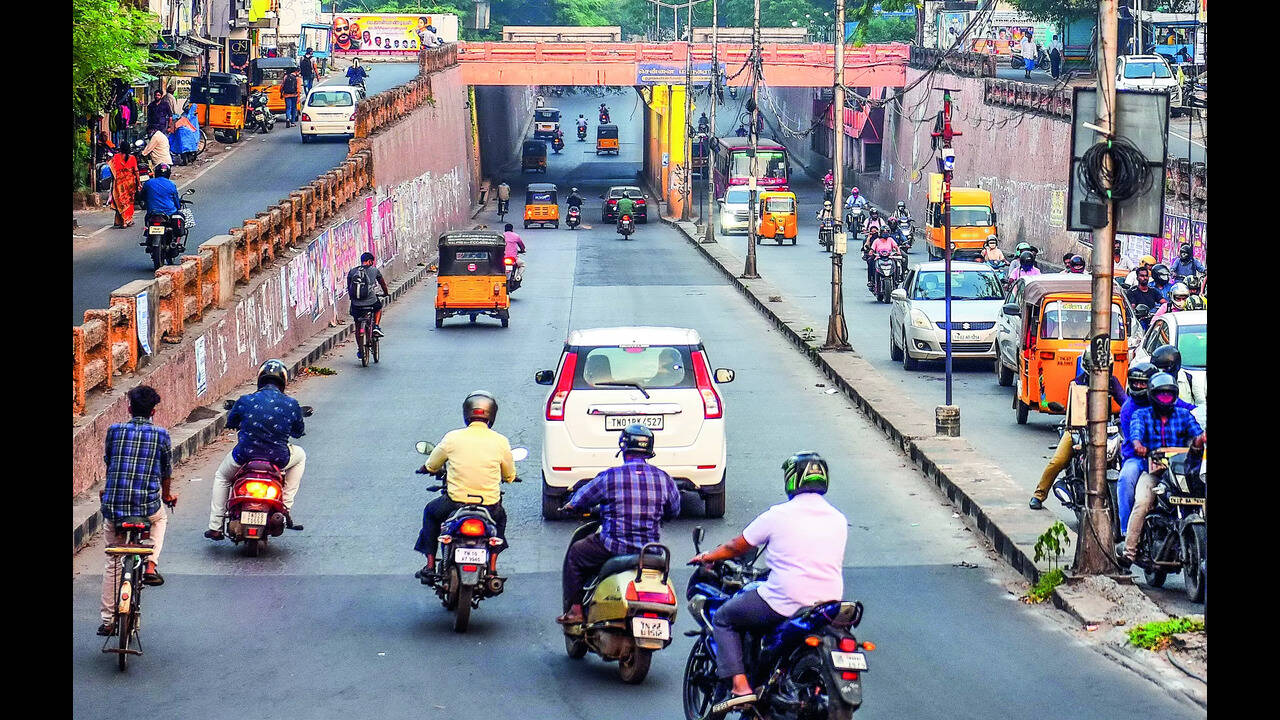
A key urban underpass in Chennai has come under scrutiny as deteriorating road conditions and stalled repair work disrupt daily traffic and raise concerns about infrastructure maintenance in the city.
The affected stretch at Nungambakkam Subway has developed multiple potholes, impacting both vehicular movement and commuter safety.The issue, now central to discussions on the Nungambakkam subway repair delay, reflects broader challenges in maintaining critical urban infrastructure.Despite the strategic importance of the subway in easing congestion along one of Chennai’s busy corridors, repair work has reportedly seen limited progress, leaving the stretch vulnerable to further damage.Commuters using the underpass have flagged concerns over uneven road surfaces, water accumulation, and reduced driving safety, particularly during peak hours.Such conditions not only slow traffic but also increase the risk of accidents, especially for two-wheelers navigating the damaged sections.Urban infrastructure experts note that the Nungambakkam subway repair delay highlights gaps in routine maintenance and project execution. In cities with high traffic density, underpasses and subways require regular upkeep due to constant wear and tear, as well as exposure to water seepage and drainage issues.From a mobility perspective, disruptions in such critical nodes can have ripple effects across the road network. As vehicles slow down or avoid the subway, congestion tends to spill over onto alternative routes, affecting travel times and increasing fuel consumption.
There is also a sustainability dimension. Poor road conditions contribute to inefficient vehicle movement, leading to higher emissions and energy use. In the long term, inadequate maintenance can increase the cost of repairs, placing additional financial strain on civic bodies.The situation also raises questions about coordination between agencies responsible for roads, drainage, and urban infrastructure.Delays in addressing structural issues often stem from fragmented responsibilities, where multiple departments must align before work can progress.Experts suggest that adopting data-driven maintenance systems—such as periodic condition assessments and predictive repair models—could help prevent such situations.Integrating smart monitoring technologies and ensuring timely allocation of funds are also seen as critical steps in improving infrastructure reliability.From an economic standpoint, maintaining smooth traffic flow is essential for productivity in a city where daily commuting forms a significant part of urban life.Persistent infrastructure issues can affect not only individual commuters but also businesses reliant on efficient transport networks.Officials are expected to expedite repair work, but timelines remain uncertain. In the interim, commuters continue to navigate the compromised stretch, underscoring the need for faster response mechanisms in urban infrastructure management.
As Chennai expands, ensuring the durability and upkeep of key assets like subways will be crucial. The current situation at Nungambakkam serves as a reminder that infrastructure development must be matched by consistent maintenance to support safe, efficient, and sustainable urban mobility.
Also Read:Chennai Rain Forecast April Brings Relief And Showers
