


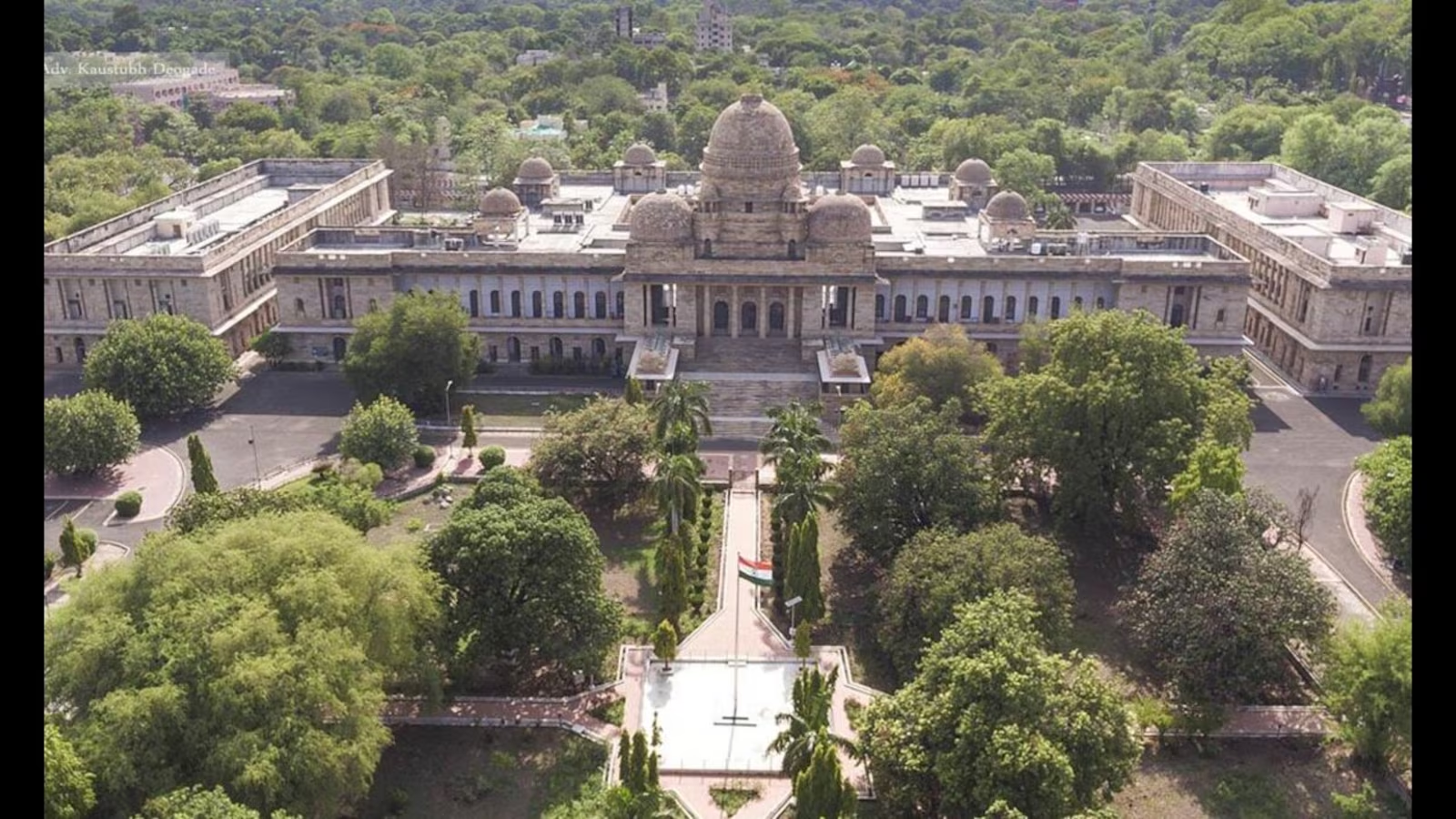
Nagpur is set to undergo a significant transformation in its role as Maharashtra’s second capital after the state government cleared more than ₹1,000 crore for a new Vidhan Bhavan complex, a decision that could reshape the city’s civic infrastructure and institutional footprint. The clearance by the Cabinet Infrastructure Development Committee underscores Nagpur’s evolving status as a centre for legislative activity and regional governance. The project, scheduled for completion by 2028, will replace the existing British-era legislative building with a modern facility spanning two key plots within the current Vidhan Bhavan precincts. One plot will house a new legislative assembly and associated annexes, while the second will accommodate a 14-storey administrative tower for offices linked to legislative functions.
Urban planners and governance analysts say the Nagpur legislative infrastructure upgrade reflects both symbolic and practical priorities. As the winter seat of the state legislature, Vidhan Bhavan brings legislators, officials, and visitors to Nagpur annually, creating a cyclical surge in economic activity across hospitality, transport, and civic services. Upgrading this infrastructure could strengthen the city’s capacity to host large legislative sessions and support ancillary functions such as media operations and committee work. The project’s design, guided by contemporary architectural practices and green building principles, aims to integrate public-facing amenities with efficient workspaces for lawmakers and staff. Officials have emphasised that the new complex will provide improved accessibility, security, and functional spaces for legislative business — a notable shift from the constraints of the century-old structure. Economists highlight that such large-scale institutional investments can have spillover effects on local development. Construction activity alone will generate jobs in engineering, construction, and allied sectors. Once operational, the expanded complex may attract year-round civic engagement, potentially smoothing the seasonal peaks associated with the winter legislative session. However, the Nagpur legislative infrastructure upgrade has also prompted debate among urban equity advocates, who argue that capital allocation must balance institutional prestige with pressing civic needs such as affordable housing, public transport, and flood resilience. Critics point out that while legislative infrastructure is important, the region also grapples with infrastructure deficits that directly affect everyday residents.
From an urban policy perspective, ensuring that the new Vidhan Bhavan project aligns with Nagpur’s broader sustainability goals will be crucial. Incorporating energy-efficient systems, accessible public spaces, and connectivity to mass transit could help embed the facility within the city’s long-term climate resilience framework. As Nagpur positions itself for enhanced legislative prominence, the next phases — including tendering, construction oversight, and community engagement — will determine whether the investment translates into equitable urban benefits. For a city balancing heritage, growth, and modernisation, the Vidhan Bhavan upgrade represents both an opportunity and a test of inclusive urban governance.
ALSO READ – Nagpur SECR Freight Growth Boosts Regional Logistics
Nagpur Secures ₹1000 Crore For New Vidhan Bhavan
